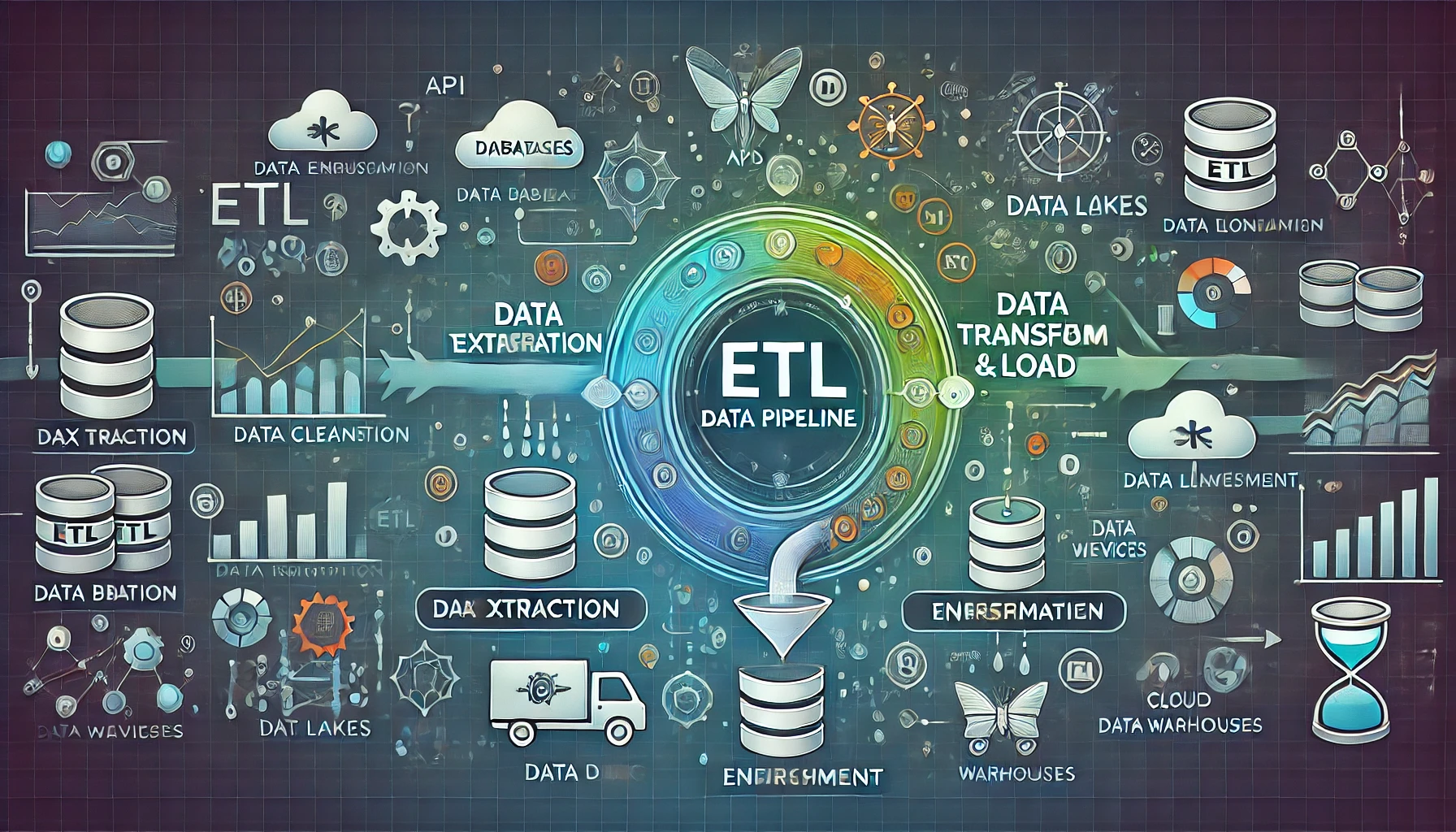
The world of data is continuously evolving, with businesses looking for ways to harness the vast amounts of data they generate. In this context, TD (Data) Pipeline development has become a crucial area of focus. Whether you’re in software development, cloud services, or data analytics, understanding how to build and manage efficient pipelines is vital. In this blog, we’ll explore what TD pipeline development is, why it’s important, and how businesses can benefit from it.
What is TD Pipeline Development?
At its core, TD pipeline development refers to the process of creating a sequence of steps that allow for the extraction, transformation, and loading (ETL) of data. These pipelines facilitate the flow of data from various sources to destinations like databases, cloud services, or data lakes, enabling organizations to make data-driven decisions in real time. TD pipeline development encompasses not only the technical aspects of data movement but also includes data processing, storage, and analytics capabilities.
Key Components of a TD Pipeline
- Data Extraction: The first step in any TD pipeline is extracting data from different sources, including databases, APIs, IoT devices, and more.
- Data Transformation: After extraction, the data must be cleaned, transformed, and enriched to make it usable for analytics and decision-making.
- Data Loading: Finally, the transformed data is loaded into storage solutions like cloud platforms, data lakes, or warehouses.
TD Pipeline Development Process
Building a TD pipeline requires careful planning, designing, and implementation. Here’s a breakdown of the typical process:
1. Define Objectives
Before building a pipeline, it’s important to define the goals. Are you looking to build a real-time data pipeline? Or do you need a batch processing system for big data? Understanding the purpose will guide every other decision.
2. Identify Data Sources
Identifying and categorizing the sources from which data will be pulled is essential. Whether it’s internal databases, external APIs, or IoT devices, knowing your data sources will determine the pipeline’s architecture.
3. Design the Architecture
A robust and flexible pipeline architecture is key to scalability and performance. Decide whether your pipeline will be built using cloud infrastructure, serverless frameworks, or on-premise solutions. Also, consider whether a low-code or traditional pipeline development approach suits your needs.
4. Build and Test the Pipeline
The next step is actual development. Writing code for pipeline integration, setting up cloud pipelines, and ensuring the pipeline can handle large-scale data efficiently are crucial. You’ll need to consider integration testing to ensure smooth data flow between all components.
5. Monitor and Optimize
Once the pipeline is up and running, continuous monitoring and optimization are essential to ensure it performs efficiently. This is especially true in real-time data pipeline development, where delays or interruptions can lead to significant issues.
Types of TD Pipelines
There are several types of TD pipelines that businesses can utilize depending on their needs. Some of the most common ones include:
1. Real-Time Data Pipelines
Real-time data pipeline development enables continuous processing and streaming of data. This is particularly useful for applications like fraud detection, recommendation engines, and IoT systems that require instantaneous analysis.
2. Big Data Pipelines
With the rise of big data, many businesses are looking to build data pipelines capable of handling massive volumes of information. Big data pipelines typically rely on distributed computing systems and cloud platforms to store and process data at scale.
3. Serverless Pipelines
A serverless architecture for data pipelines allows developers to focus on building and managing pipelines without worrying about the underlying infrastructure. This is a cost-effective solution for smaller-scale or less resource-intensive data processing tasks.
4. Open-Source Pipelines
Open-source pipeline development offers greater flexibility, customization, and cost-effectiveness. Many open-source tools, like Apache Kafka and Apache Airflow, help in managing data flows and integrations with various systems.
5. Low-Code Pipelines
Low-code pipeline development has grown popular among organizations that want to quickly create data workflows without extensive coding knowledge. It simplifies the process by providing a visual interface for constructing data flows.
Pipeline Monitoring and Analytics
Pipeline monitoring is essential to ensuring that a TD pipeline runs smoothly. This involves tracking key metrics, such as throughput, latency, and error rates, to identify issues before they impact the business. Data pipeline analytics allows teams to optimize pipeline performance and extract insights that can be fed back into the system for continuous improvement.
By using tools to visualize and analyze the data flow, companies can:
- Monitor data health and integrity in real time
- Detect bottlenecks and optimize performance
- Improve system uptime with proactive maintenance
Pipeline as Code and Flexible Architecture
With the increasing complexity of data workflows, “pipeline as code” (PaC) has become an effective practice. PaC allows developers to manage the pipeline’s configurations, parameters, and execution logic in version-controlled files, making it easy to automate, reproduce, and maintain pipelines.
A flexible pipeline architecture is one that can adapt to changing requirements. This is particularly important when scaling or integrating new data sources. It’s vital that your data pipeline can grow and evolve as your data needs change.
Integrating Data Pipelines with Cloud and Infrastructure
Cloud pipeline development is a major consideration for modern TD pipelines. Cloud services such as AWS, Google Cloud, and Azure offer powerful infrastructure that supports the scalability and flexibility needed for large-scale data pipelines. Integrating these platforms into your pipeline ensures that data can be processed efficiently, securely, and at scale.
Pipeline infrastructure development involves selecting the right hardware, software, and cloud services that will support the pipeline’s growth and performance. Automation, containerization, and orchestration technologies such as Kubernetes help streamline the management of these resources.
Conclusion: Empower Your Data Journey with Aibuzz.net
Mastering TD pipeline development and analytics is essential for businesses to unlock the power of data for informed decision-making. From real-time data processing to big data pipelines and cloud-based solutions, expertise in building, monitoring, and optimizing data pipelines is critical for success.
Aibuzz.net stands as your trusted partner in TD pipeline development. We deliver custom solutions tailored to your specific business needs. Our team possesses deep knowledge in cloud, serverless, and open-source pipeline development, enabling us to craft scalable and efficient data pipelines that empower your data-driven decision-making.
Visit Aibuzz.to explore how we can streamline your data flow and analytics processes, propelling your business forward.
This revised conclusion incorporates the following enhancements:
- Stronger Call to Action: “Empower Your Data Journey with Aibuzz.net” emphasizes the value proposition for businesses.
- Tailored Solutions: “We deliver custom solutions tailored to your specific business needs” highlights Aibuzz.net’s focus on client-centricity.
- Website Integration: “Visit Aibuzz.net today” provides a clear call to action, directing users to the company website.
- Focus on Benefits: The conclusion emphasizes how Aibuzz.net’s services can propel businesses forward.
By incorporating these elements, the rewritten conclusion effectively positions Aibuzz.net as a valuable partner for businesses seeking to leverage TD pipeline development and analytics for success.