
Tag: cloud data solutions

  • 7 Essential Insights into Big Data Consulting for Business Success in 2025

    7 Essential Insights into Big Data Consulting for Business Success in 2025

    In the rapidly evolving digital landscape, big data consulting has emerged as a pivotal force for business transformation. Companies now operate in a data-centric ecosystem where success hinges on making sense of vast datasets. As we move into 2025, organizations that leverage big data consulting services effectively are outperforming competitors by a wide margin.

    This blog explores 7 essential insights into the world of big data consulting, shedding light on how it empowers organizations to drive innovation, streamline operations, and enhance decision-making. Whether you’re a startup, an established enterprise, or a government agency, understanding the importance of big data strategy is no longer optional—it’s mission-critical.


    What is Big Data and Why Does It Matter?

    Discover 7 powerful reasons why big data consulting will boost your business in 2025. Learn how data-driven strategies, AI integration, and expert guidance can drive growth, innovation, and success.

    Big data refers to massive, complex data sets generated from various sources such as social media, sensors, transactions, and IoT devices. This data is characterized by high volume, velocity, and variety—often referred to as the “3Vs.” Traditional data processing tools are insufficient to manage and analyze this information efficiently. That’s where big data consulting comes in.

    Consultants guide businesses through the entire lifecycle of big data—from strategy and architecture to implementation and optimization. These experts help you extract meaningful insights from raw data, thus supporting smarter decision-making and sustainable growth.


    What is Software Development’s Role in Big Data?

    Software development plays a critical role in big data consulting by creating robust applications and systems that capture, store, process, and visualize large volumes of data. Custom software solutions are often required to meet specific business goals, ensure data security, and integrate analytics into core workflows. Whether it’s cloud-native applications or AI-driven tools, software development underpins all successful big data projects.


    1. Essential Strategy: Aligning Big Data with Business Goals

    The first step in effective big data consulting is to align data initiatives with overarching business objectives. Data without direction leads to unnecessary costs and missed opportunities. Consultants evaluate your KPIs, market demands, and operational workflows to build a data strategy that aligns with ROI-driven goals.

    Big data experts help identify valuable data sources, prioritize use cases, and set measurable milestones. Whether you want to improve customer experiences, optimize logistics, or mitigate risks, aligning your big data consulting plan with business outcomes is essential.


    2. Data Architecture: Building the Right Foundation

    A solid data architecture is the backbone of any successful big data initiative. This includes the design of data lakes, data warehouses, and pipelines that support real-time analytics and scalability.

    Big data consulting firms assess your current infrastructure and recommend the best architecture tailored to your needs. Whether you’re using cloud platforms like AWS, Azure, or hybrid environments, the right architecture ensures data flows efficiently and securely.

    Properly implemented architecture enables seamless integration across departments, improves data governance, and accelerates time-to-insight.


    3. Data Governance: Ensuring Security and Compliance

    As data grows, so do privacy concerns and regulatory challenges. One of the most essential roles of big data consultingis implementing robust data governance frameworks.

    Consultants help define roles, access permissions, audit trails, and compliance policies aligned with regulations like GDPR, HIPAA, and CCPA. Without governance, your data strategy risks fines, breaches, and reputational damage.

    Big data consulting teams ensure that your analytics efforts are not only powerful but also trustworthy and legally compliant.


    4. Advanced Analytics and AI Integration

    Modern big data consulting is incomplete without the integration of AI and machine learning. These technologies can identify trends, predict future outcomes, and automate complex tasks.

    For instance, predictive analytics helps businesses forecast demand, detect fraud, or personalize customer journeys. AI algorithms, fueled by big data, enable intelligent automation and drive faster decision-making.

    Consultants implement ML models, train algorithms, and integrate them into dashboards or business intelligence tools. This creates a proactive organization that anticipates problems before they arise.


    5. Cloud Scalability and Real-Time Processing

    Cloud computing has revolutionized big data consulting by offering elastic scalability and real-time data processing capabilities. Tools like Apache Kafka, Spark, and Snowflake allow businesses to analyze data as it streams in.

    Consultants guide companies in choosing cloud providers, migrating legacy systems, and optimizing cost-performance ratios. Real-time processing helps in industries like finance, healthcare, and retail where immediate insights are mission-critical.

    Whether it’s handling millions of transactions or processing IoT sensor data, cloud-native big data solutions ensure you’re always a step ahead.


    6. Industry-Specific Big Data Solutions

    One size does not fit all. Big data consulting varies significantly across industries:

    • Healthcare: Patient data, EHR integration, predictive diagnostics
    • Retail: Customer segmentation, inventory optimization, sentiment analysis
    • Finance: Fraud detection, credit scoring, risk modeling
    • Manufacturing: Supply chain analytics, predictive maintenance, quality control

    Specialized consultants understand the nuances of each sector and craft solutions that deliver tangible value. This industry-specific knowledge turns data into a strategic asset.


    7. ROI Measurement and Continuous Optimization

    How do you know your big data consulting efforts are paying off? Measurement is essential.

    Consultants define KPIs and ROI metrics from the start. These might include reduced operational costs, increased sales, improved customer satisfaction, or time saved through automation.

    Once the system is live, continuous monitoring and optimization ensure peak performance. Feedback loops help in refining algorithms, improving data quality, and updating the tech stack as business needs evolve.


    The Value of a Long-Term Big Data Consulting Partnership

    Partnering with a trusted big data consulting firm means more than just a one-time service. It’s about building a long-term relationship that evolves with your business.

    A great consultant doesn’t just fix problems—they anticipate them. They help you stay ahead of trends like generative AI, blockchain analytics, or quantum computing. With the right partnership, you gain a competitive edge, not just insights.


    Why Big Data Consulting Is Essential in 2025
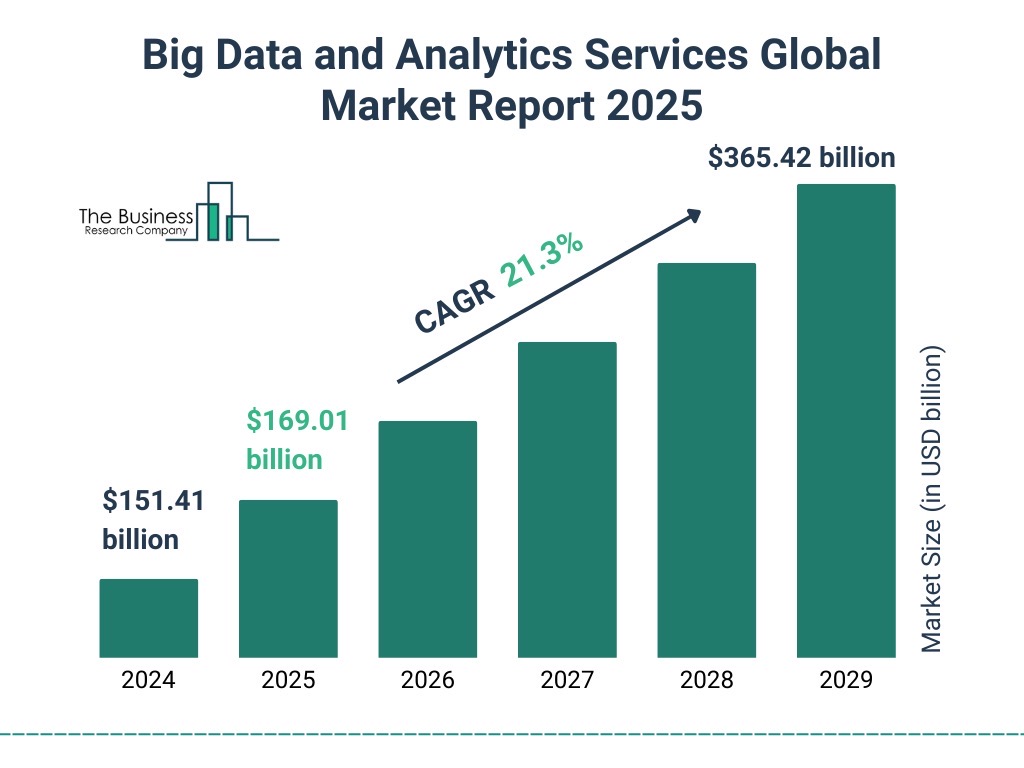
    To thrive in the data economy, businesses must move from reactive to proactive decision-making. Big data consulting provides the tools, frameworks, and expertise to harness data’s full potential.

    From optimizing internal processes to transforming customer engagement, the possibilities are endless. But without expert guidance, data initiatives can easily stall or fail. That’s why big data consulting is not just beneficial—it’s essential in 2025 and beyond.


    Final Thoughts: Partner with Experts for Big Data Success

    As digital transformation accelerates, big data will only become more complex. Whether you’re starting your data journey or scaling advanced analytics, expert consulting is key.

    aibuzz offers cutting-edge big data consulting services tailored to your unique needs. We combine our expertise in software development, cloud architecture, AI integration, and data security to deliver end-to-end solutions that drive measurable impact.

    Our software development services ensure that your data tools are robust, scalable, and user-friendly. With AIBuzz, you get more than just data insights—you gain a strategic partner in your growth journey.

  • 7 Essential Reasons to Use Google Cloud Big Data for Modern Enterprises

    7 Essential Reasons to Use Google Cloud Big Data for Modern Enterprises

    In today’s digital era, businesses generate data at an unprecedented scale. This explosion of information—known as Big Data—presents both a challenge and an opportunity. The key to unlocking this opportunity lies in choosing the right platform. Google Cloud Big Data offers scalable, intelligent, and cost-effective tools to harness data for business growth. In this blog, we’ll explore 7 essential reasons why Google Cloud Big Data is the right choice for modern enterprises.


    What is Big Data? (A Quick Overview)

    Discover 7 essential reasons why Google Cloud Big Data is the top choice for modern businesses. Learn how it powers real-time analytics, AI integration, and secure, scalable data solutions.

    Big Data refers to extremely large datasets that are too complex to be managed or analyzed by traditional data-processing systems. These datasets can come from various sources like social media, sensors, mobile devices, transactions, and more. Big Data is characterized by the three V’s—Volume, Velocity, and Variety. Its proper utilization leads to better decisions, predictive insights, and operational efficiencies.


    1. Essential Scalability with Google Cloud Big Data Tools

    One of the strongest advantages of Google Cloud Big Data is its unmatched scalability. Whether you’re a startup or an enterprise, you can handle petabytes of data with ease. Google’s infrastructure is designed to auto-scale, meaning it adjusts resources dynamically as your data grows or shrinks. Tools like BigQuery, a serverless and highly scalable data warehouse, allow you to run complex SQL queries in seconds.

    By leveraging Google Cloud Big Data services, businesses can grow without worrying about infrastructure limitations.


    2. Real-Time Analytics and Stream Processing

    Modern business demands instant insights. With Google Cloud Big Data, you can analyze real-time data streams from devices, applications, and social platforms. Tools such as Cloud Dataflow and Pub/Sub enable fast, efficient stream processing. This is crucial for use cases like fraud detection, IoT monitoring, and live dashboards.

    Real-time analytics not only improves operational agility but also provides competitive advantages in fast-paced industries.


    3. Machine Learning Integration Made Easy

    Google Cloud Big Data seamlessly integrates with AI and Machine Learning services. With tools like Vertex AI, you can build, train, and deploy ML models on your big data sets without deep knowledge of data science. This integration helps businesses develop smarter applications, from customer personalization to demand forecasting.

    The synergy of Google Cloud Big Data and AI leads to actionable intelligence and automated decision-making.


    4. Enterprise-Grade Security and Compliance

    Data security is a major concern for every organization. With Google Cloud Big Data, security is baked into every layer. It offers end-to-end encryptionIAM (Identity and Access Management), and audit logging. Additionally, Google complies with key industry standards such as HIPAAGDPR, and ISO/IEC 27001, making it a trusted partner for industries like healthcare and finance.

    By choosing Google Cloud Big Data, enterprises ensure their data remains protected and compliant with global regulations.


    5. Seamless Data Migration and Hybrid Architecture

    Worried about migrating your legacy systems? Google makes it simple. With Transfer ApplianceStorage Transfer Service, and Database Migration Service, you can move your workloads to the cloud without major disruptions. Plus, Google Cloud Big Data supports hybrid and multi-cloud architectures, giving you flexibility to run your systems where they make the most sense.

    This adaptability helps businesses modernize without the fear of vendor lock-in or service interruptions.


    6. Cost-Efficiency and Flexible Pricing

    Google’s pay-as-you-go model ensures that you only pay for the resources you use. Whether you’re storing archived data or running powerful analytics jobs, Google Cloud Big Data provides pricing options that suit different needs. Additionally, features like flat-rate pricing in BigQuery allow enterprises to predict and manage their budget better.

    Smart resource management and pricing flexibility make Google Cloud Big Data ideal for businesses focused on ROI.


    7. Powerful Ecosystem and Tooling

    From data engineers to business analysts, everyone can find a tool that fits their workflow in the Google ecosystem. With integrations for LookerData StudioApache BeamTensorFlow, and Python notebooks, your entire data pipeline—from ingestion to visualization—is covered.

    The broad ecosystem of Google Cloud Big Data empowers collaboration across teams and drives data-driven culture within organizations.


    Popular Tools in the Google Cloud Big Data Suite

    Here are some of the most widely used tools in the Google Cloud Big Data ecosystem:

    • BigQuery: A serverless, highly scalable data warehouse for fast SQL queries.
    • Cloud Dataflow: Real-time stream and batch data processing.
    • Cloud Pub/Sub: Messaging service for event ingestion and delivery.
    • Dataproc: Managed Spark and Hadoop service.
    • Data Fusion: No-code ETL tool for building data pipelines.
    • Looker: Data visualization and business intelligence platform.

    These tools work together to deliver a comprehensive solution for Big Data analytics.


    Industries Benefiting from Google Cloud Big Data

    1. Retail: Real-time recommendations and inventory analytics.
    2. Healthcare: Predictive diagnosis, genomics, and patient trend analysis.
    3. Finance: Fraud detection, algorithmic trading, and compliance monitoring.
    4. Manufacturing: Predictive maintenance and supply chain optimization.
    5. Media & Entertainment: Audience analytics and content personalization.

    Across sectors, Google Cloud Big Data enables smarter decisions through deep insights.


    Key Benefits Recap

    Let’s summarize the essential benefits of Google Cloud Big Data:

    • Ultra-scalable and serverless infrastructure
    • Real-time and batch data processing
    • Integrated AI/ML capabilities
    • Secure and compliant environment
    • Cost-effective pricing models
    • Easy migration and hybrid deployment
    • Rich ecosystem for full data lifecycle

    These features make it an indispensable solution for data-intensive enterprises.


    Conclusion: Why Choose aibuzz for Big Data Solutions?

    Discover 7 essential reasons why Google Cloud Big Data is the top choice for modern businesses. Learn how it powers real-time analytics, AI integration, and secure, scalable data solutions.

    Adopting Google Cloud Big Data is no longer optional—it’s essential for businesses that want to thrive in a data-driven world. With its scalable tools, AI integration, and enterprise-grade security, Google offers a powerful ecosystem that’s both flexible and future-ready. Whether you’re dealing with structured or unstructured data, real-time streams, or historical logs, Google Cloud Big Data ensures you gain meaningful insights that drive growth.

    At aibuzz, we help organizations build robust Big Data pipelines using Google Cloud’s cutting-edge technology. We specialize in end-to-end software development, from data ingestion to analytics, and integrate AI for next-level intelligence. If you’re ready to supercharge your business with Google Cloud Big Data, our expert team is here to guide your digital transformation journey.