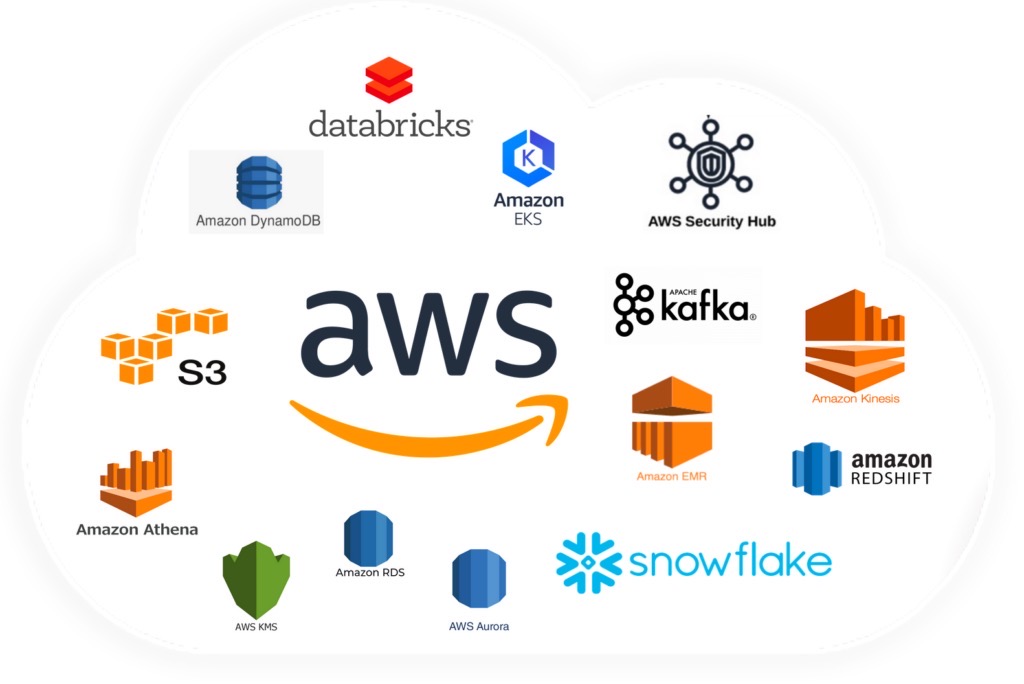
Big data has revolutionized how businesses make decisions, optimize operations, and drive innovation. But the real magic happens when you pair big data with cloud infrastructure—and no name stands taller in that space than Amazon Web Services (AWS). In today’s digitally dynamic world, AWS in big data is not just a choice—it’s the engine driving powerful, scalable, and secure data transformation.
In this blog, we’ll dive into 7 compelling reasons why AWS in big data is redefining enterprise intelligence in 2025. From storage flexibility to advanced analytics, AWS has built an ecosystem tailored for the demands of real-time data and future-forward organizations.
1. Scalability Like Never Before
One of the most celebrated advantages of AWS in big data is its unparalleled scalability. Whether you’re a startup working with gigabytes or an enterprise processing petabytes daily, AWS auto-scales its services to meet your needs without compromising performance.
Tools like Amazon EMR (Elastic MapReduce) and Amazon Redshift are designed to grow with your business. You can start small and scale your clusters or data warehouses based on workload—paying only for what you use. This elasticity is crucial for data-driven teams working on unpredictable workloads, especially in industries like retail, finance, and IoT.
2. Massive Data Storage with Flexibility
Storing vast volumes of structured and unstructured data is a big data challenge. AWS in big data solves this elegantly with services like:
- Amazon S3: Ideal for storing large data lakes with robust security and availability.
- Amazon Glacier: A low-cost solution for long-term archival data.
- AWS Lake Formation: Quickly set up secure data lakes and manage access with precision.
What sets AWS apart is the integration between storage, analytics, and machine learning tools. You’re not just storing data—you’re preparing it for deep insights.
3. Advanced Analytics Made Simple
Gone are the days when big data analytics was reserved for data scientists. With AWS in big data, analytics is accessible, intuitive, and incredibly powerful. Services like:
- Amazon Athena: Allows SQL queries directly on S3 data without moving it.
- AWS Glue: A serverless data integration service for preparing and loading data.
- Amazon QuickSight: A fast, cloud-powered business intelligence (BI) service.
These services democratize data, letting teams across departments run queries, generate dashboards, and visualize trends—without coding or hardware overhead.
4. Integrated Machine Learning Capabilities
What makes AWS in big data truly futuristic is how seamlessly it integrates machine learning (ML). With Amazon SageMaker, data teams can:
- Build, train, and deploy ML models at scale.
- Automate workflows with built-in algorithms and AutoML.
- Monitor models with explainability and bias detection tools.
By combining big data with ML on AWS, businesses can unlock predictive insights—forecasting sales, detecting fraud, personalizing customer experiences, and much more.
5. Real-Time Data Streaming for Instant Decisions
In industries like finance, gaming, and e-commerce, real-time data isn’t a luxury—it’s a necessity. AWS in big dataaddresses this through:
- Amazon Kinesis: Real-time data ingestion and analytics.
- AWS Lambda: Serverless functions that respond to data triggers.
- Amazon MSK (Managed Streaming for Apache Kafka): A fully managed service to run real-time apps.
These tools empower businesses to act on data the moment it arrives—whether it’s fraud detection in fintech or personalization in e-commerce.
6. Ironclad Security and Compliance
When it comes to AWS in big data, trust and security are built-in. AWS ensures:
- End-to-end encryption for data at rest and in transit.
- IAM (Identity and Access Management) for detailed user permissions.
- Audit trails via AWS CloudTrail and AWS Config.
Moreover, AWS complies with major regulations like GDPR, HIPAA, and ISO, making it a secure home for sensitive data across industries like healthcare and finance.
7. Cost Optimization at Every Level
Unlike traditional on-prem setups, where you’re locked into costly hardware, AWS in big data provides a pay-as-you-go model. With tools like AWS Cost Explorer, Savings Plans, and Spot Instances, businesses can optimize spend without sacrificing power.
Even at scale, AWS helps organizations control budget leakage by auto-scaling resources and suggesting cost-saving measures proactively.
Software Development and AWS: A Synergistic Force
Modern software development is heavily data-driven. Whether you’re building mobile apps, web platforms, or backend systems, your application is likely interacting with vast datasets.
Here’s where AWS in big data shines for developers:
- Seamless APIs for integrating S3, DynamoDB, and Redshift.
- DevOps-friendly tools like AWS CodePipeline and CodeBuild.
- Cloud-native architecture for microservices and containerized workloads via ECS and EKS.
For developers, it means faster deployments, deeper insights, and the ability to iterate with real-world feedback drawn directly from data.
Case Study: E-Commerce at Scale
Let’s take an example. A mid-sized e-commerce company wanted to personalize user experience in real-time during peak holiday traffic. Using AWS in big data, they:
- Collected clickstream data through Amazon Kinesis.
- Processed user behavior using AWS Lambda.
- Built ML models in SageMaker to recommend products.
- Visualized customer trends in QuickSight dashboards.
Result? 25% increase in average cart value and 40% improvement in customer retention. This is the kind of transformation AWS makes possible.
Real-World Applications of AWS in Big Data
Here’s a glance at industries benefiting from this powerful combo:
Healthcare:
- Predicting patient readmissions.
- Managing clinical records.
- Detecting disease outbreaks using real-time data.
Automotive:
- Autonomous vehicle telemetry processing.
- Predictive maintenance.
- Customer behavior analytics.
Finance:
- Real-time fraud detection.
- Credit scoring.
- Personalized investment advice.
Gaming:
- Player behavior tracking.
- Dynamic content generation.
- In-game monetization optimization.
AWS provides the reliability, speed, and depth these industries need to innovate continuously.
Best Practices for Implementing AWS in Big Data Projects
- Define a Data Strategy: Don’t just migrate—align your data goals with business objectives.
- Choose the Right Tools: Don’t overcomplicate. Start with core services like S3, Glue, and Redshift.
- Secure Early, Scale Smoothly: Apply IAM and encryption from day one.
- Use Serverless Where Possible: Lambda and Glue reduce operational complexity.
- Monitor and Optimize Continuously: Use AWS CloudWatch, Cost Explorer, and performance metrics.
Challenges and How AWS Helps Overcome Them
| Challenge | AWS Solution |
|---|---|
| Data silos | AWS Lake Formation |
| Real-time analytics | Amazon Kinesis |
| Data preparation complexity | AWS Glue |
| High infrastructure cost | Auto-scaling + Spot Instances |
| Security concerns | IAM, KMS, CloudTrail |
With the right architecture and approach, AWS mitigates common big data bottlenecks efficiently.
The Future of AWS in Big Data: 2025 and Beyond
As we move into a future powered by AI, IoT, and hyper-personalization, AWS in big data will only become more integral. The emergence of generative AI, edge computing, and quantum data processing will open new doors—most of which will run on scalable, intelligent platforms like AWS.
The power of AWS lies in its vision: a world where data is no longer a burden but an asset that propels innovation, empowers employees, and delights customers.
Conclusion: Why AIBuzz Recommends AWS for Big Data Success
At AIBuzz, we believe that AWS in big data is not just a platform—it’s a strategic advantage. Whether you’re a startup, SMB, or enterprise, adopting AWS ensures your big data operations are secure, scalable, and future-ready.
As experts in IT and tech services, our team at AIBuzz helps businesses harness the full potential of cloud and data. From consultation to implementation, we bring data to life—and AWS is our go-to partner for that journey.