
In the fast-paced world of finance, software solutions have become the backbone of seamless transactions, risk management, and regulatory compliance. Financial software development is evolving to meet the increasing demands of businesses, financial institutions, and consumers. Whether you’re a startup looking to build a fintech platform or an established bank upgrading its digital services, understanding the essential features of financial software is crucial.
Understanding Financial Software Development
Financial software development refers to the process of designing, building, and maintaining software solutions tailored for banking, investment, insurance, and fintech applications. These solutions enhance operational efficiency, improve customer experience, and ensure compliance with financial regulations. With advancements in AI, blockchain, and cloud computing, financial software is becoming more sophisticated, secure, and scalable.
Why is Financial Software Development Important?
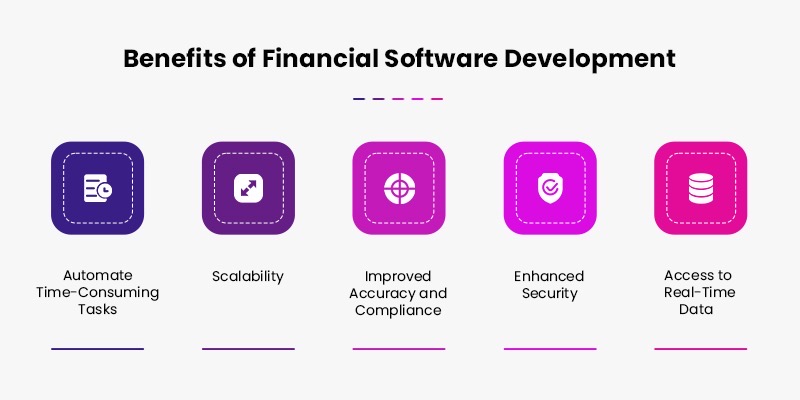
Financial software solutions play a crucial role in modern banking and finance by:
- Enhancing security against fraud and cyber threats.
- Automating routine financial processes to increase efficiency.
- Providing real-time data analytics for better decision-making.
- Ensuring compliance with financial regulations.
- Improving customer engagement with user-friendly digital interfaces.
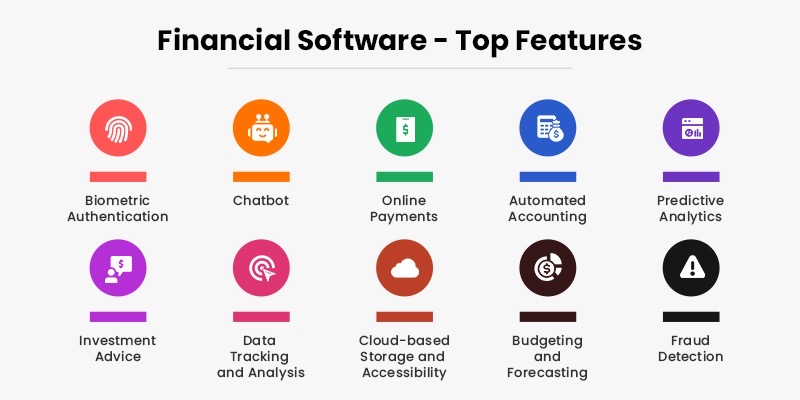
Let’s explore the 10 essential features every financial software must have in 2025.
1. Robust Security & Compliance
Security is the cornerstone of financial software. With cyber threats becoming more sophisticated, financial software must implement encryption, multi-factor authentication (MFA), and biometric verification. Compliance with regulations like GDPR, PCI DSS, and ISO 27001 ensures that sensitive financial data remains protected. Failing to meet security standards can lead to severe financial losses and reputational damage.
2. AI-Powered Fraud Detection
Artificial Intelligence (AI) plays a crucial role in identifying fraudulent transactions. Machine learning algorithms analyze transaction patterns in real time and flag suspicious activities, preventing fraud before it happens. Integrating AI-driven anomaly detection can enhance security and reduce financial losses. Companies that adopt AI-powered fraud detection experience fewer chargebacks and fraudulent claims.
3. Cloud-Based Architecture
Cloud technology is reshaping financial software development. Cloud-based financial solutions offer scalability, reduced infrastructure costs, and enhanced collaboration. Popular cloud service providers like AWS, Microsoft Azure, and Google Cloud enable financial firms to process large volumes of data with minimal downtime. Cloud-based financial systems also facilitate remote work and global financial transactions.
4. Seamless API Integration
APIs (Application Programming Interfaces) facilitate seamless integration between financial software and third-party applications. Open banking APIs allow fintech platforms to connect with multiple banks, enabling features like real-time payments, digital wallets, and automated reconciliation.
5. Blockchain for Transparency & Security
Blockchain technology is revolutionizing financial transactions by providing decentralized, tamper-proof ledgers. By leveraging blockchain, financial software can enhance security, transparency, and efficiency in cross-border payments, smart contracts, and identity verification. Blockchain adoption in finance is growing rapidly, offering benefits like cost reduction, fraud prevention, and real-time settlements.
6. AI-Driven Analytics & Business Intelligence
Data-driven decision-making is a priority for financial institutions. AI-powered analytics tools provide predictive insights, helping businesses understand customer behavior, market trends, and financial risks. Business intelligence (BI) dashboards visualize complex financial data in an easy-to-interpret format. With AI-driven analytics, financial firms can make data-backed decisions to increase profitability and reduce risks.
7. Automated Payment Processing
Automating payment processes reduces manual intervention, minimizing errors and improving efficiency. Financial software should support multiple payment gateways, real-time settlements, and automated invoicing to streamline transactions for businesses and consumers alike. Automated payment systems improve cash flow management, enhance customer satisfaction, and prevent human errors.
8. User-Friendly Interface & Mobile Optimization
An intuitive user experience (UX) is critical for financial software adoption. The interface should be designed with simplicity in mind, ensuring seamless navigation. Mobile-optimized financial apps allow users to access banking services, track investments, and make transactions on the go. As mobile banking adoption grows, businesses must prioritize responsive designs and user-friendly digital experiences.
9. Scalable & Customizable Solutions
Financial software must be scalable to accommodate growing user bases and expanding business operations. Customizability is also key, allowing businesses to tailor features according to their specific needs, whether it’s wealth management, insurance tech, or digital lending. Scalable financial solutions help businesses expand globally and adapt to changing market conditions.
10. Regulatory Compliance Automation
Staying compliant with financial regulations is a major challenge. Regulatory technology (RegTech) automates compliance processes, ensuring that financial institutions adhere to anti-money laundering (AML), Know Your Customer (KYC), and tax regulations with minimal manual intervention. Automation in regulatory compliance reduces operational costs and mitigates risks associated with non-compliance penalties.
Future Trends in Financial Software Development

As we move towards a more digital economy, financial software is expected to integrate advanced technologies like:
- Decentralized Finance (DeFi): DeFi applications eliminate intermediaries and provide financial services directly on blockchain networks.
- Quantum Computing: Quantum technologies have the potential to revolutionize financial modeling and risk assessment.
- Hyper-Personalization: AI-driven personalization will allow financial software to offer tailored financial advice and investment opportunities.
- Voice-Activated Banking: AI-powered voice assistants will enable users to conduct transactions and inquiries using natural language processing.
Final Thoughts
The financial software landscape is constantly evolving, and businesses that invest in feature-rich, secure, and scalable solutions gain a competitive edge. Whether it’s AI-driven analytics, blockchain security, or cloud-based operations, adopting cutting-edge technologies in financial software development is essential for success. By incorporating these essential features, businesses can future-proof their financial platforms and enhance customer satisfaction.
Looking for expert financial software development services? Visit abuzz.net to explore innovative solutions tailored to your business needs!