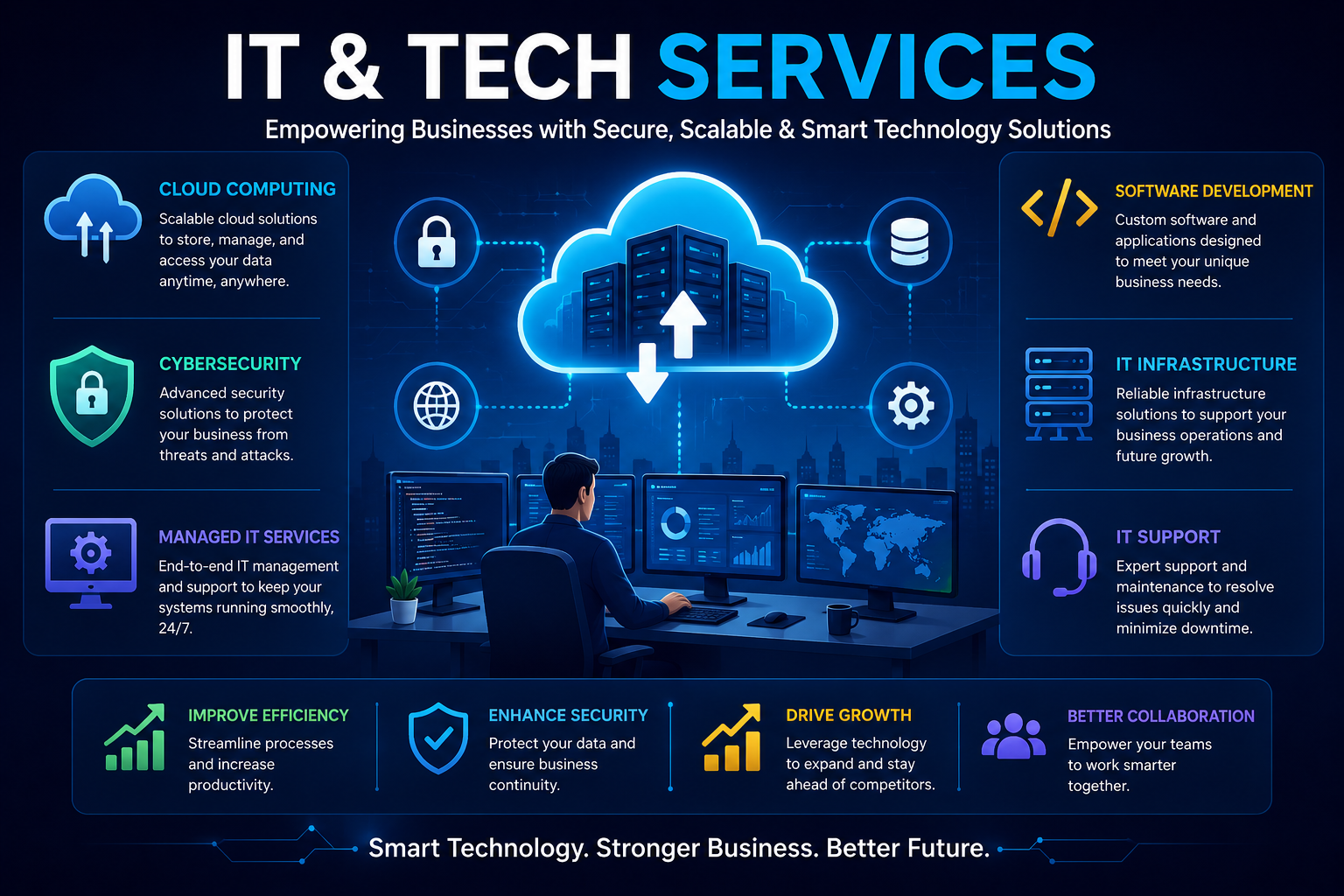
Tag: IT and Tech

  • IT and Tech Services: The Driving Force Behind Digital Transformation

    IT and Tech Services: The Driving Force Behind Digital Transformation

    In today’s digital-first world, businesses rely heavily on technology to operate efficiently, serve customers, and stay competitive. Whether it’s a small startup managing online sales or a multinational enterprise handling millions of customer interactions, technology plays a critical role in daily operations.

    However, technology alone is not enough. Organizations need reliable systems, skilled professionals, and strategic solutions to maximize the value of their digital investments. This is where IT and tech services become essential.

    From cloud computing and cybersecurity to software development and IT consulting, modern technology services help businesses improve productivity, reduce operational risks, and achieve sustainable growth.

    This comprehensive guide explores everything you need to know about IT and tech services, their benefits, applications, challenges, and future trends.


    What Are IT and Tech Services? :

    IT and tech services refer to professional solutions that help organizations manage, optimize, and secure their technology infrastructure and digital operations.

    These services include:

    • IT support and maintenance
    • Software development
    • Cloud computing
    • Cybersecurity
    • Data management
    • Artificial intelligence solutions
    • IT consulting
    • Network management
    • Digital transformation services

    Simply put, IT and tech services ensure that businesses can use technology effectively, securely, and efficiently.


    Why IT and Tech Services Matter More Than Ever :

    Technology has evolved from being a support function to becoming a strategic business asset.

    Companies that leverage technology effectively often experience:

    • Higher productivity
    • Better customer experiences
    • Faster innovation
    • Improved security
    • Reduced operational costs

    Without reliable IT services, businesses risk downtime, security breaches, and missed growth opportunities.


    The Evolution of IT Services :

    Traditional IT Support :

    Years ago, IT services primarily focused on:

    • Fixing computers
    • Maintaining servers
    • Installing software
    • Managing networks

    The role was largely reactive.

    Modern Technology Services :

    Today, IT services are proactive and strategic.

    Modern providers help businesses:

    • Automate processes
    • Protect digital assets
    • Develop custom software
    • Analyze business data
    • Implement cloud solutions
    • Create digital transformation strategies

    Technology is now directly linked to business success.


    Types of IT and Tech Services :

    Managed IT Services :

    Managed IT services involve outsourcing technology management to specialized providers.

    Key Benefits

    • 24/7 monitoring
    • Reduced downtime
    • Predictable costs
    • Expert support
    • Improved system performance

    Businesses can focus on growth while professionals handle technical operations.

    Internal Link Suggestion:
    /managed-it-services


    Cloud Computing Services :

    Cloud technology has transformed the way organizations store data and run applications.

    Popular Cloud Solutions

    • Infrastructure as a Service (IaaS)
    • Platform as a Service (PaaS)
    • Software as a Service (SaaS)

    Benefits of Cloud Services

    • Remote accessibility
    • Cost savings
    • Scalability
    • Enhanced collaboration
    • Business continuity

    External Resource:
    https://aws.amazon.com/what-is-cloud-computing/


    Cybersecurity Services :

    Cyber threats continue to rise every year.

    Cybersecurity services protect businesses from:

    • Malware attacks
    • Data breaches
    • Ransomware
    • Phishing scams
    • Unauthorized access

    Common Security Solutions

    • Firewall management
    • Security monitoring
    • Endpoint protection
    • Data encryption
    • Vulnerability assessments

    Cybersecurity is no longer optional—it is a business necessity.


    Software Development Services :

    Every business has unique requirements.

    Custom software development helps organizations create tailored solutions that improve efficiency and customer experiences.

    Development Services Include

    • Web applications
    • Mobile apps
    • Enterprise software
    • SaaS platforms
    • E-commerce systems

    Internal Link Suggestion:
    /software-development


    IT Consulting Services :

    Technology decisions can significantly impact business outcomes.

    IT consultants help organizations:

    • Evaluate current systems
    • Create technology roadmaps
    • Optimize infrastructure
    • Reduce technology costs
    • Improve operational efficiency

    Consultants ensure technology investments align with business objectives.


    Network and Infrastructure Services :

    Reliable infrastructure is essential for uninterrupted operations.

    These services include:

    • Network setup
    • Server management
    • Data center solutions
    • Internet connectivity
    • Infrastructure monitoring

    Strong infrastructure creates the foundation for digital success.


    Data Analytics Services :

    Data has become one of the world’s most valuable business assets.

    Analytics services help organizations:

    • Understand customer behavior
    • Improve decision-making
    • Identify trends
    • Optimize operations
    • Predict future outcomes

    External Resource:
    https://www.ibm.com/analytics


    Artificial Intelligence Services :

    AI is revolutionizing how businesses operate.

    Applications include:

    • Customer support chatbots
    • Predictive analytics
    • Process automation
    • Recommendation engines
    • Intelligent decision-making systems

    AI helps organizations work smarter and faster.

    Internal Link Suggestion:
    /artificial-intelligence


    Key Benefits of IT and Tech Services :

    Increased Efficiency :

    Technology automates repetitive tasks, allowing employees to focus on strategic work.

    Enhanced Security :

    Professional IT teams continuously monitor systems and address vulnerabilities.

    Cost Reduction :

    Managed services reduce infrastructure costs and prevent expensive downtime.

    Better Customer Experiences :

    Technology enables faster communication, personalized interactions, and seamless services.

    Scalability :

    Modern solutions grow alongside businesses without requiring major infrastructure changes.

    Competitive Advantage :

    Organizations that embrace technology often outperform competitors.


    How IT Services Support Different Industries :

    Healthcare :

    Healthcare organizations use IT services for:

    • Electronic health records
    • Telemedicine
    • Patient management systems
    • Data security

    Retail and E-commerce :

    Retail businesses leverage technology for:

    • Inventory management
    • Online sales platforms
    • Customer analytics
    • Payment processing

    Finance :

    Financial institutions rely on:

    • Secure transactions
    • Fraud detection
    • Data protection
    • Mobile banking solutions

    Education :

    Educational organizations use technology to:

    • Deliver online learning
    • Manage student records
    • Improve collaboration
    • Enhance accessibility

    Manufacturing :

    Manufacturers utilize technology for:

    • Automation
    • Supply chain management
    • Predictive maintenance
    • Production optimization

    Digital Transformation and IT Services :

    Digital transformation involves integrating technology into every aspect of business operations.

    IT service providers help organizations:

    • Modernize legacy systems
    • Implement cloud technologies
    • Automate workflows
    • Improve customer experiences
    • Enhance operational efficiency

    Successful digital transformation requires both technology and strategic planning.


    Challenges Businesses Face Without IT Services :

    Organizations that neglect technology often experience:

    Security Risks :

    Weak systems become easy targets for cybercriminals.

    Operational Inefficiencies :

    Manual processes slow productivity.

    Data Loss :

    Poor backup practices can lead to critical information loss.

    Limited Growth :

    Outdated technology restricts scalability.

    Increased Costs :

    Unexpected system failures can be expensive.


    Emerging Trends in IT and Tech Services :

    Artificial Intelligence :

    AI-driven automation continues to reshape industries.

    Cloud-First Strategies :

    Businesses increasingly prioritize cloud solutions.

    Edge Computing :

    Data processing closer to users improves speed and performance.

    Internet of Things (IoT) :

    Connected devices generate valuable business insights.

    Advanced Cybersecurity :

    Organizations are investing more heavily in proactive security measures.

    Automation :

    Workflow automation improves efficiency across departments.


    How to Choose the Right IT Service Provider :

    Selecting the right technology partner is crucial.

    Consider the following factors:

    Industry Experience

    Choose providers with proven expertise.

    Service Portfolio

    Look for comprehensive solutions.

    Security Standards

    Ensure compliance with industry best practices.

    Customer Support

    Reliable support minimizes downtime.

    Scalability

    The provider should support future growth.

    Reputation

    Review client testimonials and case studies.


    Future of IT and Tech Services :

    The future will be driven by innovation.

    Emerging technologies such as:

    • Artificial Intelligence
    • Quantum Computing
    • Machine Learning
    • Blockchain
    • Advanced Automation

    will continue transforming how businesses operate.

    Organizations that embrace technological change will be better positioned for long-term success.


    Internal Links :

    Add these links where relevant in the blog:


    External Links :

    Cloud Computing

    https://aws.amazon.com/what-is-cloud-computing

    Technology Research

    https://www.gartner.com/en/information-technology


    Rich Media Resources :

    Video Resource

    Photo Resource

    Technology Insights

    https://www.gartner.com/en/information-technology

    Cloud Computing Guide

    https://aws.amazon.com/what-is-cloud-computing

    Cybersecurity Best Practices

    https://www.cisa.gov/cybersecurity


    Frequently Asked Questions (FAQs) :

    What are IT and tech services? :

    IT and tech services are professional solutions that help businesses manage, optimize, and secure their technology systems and digital operations.

    Why are IT services important for businesses? :

    They improve productivity, strengthen security, reduce costs, and support business growth.

    What is included in managed IT services? :

    Managed IT services typically include monitoring, maintenance, technical support, cybersecurity, and infrastructure management.

    How do cloud services benefit businesses? :

    Cloud services offer flexibility, scalability, cost savings, and remote accessibility.

    Why is cybersecurity important? :

    Cybersecurity protects business data, systems, and customers from cyber threats and security breaches.


    Conclusion :

    Technology is no longer a support function operating in the background. It has become the foundation of modern business success.

    IT and tech services help organizations stay secure, improve efficiency, enhance customer experiences, and adapt to changing market demands. Whether through cloud computing, cybersecurity, software development, or data analytics, these services empower businesses to innovate and grow.

    As technology continues to evolve, companies that invest in reliable IT and tech services will be better prepared to navigate challenges, seize opportunities, and achieve sustainable growth in an increasingly digital world.


    ☎️ 919967940928

    🌐 https://aibuzz.net/
  • IT and Tech Services: The Quiet Force Behind Every Modern Business

    IT and Tech Services: The Quiet Force Behind Every Modern Business

    Take a moment and think about how businesses work today.

    You order food from an app.
    You attend meetings online.
    You transfer money within seconds.
    You chat with customer support without making a phone call.
    You store files in the cloud without worrying about losing them.

    All of this feels normal now.

    But behind these everyday experiences, there’s an entire world of IT and tech services making everything work smoothly.

    And honestly, most people only notice technology when something stops working.

    When a website crashes, payments fail, systems slow down, or customer data gets compromised, suddenly technology becomes everyone’s biggest concern. But when everything runs properly, IT services quietly stay in the background doing their job.

    That’s the interesting thing about technology today — it has become invisible, but absolutely essential.

    Whether it’s a small local business, an online startup, or a global company, technology now shapes how businesses communicate, grow, sell, protect data, and serve customers.

    In many ways, modern businesses no longer simply “use” technology.

    They depend on it.

    In this blog, we’ll explore IT and tech services in a simple, natural, and practical way — without overly technical explanations or robotic language. We’ll look at how these services help businesses operate better, why they matter so much today, and where the future of technology is heading.


    What Are IT and Tech Services? :

    IT and tech services are solutions that help businesses manage and improve their technology systems.

    That may sound broad, but the idea is actually very simple.

    These services help businesses:

    • Run websites and applications
    • Store and protect data
    • Improve communication
    • Automate repetitive work
    • Protect customer information
    • Solve technical problems
    • Build software and mobile apps
    • Manage digital systems

    In short, IT services help businesses function more efficiently in a digital world.

    For example:

    • When you join a Zoom meeting, cloud technology is working.
    • When your payment gets processed securely online, cybersecurity systems are protecting your data.
    • When customer support replies instantly through a chatbot, AI technology is involved.
    • When employees collaborate on the same document remotely, cloud platforms make it possible.

    Most businesses use technology every single day without even realizing how many systems are quietly working in the background.


    Why Technology Has Become So Important for Businesses :

    A few years ago, businesses could still survive with minimal digital tools.

    Today, that’s becoming almost impossible.

    Customers now expect businesses to be fast, responsive, and available online. People don’t like waiting anymore. If a website loads slowly or an app feels confusing, users often leave within seconds.

    Technology helps businesses meet these expectations.

    And honestly, businesses that ignore digital transformation often struggle to keep up.


    Technology Saves Time and Reduces Stress :

    One of the biggest benefits of IT services is efficiency.

    Without technology, businesses spend huge amounts of time handling repetitive tasks manually.

    Think about tasks like:

    • Sending invoices
    • Updating spreadsheets
    • Managing inventory
    • Organizing customer records
    • Responding to repetitive questions
    • Scheduling appointments

    Technology automates many of these processes.

    That doesn’t just save time — it reduces stress for employees too.

    Instead of constantly fixing small operational problems, teams can focus on more meaningful work.

    And realistically, that creates a healthier work environment.


    Managed IT Services: The Team Most Businesses Never See :

    Not every company has the budget to hire a large internal IT department.

    That’s why managed IT services have become so common.

    A managed IT provider acts like an external technology team that supports the business behind the scenes.

    They handle things like:

    • System monitoring
    • Software updates
    • Technical support
    • Cybersecurity
    • Data backups
    • Network management

    The goal is not simply fixing problems after something breaks.

    The real value comes from preventing issues before they become serious.

    And honestly, preventing downtime is often far cheaper than repairing damage later.


    Cloud Computing Changed the Way Businesses Operate :

    Cloud computing completely transformed modern business operations.

    Years ago, companies stored most of their files and software on physical office computers or servers.

    Now, businesses can access systems, files, and applications through the internet from almost anywhere.

    You probably already use cloud technology every day without thinking about it.

    Platforms like:

    • Google Drive
    • Dropbox
    • Microsoft 365
    • Zoom
    • Google Workspace

    are all cloud-based services.

    And they changed how people work, collaborate, and communicate.


    Why Businesses Love Cloud Technology :

    Employees Can Work From Anywhere :

    Remote and hybrid work became possible largely because of cloud systems.

    Employees can now access files, attend meetings, and collaborate from different locations without needing to sit in the same office.


    Businesses Save Money :

    Cloud platforms reduce the need for expensive physical infrastructure.

    Instead of buying large servers, companies often pay only for the resources they actually use.


    Collaboration Feels Easier :

    Multiple people can work on the same document at the same time.

    That level of flexibility changed teamwork completely.


    Data Protection Improves :

    Most major cloud providers invest heavily in security systems and backup protection.

    In many cases, cloud storage is actually safer than relying only on local devices.


    Helpful Rich Media Resources :

    Learn More About Cloud and IT Services :

    Technology and Networking Guides :


    Cybersecurity Became a Necessity, Not a Luxury :

    Years ago, many small businesses assumed hackers only targeted large corporations.

    That’s no longer true.

    Today, businesses of every size face cybersecurity risks.

    Customer information, payment details, employee records, and business documents all hold value. And cybercriminals know that.

    That’s why cybersecurity is now one of the most important parts of modern IT services.


    What Cybersecurity Services Actually Do :

    Cybersecurity services help businesses reduce digital threats and protect sensitive information.

    This includes:

    • Blocking suspicious activity
    • Monitoring networks
    • Detecting malware
    • Preventing unauthorized access
    • Protecting cloud systems
    • Securing customer data

    Some common cybersecurity tools include:

    Firewalls :

    They act like digital security barriers between systems and outside threats.

    Multi-Factor Authentication :

    This adds an extra verification step during login.

    Antivirus and Threat Detection :

    These tools identify harmful activity before it spreads.

    Data Encryption :

    Encryption protects information even if it gets intercepted.


    Software Development Helps Businesses Build Better Experiences :

    Every business operates differently.

    That’s why many companies eventually need software designed specifically for their workflow instead of depending entirely on generic tools.

    Software development services can help businesses create:

    • Websites
    • Mobile apps
    • E-commerce platforms
    • Booking systems
    • Customer portals
    • Inventory systems
    • Business dashboards

    Custom software gives businesses more flexibility and control over how they operate.

    And honestly, sometimes that becomes a major competitive advantage.


    Mobile Apps Changed Customer Expectations :

    People spend a huge amount of time on smartphones now.

    Naturally, businesses want to connect with customers where they already spend their attention.

    Mobile apps are now important for industries like:

    • Banking
    • Healthcare
    • Retail
    • Food delivery
    • Education
    • Fitness

    A smooth app experience creates convenience and stronger customer engagement.

    But users also expect apps to feel simple and fast.

    If an app feels confusing or slow, people often uninstall it quickly.

    That’s why user experience matters just as much as functionality.


    Artificial Intelligence Is Quietly Becoming Part of Everyday Business :

    Artificial Intelligence used to sound futuristic.

    Now, businesses use AI in everyday operations more than most people realize.

    Examples include:

    • Chatbots answering customer questions
    • Recommendation systems suggesting products
    • Fraud detection systems
    • Automated reporting tools
    • Smart analytics platforms

    AI helps businesses automate repetitive work and process information more efficiently.

    It’s not replacing human creativity completely.

    But it is helping teams work faster and smarter.


    IT Consulting Helps Businesses Avoid Expensive Mistakes :

    Technology changes quickly, and many businesses struggle to decide which systems or tools are actually worth investing in.

    That’s where IT consultants help.

    They guide businesses through decisions related to:

    • Digital transformation
    • Infrastructure upgrades
    • Cloud migration
    • Security planning
    • Software selection
    • Technology strategy

    A good consultant doesn’t just recommend trendy tools.

    They help businesses choose technology that genuinely supports their goals.


    Data Has Become One of the Most Valuable Business Assets :

    Modern businesses generate huge amounts of information every day.

    Website traffic, customer behavior, sales trends, and operational performance all create valuable data.

    But collecting data alone isn’t enough.

    Businesses also need to understand what that data actually means.

    That’s where analytics tools become useful.

    Data analytics helps companies understand:

    • What customers want
    • Which products perform best
    • Where users leave websites
    • Which marketing campaigns work
    • What areas need improvement

    Businesses that understand their data often make smarter decisions.


    Technology Is Transforming Every Industry :

    Technology is no longer limited to software companies.

    Almost every industry depends heavily on IT services today.

    Healthcare :

    Hospitals use telemedicine, digital records, and smart monitoring systems.

    Education :

    Online learning platforms changed how students access education.

    Retail :

    Modern shopping relies heavily on e-commerce and digital payment systems.

    Finance :

    Banks depend on cybersecurity and digital banking technology.

    Manufacturing :

    Factories use automation and smart monitoring systems to improve efficiency.

    Even traditional industries are becoming more digital every year.


    Remote Work Changed Business Technology Forever :

    Remote work became much more common in recent years.

    That shift forced businesses to rethink communication and collaboration completely.

    Cloud systems, video meetings, and online project management tools suddenly became essential.

    Businesses now rely heavily on platforms like:

    • Zoom
    • Slack
    • Microsoft Teams
    • Google Workspace

    Without reliable IT support, remote work becomes difficult very quickly.


    Technology Also Comes With Challenges :

    Even though technology creates incredible opportunities, it also creates challenges.

    Rapid Changes :

    Technology evolves extremely fast, and businesses often struggle to keep up.

    Security Risks :

    Cyber threats continue becoming more advanced.

    High Costs :

    Large digital transformation projects can require major investments.

    Skill Shortages :

    Finding experienced IT professionals is not always easy.

    And honestly, some businesses also adopt too many tools too quickly without clear planning.

    Technology works best when it solves real problems — not when it’s added just to follow trends.


    Choosing the Right IT Service Provider Matters :

    A good technology partner can reduce stress and help businesses grow confidently.

    A poor one can create endless frustration.

    Businesses should look for providers with:

    • Strong communication
    • Reliable support
    • Good security standards
    • Industry experience
    • Transparent pricing
    • Scalable solutions

    The best IT providers don’t just repair technical issues.

    They help businesses prepare for the future.


    Internal Links :

    You can connect this blog with related content on your website such as:


    External Resources :


    Frequently Asked Questions (FAQ) :

    What are IT and tech services? :

    IT and tech services help businesses manage technology systems, cybersecurity, software, cloud infrastructure, and digital operations.


    Why are IT services important for businesses? :

    They improve efficiency, strengthen security, reduce downtime, and support better customer experiences.


    What is cloud computing? :

    Cloud computing allows businesses to access systems, files, and software through the internet instead of relying only on physical hardware.


    How does cybersecurity help businesses? :

    Cybersecurity protects businesses from hacking, malware, phishing attacks, and data theft.


    What are managed IT services? :

    Managed IT services involve outsourcing technical support and system management to professional providers.


    Conclusion :

    Technology has quietly become the foundation of modern business operations.

    From cloud computing and cybersecurity to AI and software development, IT and tech services help businesses work smarter, communicate better, protect customer information, and adapt to changing customer expectations.

    And the interesting thing is this:

    Most people only notice technology when something goes wrong.

    But when businesses run smoothly, employees collaborate easily, customers stay happy, and operations remain secure, strong IT services are usually working silently behind the scenes.

    As technology continues evolving, businesses that invest in thoughtful digital solutions will likely adapt faster and grow more confidently in the future.

    Because today, technology isn’t just supporting business growth anymore.

    In many ways, it’s driving it.

    ☎️ 919967940928

    🌐 https://aibuzz.net/
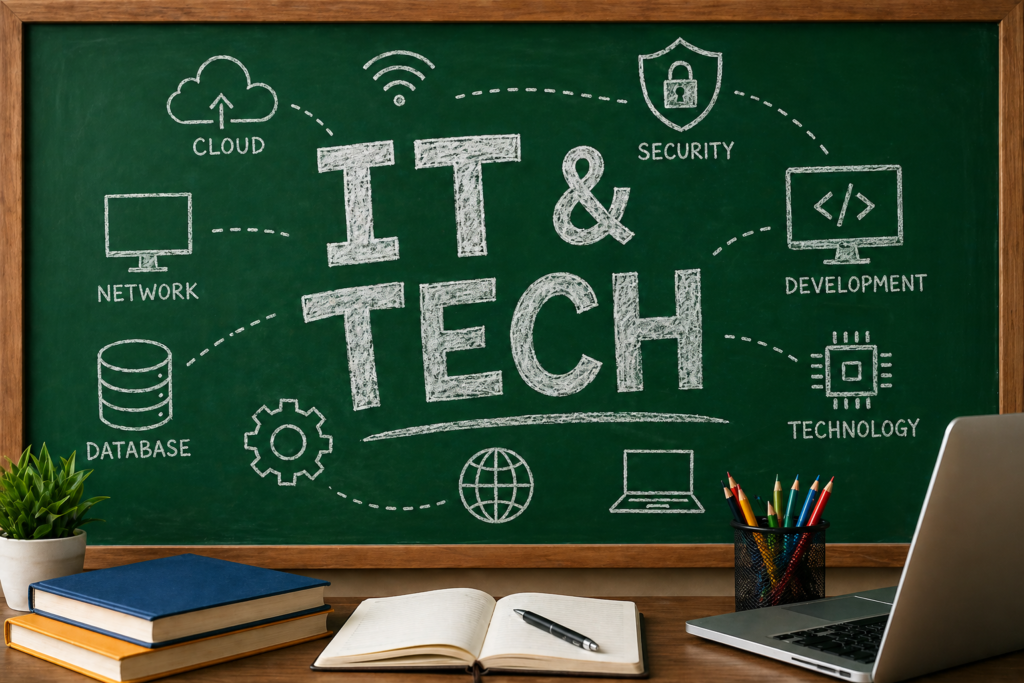
  • IT and Tech Services: The Invisible Engine Behind Modern Businesses

    IT and Tech Services: The Invisible Engine Behind Modern Businesses

    Most people don’t think much about technology when everything is working properly.

    You open a website, place an order, attend a video meeting, send a payment, or store files online — and it all feels normal. Fast. Easy. Almost automatic.

    But behind those simple everyday actions, there’s a huge world of IT and tech services quietly making things work.

    And honestly, modern businesses would struggle without them.

    Today, technology is no longer something companies use only for “technical work.” It affects almost every part of business life — communication, customer service, security, sales, marketing, operations, remote work, and decision-making.

    Even small businesses now rely on digital systems in ways they didn’t a decade ago.

    A local café may use cloud billing software. A clothing store may sell products through Instagram and an e-commerce website. A clinic may manage patient records digitally. A startup may run its entire business remotely using online collaboration tools.

    Technology has become deeply woven into daily business operations.

    And the interesting part is this:

    When technology works well, nobody really notices it.

    But when systems fail, websites crash, payments stop working, or data gets leaked, suddenly everyone realizes how important good IT services really are.

    In this guide, we’ll explore IT and tech services in a simple, practical, and human way — without overly technical explanations or robotic language.


    What Are IT and Tech Services? :

    At its core, IT and tech services simply help businesses use technology effectively.

    That’s it.

    These services support the systems, tools, software, and digital infrastructure businesses rely on every day.

    Some common examples include:

    • Website development
    • Cloud computing
    • Cybersecurity
    • Mobile app development
    • Technical support
    • Software development
    • Data storage
    • AI tools
    • IT consulting
    • Network management

    Most businesses use several of these services at the same time, even if customers never see them directly.

    For example:

    • When you reset a password through email, IT systems are involved.
    • When you stream a video meeting smoothly, cloud technology is working.
    • When your online payment goes through securely, cybersecurity tools are protecting your information.
    • When a customer support chatbot responds instantly, AI systems are helping behind the scenes.

    Technology has quietly become part of everyday business life.


    Why Businesses Depend So Much on Technology Today :

    A few years ago, many companies could still operate with minimal technology.

    Now, that’s becoming harder and harder.

    Customers expect fast websites, instant communication, online support, secure payments, and smooth digital experiences. People are used to convenience now.

    And businesses have adapted around those expectations.

    Technology helps companies stay organized, efficient, competitive, and connected.

    Without it, even simple tasks can become slow and frustrating.


    Technology Helps Businesses Save Time :

    One of the biggest reasons businesses invest in IT services is simple:

    Time.

    Without technology, employees spend hours doing repetitive manual work.

    Things like:

    • Organizing files
    • Updating spreadsheets
    • Sending invoices
    • Managing inventory manually
    • Responding to repetitive customer questions
    • Tracking information by hand

    Technology automates many of these tasks so teams can focus on more meaningful work.

    And honestly, most employees prefer that.

    Nobody enjoys spending half the day fixing avoidable technical problems or handling repetitive admin tasks.


    Managed IT Services: The People Quietly Keeping Everything Running :

    Not every business can afford a large in-house technology department.

    That’s why managed IT services have become so popular.

    A managed IT provider basically acts like an external technology team for the business.

    They handle things like:

    • System monitoring
    • Technical support
    • Software updates
    • Network management
    • Data backups
    • Cybersecurity
    • Troubleshooting

    The goal is not just fixing problems after they happen.

    The real value comes from preventing issues before they interrupt the business.

    That proactive support can save companies a lot of stress, downtime, and unexpected costs.


    Cloud Computing Changed Business Forever :

    There’s a good chance you already use cloud technology every day without even thinking about it.

    When you upload files to Google Drive, attend a Zoom meeting, or collaborate through Microsoft 365, you’re using cloud services.

    Cloud computing allows businesses to access software, files, and systems online instead of relying only on physical office servers.

    And honestly, it completely changed how modern businesses operate.


    Why Businesses Love Cloud Technology :

    People Can Work From Anywhere :

    One of the biggest advantages of cloud systems is flexibility.

    Employees can access work files, attend meetings, and collaborate from almost anywhere with an internet connection.

    That became especially important as remote and hybrid work grew worldwide.


    It Reduces Hardware Costs :

    Businesses no longer need massive physical infrastructure for everything.

    Cloud systems allow companies to scale resources based on their needs.

    That often saves money and reduces maintenance headaches.


    Collaboration Feels Easier :

    Multiple employees can work on the same files in real time.

    Teams stay connected more easily, even when working from different cities or countries.


    Data Protection Improves :

    Major cloud providers invest heavily in backups, monitoring, and security systems.

    For many businesses, cloud storage is actually safer than relying entirely on local computers.


    Helpful Learning Resources :

    Cloud and Technology Guides :

    Networking and IT Knowledge :


    Cybersecurity Became a Business Necessity :

    Years ago, cybersecurity was something many small businesses barely thought about.

    Today, that’s changed completely.

    Businesses now store huge amounts of sensitive information digitally:

    • Customer data
    • Payment details
    • Employee records
    • Internal business files
    • Login credentials

    Unfortunately, cybercriminals know that information is valuable.

    And attacks are becoming more sophisticated every year.

    That’s why cybersecurity is no longer optional.

    It’s part of basic business protection now.


    What Cybersecurity Services Actually Do :

    Cybersecurity services help businesses reduce digital risks and protect sensitive information.

    This can include:

    • Blocking suspicious activity
    • Detecting malware
    • Preventing unauthorized access
    • Monitoring systems for threats
    • Protecting networks
    • Securing cloud systems

    Some common cybersecurity tools include:

    Firewalls :

    These filter potentially dangerous traffic before it reaches systems.

    Multi-Factor Authentication :

    This adds an extra verification step during logins.

    Antivirus and Threat Detection :

    These tools help identify harmful software and unusual activity.

    Data Encryption :

    Encryption keeps information protected even if data gets intercepted.


    Software Development Helps Businesses Build Around Their Own Needs :

    Every business operates differently.

    That’s why many companies eventually need software designed specifically for their workflow instead of relying entirely on generic tools.

    Software development services can help create:

    • Websites
    • Mobile applications
    • Customer portals
    • Booking systems
    • Inventory platforms
    • Business dashboards
    • E-commerce solutions

    Custom software gives businesses more flexibility and control.

    Instead of adjusting the business around software limitations, the software is built around the business itself.


    Mobile Apps Changed Customer Expectations :

    People spend a huge amount of time on smartphones now.

    So naturally, businesses want to meet customers where they already are.

    Mobile apps have become important for industries like:

    • Shopping
    • Healthcare
    • Banking
    • Food delivery
    • Education
    • Fitness
    • Entertainment

    A smooth app experience can strengthen customer loyalty and improve convenience.

    But users also expect apps to feel fast and simple.

    If something feels confusing or slow, people usually leave quickly.

    That’s why user experience matters just as much as technology itself.


    Artificial Intelligence Is Becoming Part of Everyday Business :

    A lot of businesses are already using AI tools, even if customers don’t always realize it.

    For example:

    • Chatbots answering support questions
    • Recommendation systems suggesting products
    • AI tools analyzing customer behavior
    • Fraud detection systems in banking
    • Smart automation handling repetitive work

    AI isn’t replacing human thinking completely.

    But it is helping businesses work faster, automate repetitive tasks, and process information more efficiently.

    And honestly, businesses are still exploring what AI can truly do long term.


    IT Consulting Helps Businesses Make Smarter Technology Decisions :

    Technology changes quickly.

    Sometimes businesses know they need upgrades or better systems, but they’re unsure where to start.

    That’s where IT consultants help.

    They guide businesses through decisions related to:

    • Cloud migration
    • Security improvements
    • Infrastructure planning
    • Software selection
    • Digital transformation
    • Technology strategy

    A good consultant doesn’t just recommend expensive tools.

    They help businesses choose solutions that actually fit their goals, workflow, and budget.


    Data Has Become One of the Most Valuable Business Assets :

    Businesses generate enormous amounts of data every single day.

    Website traffic, customer behavior, sales reports, marketing campaigns, and operational metrics all create information.

    The challenge is understanding what that information actually means.

    That’s where analytics tools become valuable.

    Data analytics helps businesses understand:

    • What customers want
    • Which products perform best
    • What marketing works
    • Where users leave websites
    • Which areas need improvement

    Companies that understand their data often make better decisions.


    Technology Is Reshaping Every Industry :

    Technology isn’t limited to software companies anymore.

    Almost every industry depends on IT services today.

    Healthcare :

    Hospitals use telemedicine platforms, digital records, and smart monitoring systems.

    Education :

    Online learning changed how students access education worldwide.

    Retail :

    Modern shopping depends heavily on e-commerce systems and digital payments.

    Finance :

    Banks rely on cybersecurity, online transactions, and fraud prevention tools.

    Manufacturing :

    Factories now use automation, smart sensors, and connected systems to improve production.

    Even traditional industries are becoming more technology-driven every year.


    Remote Work Changed Business Technology Forever :

    Remote work became much more common over the last few years.

    That shift forced businesses to rethink communication and collaboration completely.

    Cloud systems, video meetings, and online project management suddenly became essential tools instead of optional conveniences.

    Businesses now rely heavily on platforms like:

    • Zoom
    • Slack
    • Microsoft Teams
    • Google Workspace
    • Cloud storage systems

    Without reliable IT support, remote work can quickly become frustrating and inefficient.


    Technology Also Comes With Challenges :

    Even though technology offers incredible benefits, it also creates challenges.

    Rapid Change :

    Technology evolves extremely fast, and businesses sometimes struggle to keep up.

    Cybersecurity Risks :

    Digital threats continue becoming more advanced.

    High Costs :

    Large digital transformation projects can require major investments.

    Skill Shortages :

    Finding experienced technology professionals isn’t always easy.

    And honestly, some businesses also adopt too many tools too quickly without clear planning.

    Technology works best when it solves real business problems — not when it’s used simply because something feels trendy.


    Choosing the Right IT Service Provider Matters :

    A good technology partner can reduce stress and help businesses grow more confidently.

    A poor one can create endless frustration.

    Businesses should look for providers with:

    • Strong communication
    • Reliable support
    • Good security practices
    • Industry experience
    • Transparent pricing
    • Scalable solutions

    The best IT providers don’t just repair technical issues.

    They help businesses prepare for the future.


    Digital Transformation Is Really About People :

    Many people think digital transformation is only about installing new software.

    But honestly, it’s more about improving experiences.

    Sometimes businesses simply want:

    • Faster communication
    • Better customer service
    • Easier collaboration
    • Smarter workflows
    • More flexibility
    • Less wasted time

    Technology is just the tool helping make those improvements possible.


    The Future of IT and Tech Services :

    Technology will continue evolving rapidly over the next few years.

    Some major trends shaping the future include:

    AI Automation :

    More businesses will automate repetitive work.

    Smarter Cybersecurity :

    Security systems will become more intelligent and predictive.

    Internet of Things (IoT) :

    Connected devices will improve monitoring and automation.

    Edge Computing :

    Faster local data processing will improve performance.

    Sustainable Technology :

    Businesses are becoming more focused on energy-efficient systems and greener digital infrastructure.

    The companies that adapt thoughtfully — without blindly chasing every trend — will likely stay ahead long term.


    Internal Links :

    You can connect this blog with related content on your website such as:


    External Resources :


    Frequently Asked Questions (FAQ) :

    What are IT and tech services? :

    IT and tech services help businesses manage technology systems, cybersecurity, software, cloud infrastructure, and digital operations.


    Why are IT services important today? :

    They improve efficiency, reduce downtime, strengthen security, and support better customer experiences.


    What is cloud computing? :

    Cloud computing allows businesses to access files, systems, and software through the internet instead of relying only on physical hardware.


    How does cybersecurity help businesses? :

    Cybersecurity protects businesses from hacking, malware, phishing attacks, and data theft.


    What are managed IT services? :

    Managed IT services involve outsourcing technical management and support to professional technology providers.


    Conclusion :

    Technology has quietly become one of the most important parts of modern business life.

    From cybersecurity and cloud computing to AI and software development, IT and tech services help businesses stay efficient, connected, secure, and competitive.

    And the interesting thing is this:

    Most people only notice technology when something breaks.

    But when businesses run smoothly, customers stay happy, employees collaborate easily, and operations remain secure, strong IT services are usually working quietly in the background.

    As the digital world continues evolving, businesses that invest in the right technology solutions will likely adapt faster and grow more confidently in the years ahead.

    Because today, technology isn’t just supporting business growth anymore.

    In many ways, it has become the foundation of it.

    ☎️ 919967940928

    🌐 https://aibuzz.net/
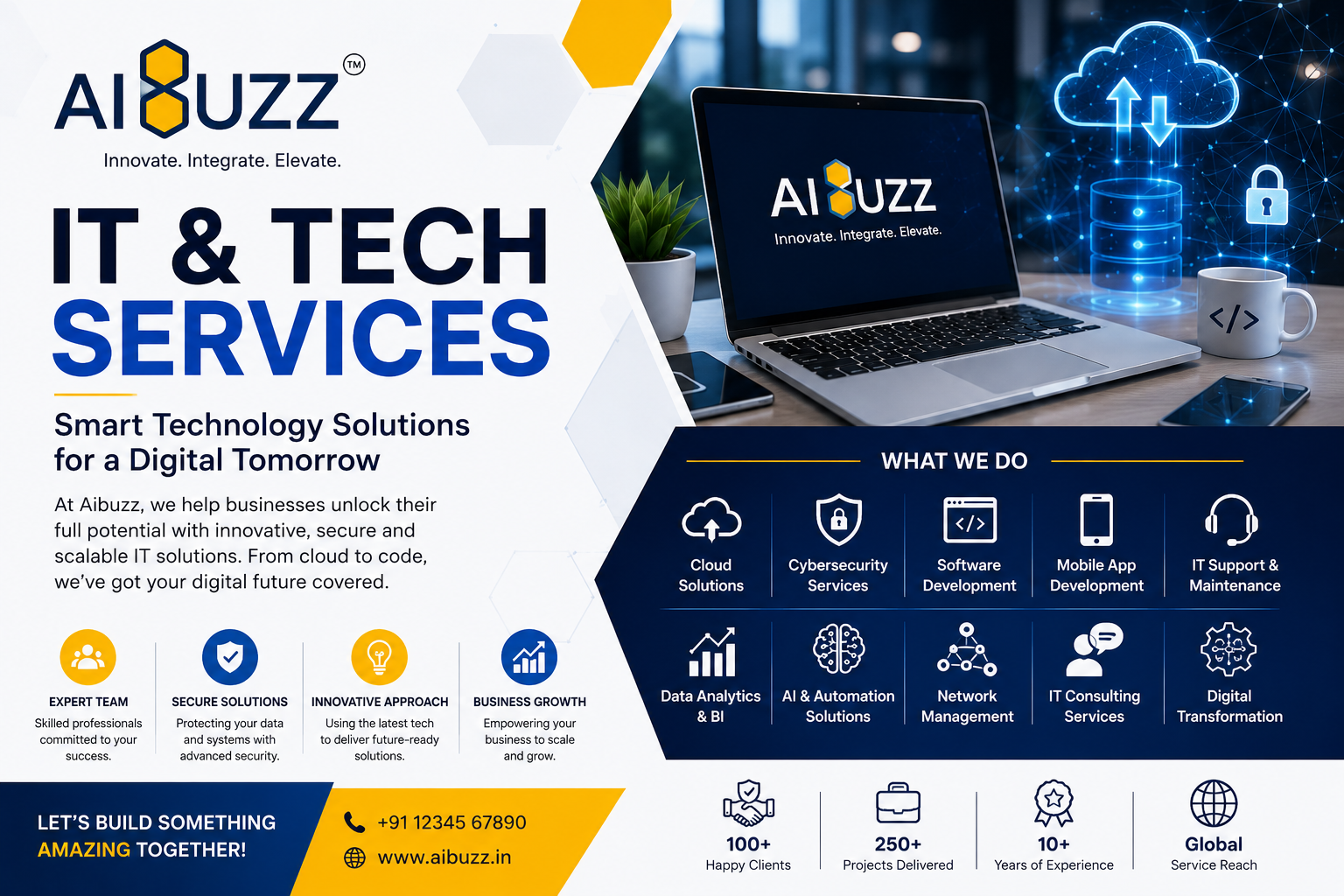
  • IT and Tech Services: The Quiet Force Behind Every Successful Business

    IT and Tech Services: The Quiet Force Behind Every Successful Business

    Introduction

    Most people don’t think about IT and tech services until something stops working.

    The internet goes down.
    A website crashes.
    Customer data disappears.
    A payment system fails.

    Suddenly, technology becomes everyone’s problem.

    But when everything runs smoothly, we barely notice the systems working quietly in the background.

    That’s the interesting thing about technology today—it has become so deeply connected to our lives that we expect it to work perfectly all the time.

    From small local businesses to global brands like Apple, Google, and Microsoft, every company depends on IT and tech services in some way.

    And honestly, modern business would struggle to survive without them.

    Whether it’s communicating with customers, protecting sensitive data, managing teams remotely, or running online stores, technology is now at the center of everything.

    This blog is not going to overwhelm you with complicated technical jargon.

    Instead, we’ll talk about IT and tech services in a simple, practical, and human way—what they are, why they matter, how businesses use them, and why they’ve become one of the most valuable investments any company can make.


    What Are IT and Tech Services? :

    Let’s Keep It Simple

    IT and tech services are basically the systems and support that help businesses use technology properly.

    That includes things like:

    • Websites
    • Software
    • Cloud storage
    • Cybersecurity
    • Technical support
    • Data management
    • Mobile apps
    • Business automation

    In simple words, these services help businesses stay organized, connected, secure, and efficient.

    Think of it like this:

    A business without technology today is like trying to drive a car without an engine.

    You might move a little… but not very far.


    Why IT Services Matter More Than Ever :

    Because Customers Expect Speed

    People are impatient now.

    If a website takes too long to load, users leave.
    If online payments fail, customers lose trust.
    If support replies take days, people move to competitors.

    Technology directly affects customer experience.

    And customer experience affects business growth.


    Because Businesses Run on Data :

    Every click, payment, order, email, and interaction creates data.

    That data helps businesses understand:

    • What customers want
    • Which products perform best
    • Where money is being wasted
    • How to improve services

    Without proper IT systems, managing all that information becomes messy very quickly.


    Because Security Is a Serious Issue :

    Cyberattacks are no longer “big company problems.”

    Small businesses get targeted too.

    Hackers don’t really care about the size of your company. They care about weak systems.

    That’s why cybersecurity has become one of the most important parts of IT services today.


    Different Types of IT and Tech Services :

    1. Managed IT Services :

    Like Having a Full Tech Team Without Hiring One

    A lot of businesses don’t want the stress of managing technical systems themselves.

    So instead, they hire companies that specialize in IT support.

    Organizations like IBM and Accenture help businesses manage their technology infrastructure professionally.

    These services often include:

    • System monitoring
    • Technical support
    • Software updates
    • Network management
    • Security maintenance

    It’s basically like having a technology safety net.


    2. Cloud Computing Services :

    The Way Businesses Store Data Has Completely Changed

    Years ago, businesses stored everything on physical computers or servers.

    If those systems failed, important files could disappear instantly.

    Now, cloud platforms like:

    • Amazon Web Services
    • Google Cloud
    • Microsoft Azure

    allow businesses to store data online securely.


    Why Businesses Love Cloud Technology :

    Access From Anywhere

    Teams can work remotely without problems.

    Better Collaboration

    Employees can work together in real time.

    Flexibility

    Storage and systems can scale as businesses grow.

    Lower Costs

    Businesses don’t always need expensive physical infrastructure anymore.

    Cloud computing made remote work and digital collaboration much easier than before.


    3. Cybersecurity Services :

    Digital Protection Matters More Than People Realize

    Most businesses store sensitive information online:

    • Customer data
    • Payment details
    • Employee records
    • Business documents

    Without strong security systems, that information becomes vulnerable.

    Cybersecurity services help protect businesses from:

    • Hackers
    • Malware
    • Phishing attacks
    • Data theft
    • Ransomware

    Common Cybersecurity Solutions :

    Firewalls

    Block suspicious activity.

    Antivirus Software

    Protect devices from harmful programs.

    Multi-Factor Authentication

    Adds extra login protection.

    Data Encryption

    Keeps information secure.

    Backup Systems

    Helps recover data if something goes wrong.


    The Cost of Ignoring Security :

    One cyberattack can damage:

    • Finances
    • Customer trust
    • Brand reputation
    • Business operations

    And sometimes, recovery takes years.

    That’s why businesses are investing heavily in cybersecurity today.


    4. Software Development Services :

    Sometimes Businesses Need Custom Solutions

    Every business works differently.

    And sometimes, ready-made software just doesn’t fit properly.

    That’s where software development comes in.

    Developers create custom tools designed specifically for business needs.


    Common Types of Software Development :

    Business Websites

    Professional online presence.

    Mobile Applications

    Apps for customers and internal teams.

    E-commerce Platforms

    Online stores with payment systems.

    CRM Systems

    Customer management tools.

    Internal Dashboards

    Systems that help businesses manage operations efficiently.


    Why Custom Software Helps :

    Custom tools often:

    • Save time
    • Reduce manual work
    • Improve organization
    • Increase productivity
    • Create better customer experiences

    Good software removes unnecessary friction from everyday work.


    5. IT Consulting Services :

    Technology Decisions Can Be Expensive

    Choosing the wrong systems can waste huge amounts of money and time.

    That’s why many businesses work with IT consultants.

    These experts help companies:

    • Build digital strategies
    • Improve systems
    • Upgrade infrastructure
    • Reduce security risks
    • Plan future technology investments

    Sometimes, the right advice can prevent very costly mistakes.


    6. Artificial Intelligence and Automation :

    AI Is Changing Business Faster Than Expected

    Artificial intelligence used to feel futuristic.

    Now it’s becoming normal.

    Companies like OpenAI are helping businesses automate tasks and improve decision-making using AI technology.


    How Businesses Use AI Today :

    Chatbots

    Answer customer questions instantly.

    Data Analysis

    Find patterns and trends faster.

    Automation

    Reduce repetitive manual tasks.

    Recommendation Systems

    Personalize customer experiences.


    Why AI Matters :

    Businesses are realizing something important:

    AI doesn’t replace human creativity—it helps people work faster and smarter.

    That’s why AI adoption is growing across almost every industry.


    Benefits of IT and Tech Services :

    Better Efficiency :

    Technology automates repetitive work and saves time.


    Improved Customer Experience :

    Fast systems create smoother customer interactions.


    Stronger Security :

    Businesses can better protect sensitive information.


    Easier Communication :

    Modern tools improve collaboration between teams.


    More Flexibility :

    Cloud systems allow businesses to adapt quickly.


    Faster Growth :

    Technology makes scaling much easier.


    Industries That Depend on IT Services :

    Healthcare :

    Hospitals use technology for:

    • Patient records
    • Online consultations
    • Medical systems

    Finance :

    Banks depend heavily on:

    • Secure transactions
    • Fraud detection
    • Real-time processing

    Retail and E-commerce :

    Online stores need:

    • Payment systems
    • Inventory management
    • Customer analytics

    Education :

    Schools and universities use:

    • Online learning platforms
    • Virtual classrooms
    • Digital collaboration tools

    Challenges Businesses Still Face :

    Technology Changes Very Fast :

    Keeping systems updated can feel overwhelming.


    Cybersecurity Threats Keep Growing :

    Attack methods constantly evolve.


    Skilled IT Professionals Are Expensive :

    Experienced experts are highly demanded worldwide.


    Setup Costs Can Be High :

    Good infrastructure requires investment.

    But poor infrastructure often costs even more later.


    The Future of IT and Tech Services :

    Technology will continue becoming more intelligent, faster, and more connected.

    Businesses are moving toward:

    • AI-powered systems
    • Smarter automation
    • Advanced cybersecurity
    • Faster cloud infrastructure
    • Data-driven decision-making

    The companies that adapt early usually gain the biggest advantages.


    Internal Linking Ideas :

    To improve SEO and website engagement, link this blog to:

    Example:
    “Explore our Cybersecurity Solutions to protect your business from modern digital threats.”


    External Resources :

    Useful trusted resources:


    Rich Media Ideas for Better Engagement :

    To make this blog more engaging, add:

    Visual content helps readers understand technical topics much faster.


    Frequently Asked Questions (FAQs) :

    1. What are IT and tech services? :

    They are services that help businesses manage technology, software, security, networks, and digital operations.


    2. Why are IT services important? :

    They improve efficiency, security, communication, and customer experience.


    3. What is cloud computing? :

    Cloud computing allows businesses to store and access data online instead of relying only on physical systems.


    4. Why is cybersecurity important for businesses? :

    It helps protect sensitive business and customer information from cyber threats.


    5. Do small businesses need IT services? :

    Absolutely. Even small businesses rely heavily on technology today.


    6. How does AI help businesses? :

    AI helps automate tasks, analyze data, improve efficiency, and enhance customer experiences.


    Conclusion :

    The interesting thing about IT and tech services is that most people only notice them when they fail.

    But when they work properly, they quietly help businesses:

    • Grow faster
    • Stay secure
    • Serve customers better
    • Operate more efficiently

    Technology is no longer just a “support system.”

    It has become the foundation of modern business itself.

    And as the world becomes even more digital, businesses that invest in strong IT solutions today will be much better prepared for tomorrow.

    ☎️ 919967940928

    🌐 https://aibuzz.net/
  • 7 Powerful Reasons Why IT Disaster Recovery Services Are Essential for Modern Businesses

    7 Powerful Reasons Why IT Disaster Recovery Services Are Essential for Modern Businesses

    In today’s hyper-connected and digitally dependent world, downtime is more than just an inconvenience—it can be catastrophic. Whether it’s due to a cyberattack, hardware failure, or a natural disaster, the repercussions of data loss or system downtime can impact your operations, revenue, and reputation. That’s where IT disaster recovery services come into play—acting as the shield that protects your business from chaos.

    This blog explores seven powerful reasons why IT disaster recovery services are not just important—but essential. We’ll also uncover how these services integrate with broader IT and tech strategies to future-proof businesses. Whether you run a startup or a Fortune 500 company, this comprehensive guide will help you understand the core benefits of disaster recovery and why every business needs it.


    1. Business Continuity Without Interruption

    Imagine your company is hit by a sudden server crash during peak hours. With no backup systems or recovery plans in place, you may lose customers, data, and credibility. IT disaster recovery services ensure business continuity, helping you bounce back swiftly without losing operational momentum.

    These services implement structured recovery plans that minimize downtime. Whether your data resides in the cloud, on-premises, or in hybrid environments, recovery protocols kick in immediately, keeping your team connected and clients satisfied.

    Power Insight: According to IBM, businesses lose an average of $9,000 per minute of unplanned downtime. Disaster recovery isn’t a luxury—it’s a necessity.


    2. Cybersecurity Threat Protection

    Ransomware and cyberattacks have become increasingly common. One breach can lock you out of critical data, halt operations, or even permanently destroy assets. IT disaster recovery services act as a cybersecurity net, providing automated backupscloud recovery, and real-time threat detection.

    If an attack occurs, your recovery team can restore clean, uncompromised data—often within minutes. This not only ensures operational continuity but also shields your business from the long-term damage associated with data loss and customer distrust.

    Fun Fact: Over 60% of small businesses go out of business within six months of a cyberattack. Recovery solutions help prevent this fate.


    3. Compliance and Legal Assurance

    For industries such as finance, healthcare, or e-commerce, data compliance isn’t optional. Failing to meet legal regulations can lead to hefty fines and lawsuits. IT disaster recovery services help organizations maintain compliance with GDPRHIPAASOX, and other data protection laws.

    With auditable backup systems and data integrity checks, you ensure that your business always meets the standards—while maintaining customer trust.

    Positive Outcome: When audits arise, having a robust disaster recovery plan already in place makes compliance reporting a breeze.


    4. Minimized Financial Losses

    Downtime costs more than just productivity—it affects every aspect of your business. From lost sales and delayed projects to compensation claims and increased IT labor costs, the financial hit can be significant.

    IT disaster recovery services offer cost-effective plans tailored to your company size and sector. Instead of investing in expensive in-house infrastructure, businesses can subscribe to scalable, cloud-based solutions that are monitored and managed by experts.

    Case Study Highlight: A retail firm reduced potential revenue loss by 85% using real-time recovery solutions during a server outage in 2024.


    5. Protection from Natural Disasters

    Floods, fires, earthquakes—nature is unpredictable, but your data doesn’t have to be. Traditional on-site data centers are vulnerable to physical damage. With cloud-integrated IT disaster recovery services, your critical systems and files remain safe in geographically dispersed, secure environments.

    Redundant backups and failover solutions ensure rapid recovery even if your entire building is affected.

    Did You Know? A staggering 93% of businesses without disaster recovery that suffer a major data loss shut down within one year.


    6. Faster Response with Automation and AI

    Modern IT disaster recovery services are driven by automation and AI. Intelligent systems can detect anomalies and launch failover protocols automatically—sometimes before the actual disruption becomes noticeable.

    These services offer:

    • Automated data backups
    • Self-healing networks
    • AI-driven incident diagnostics
    • Predictive analytics for failure prevention

    The ability to respond instantly helps businesses maintain their competitive edge and safeguard mission-critical processes.

    WordPress Bonus: If your site runs on WordPress and experiences a crash or hack, automated recovery ensures minimal SEO and traffic loss, keeping your online presence stable.


    7. Peace of Mind for Stakeholders

    From CEOs and CTOs to customers and investors, everyone wants to know their data and systems are secure. A solid IT disaster recovery services plan boosts stakeholder confidence by showing you’re prepared for the worst-case scenario.

    It demonstrates:

    • Technical maturity
    • Risk management awareness
    • Commitment to customer trust

    In board meetings or client pitches, being able to point to a tested, certified disaster recovery solution strengthens your brand reputation and boosts investor confidence.


    Short Paragraph: IT and Tech – The Foundation of Modern Business

    IT and tech form the backbone of every modern enterprise. From communication tools and databases to customer portals and payment systems, digital infrastructure is what keeps businesses alive. Investing in services like disaster recovery is not just about protection—it’s about empowering your tech to deliver seamless performanceinnovation, and resiliencein every scenario.


    Best Practices for Implementing IT Disaster Recovery Services

    If you’re just starting or improving your recovery strategy, consider these essential tips:

    1. Conduct Risk Assessments
      Identify vulnerabilities in your IT infrastructure—both digital and physical.
    2. Set Recovery Time Objectives (RTO) and Recovery Point Objectives (RPO)
      Define how quickly your systems must recover and how much data loss is acceptable.
    3. Use Cloud Backup and Redundancy
      Diversify your recovery points across various cloud regions.
    4. Test Regularly
      Simulations and audits ensure that your disaster recovery plan actually works.
    5. Create a Team Response Plan
      Assign roles and responsibilities in case of an emergency to avoid confusion.

    Emerging Trends in Disaster Recovery for 2025

    Looking ahead, here are three trends shaping IT disaster recovery services:

    • AI-Powered Recovery Tools
      Predictive algorithms will diagnose failures before they happen.
    • Zero Downtime Recovery
      Real-time failover systems are becoming more affordable for SMBs.
    • Blockchain for Backup Verification
      Immutable logs ensure backup data integrity and compliance tracking.

    Power Tip: Aligning your disaster recovery with emerging tech trends will give your business a future-proof edge.


    Conclusion: Secure Your Digital Future with AIBuzz

    In a world driven by data and tech, the value of IT disaster recovery services cannot be overstated. From ensuring uninterrupted business operations to protecting against cyber threats and natural disasters, these services are indispensable for modern businesses. If your organization is looking to adopt or upgrade its disaster recovery capabilities, now is the time.

    AIBuzz offers top-tier IT and tech services, including advanced IT disaster recovery services tailored to your industry needs. With a deep understanding of security, automation, and real-time response, AIBuzz helps businesses build resilient digital ecosystems.

    We also specialize in big data analytics, helping companies extract meaningful insights even during unexpected disruptions. Trust AIBuzz to safeguard your data, enhance your IT infrastructure, and power your success in 2025 and beyond.

  • Mastering Android Software Development: A Complete Guide to Building Apps in 2025

    Mastering Android Software Development: A Complete Guide to Building Apps in 2025

    In today’s ever-evolving technological landscape, Android software development remains one of the most sought-after skills for developers. With over 2.5 billion active Android devices worldwide, the Android ecosystem is a vibrant and lucrative market for tech professionals. Whether you’re an aspiring Android developer or a business looking to build a top-notch app, understanding Android software development is crucial for success. In this comprehensive guide, we’ll cover everything you need to know about Android app development, the best practices, tools, and how to stay ahead of the curve in 2025.

    What is Android Software Development?

    Mastering Android Software Development: A Complete Guide to Building Apps in 2025

    Android software development involves creating applications for devices running the Android operating system, primarily smartphones and tablets. The development process encompasses several stages, including app design, coding, testing, and deployment. Android apps are typically built using Java, Kotlin, or C++ programming languages, with Java being the most commonly used language for Android development until Kotlin gained popularity in recent years.

    Why Choose Android Development?

    With Android holding the largest global market share for mobile operating systems, it’s clear why Android app development is a profitable career choice. Here are a few key reasons why developers choose Android software development:

    1. Large User Base: As the most popular mobile operating system worldwide, Android offers developers access to a massive audience. This wide reach allows businesses to increase their app’s exposure and potential for success.
    2. Flexibility and Customization: Android is an open-source operating system, which means developers can customize their apps more freely. This flexibility makes it easier to create unique and feature-rich apps tailored to different user needs.
    3. Rich Development Tools: Android development offers a variety of development tools, such as Android Studio, Firebase, and libraries that simplify the coding process and enhance app functionality.
    4. Monetization Opportunities: Android offers several monetization strategies, including in-app purchases, ads, and premium app models, enabling developers to generate revenue from their apps.
    5. Cross-Platform Development: With frameworks like Flutter and React Native, developers can create apps that run on both Android and iOS, reaching even larger audiences and cutting down development time.

    Key Concepts in Android Development

    To effectively develop Android apps, developers must understand the core concepts and tools that power Android software development. Here are the foundational components:

    1. Programming Languages for Android Development

    • Java: Java was the official programming language for Android for many years. Even though Kotlin has taken over as the preferred language, Java remains a vital language to know for Android developers, especially for maintaining legacy apps.
    • Kotlin: Introduced by JetBrains, Kotlin is now the preferred language for Android development, with its concise syntax and improved safety features over Java. It’s interoperable with Java and has rapidly gained popularity since Google declared it the official language for Android.
    • C++: Android also supports C++ for developing high-performance applications, especially those that require intensive processing, such as games or apps involving advanced graphics.

    2. Android Studio

    Android Studio is the official Integrated Development Environment (IDE) for Android app development. Built on JetBrains’ IntelliJ IDEA, Android Studio is packed with features to enhance productivity, such as:

    • Code editor: Features like code completion, real-time error checking, and refactoring tools improve the development process.
    • Layout editor: Helps you create responsive UIs with drag-and-drop functionality.
    • Emulator: Test apps on various Android device types without needing physical devices.
    • Performance analysis tools: Profiling tools to monitor app performance and make improvements.

    3. Android SDK

    The Android Software Development Kit (SDK) is a set of tools and libraries that allow developers to build Android apps. It includes:

    • APIs for Android components: To interact with device hardware like cameras, GPS, and sensors.
    • Android libraries: These provide pre-built functionality to speed up development.
    • Debugging tools: Essential for troubleshooting app performance and bugs.

    4. UI/UX Design in Android Development

    One of the most crucial aspects of Android development is designing an intuitive and engaging user interface (UI) and providing a smooth user experience (UX). Developers need to follow Android’s Material Design principles, which prioritize usability, accessibility, and aesthetic appeal.

    Material Design ensures that your app’s UI is consistent across different Android devices and provides guidelines on how to design elements such as buttons, navigation, colors, and typography.

    Best Practices for Android App Development

    Building an Android app is an intricate process that involves several best practices to ensure optimal performance, security, and user experience:

    1. Focus on Performance

    Optimizing the app’s performance is crucial to retaining users. Slow apps with high loading times tend to push users away. To improve performance:

    • Minimize background processes: Ensure that your app consumes minimal battery and processing power.
    • Use efficient data management: Store data in databases like SQLite or use cloud storage for better access speed.
    • Optimize images and resources: Compress images and minimize app size for faster loading.

    2. Secure Your App

    Security is a key concern in Android app development. Implementing strong encryption, secure communication protocols, and ensuring data protection is essential. Consider these strategies:

    • Use HTTPS for all communications.
    • Encrypt sensitive data using industry-standard encryption methods.
    • Follow Android’s security guidelines to protect users from threats such as malware.

    3. Test Extensively

    Testing is critical to ensure your app performs well under different scenarios. Common testing techniques include:

    • Unit testing: Ensures individual components work correctly.
    • UI testing: Simulates user interactions to check app functionality.
    • Load testing: Verifies how the app performs under high traffic.

    Automated testing tools like Espresso and UI Automator can speed up the testing process.

    4. Keep User Experience in Mind

    Users expect seamless and responsive apps. Focus on:

    • Simple navigation: Ensure users can easily navigate through the app.
    • Clear instructions: Provide intuitive prompts and tooltips.
    • Smooth animations: Use animations sparingly to avoid performance issues while enhancing usability.

    Conclusion

    Android software development is an exciting and rewarding field, with constant updates and evolving trends. By staying up-to-date with the latest programming languages, tools, and best practices, developers can create innovative and high-performing apps that resonate with users.

    As businesses look for skilled developers to build powerful Android apps, it’s essential to partner with the right team of experts. That’s where aibuzz comes in. At aibuzz, we specialize in end-to-end software development services, including custom Android app development, IT solutions, and digital transformation. With our experienced team of developers, designers, and project managers, we help businesses create cutting-edge Android applications that provide value, improve engagement, and enhance customer satisfaction.

    If you’re looking for a trusted partner to bring your Android app vision to life, aibuzz is here to help. Reach out to us today to discuss your project and take the first step toward building a successful mobile app.


    By following this guide, you’re not only on your way to mastering Android software development, but you’re also empowered to create apps that stand out in the competitive mobile market of 2025!