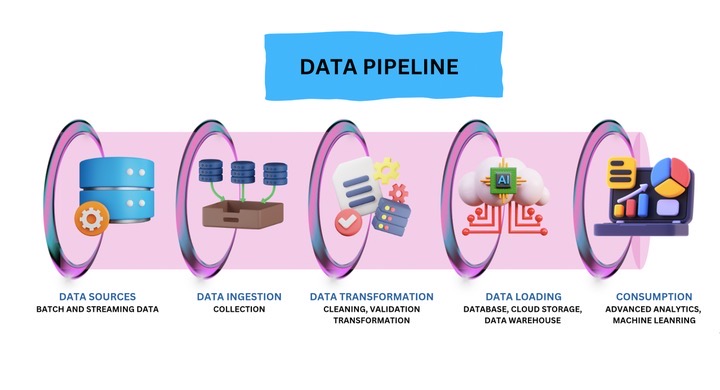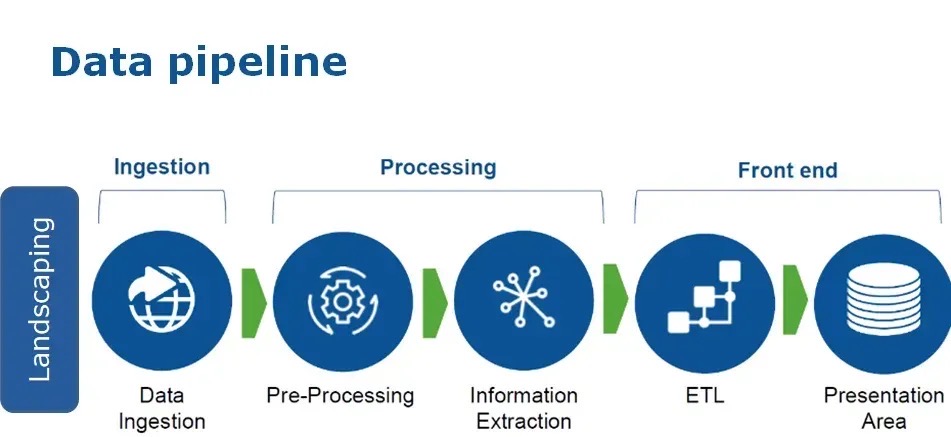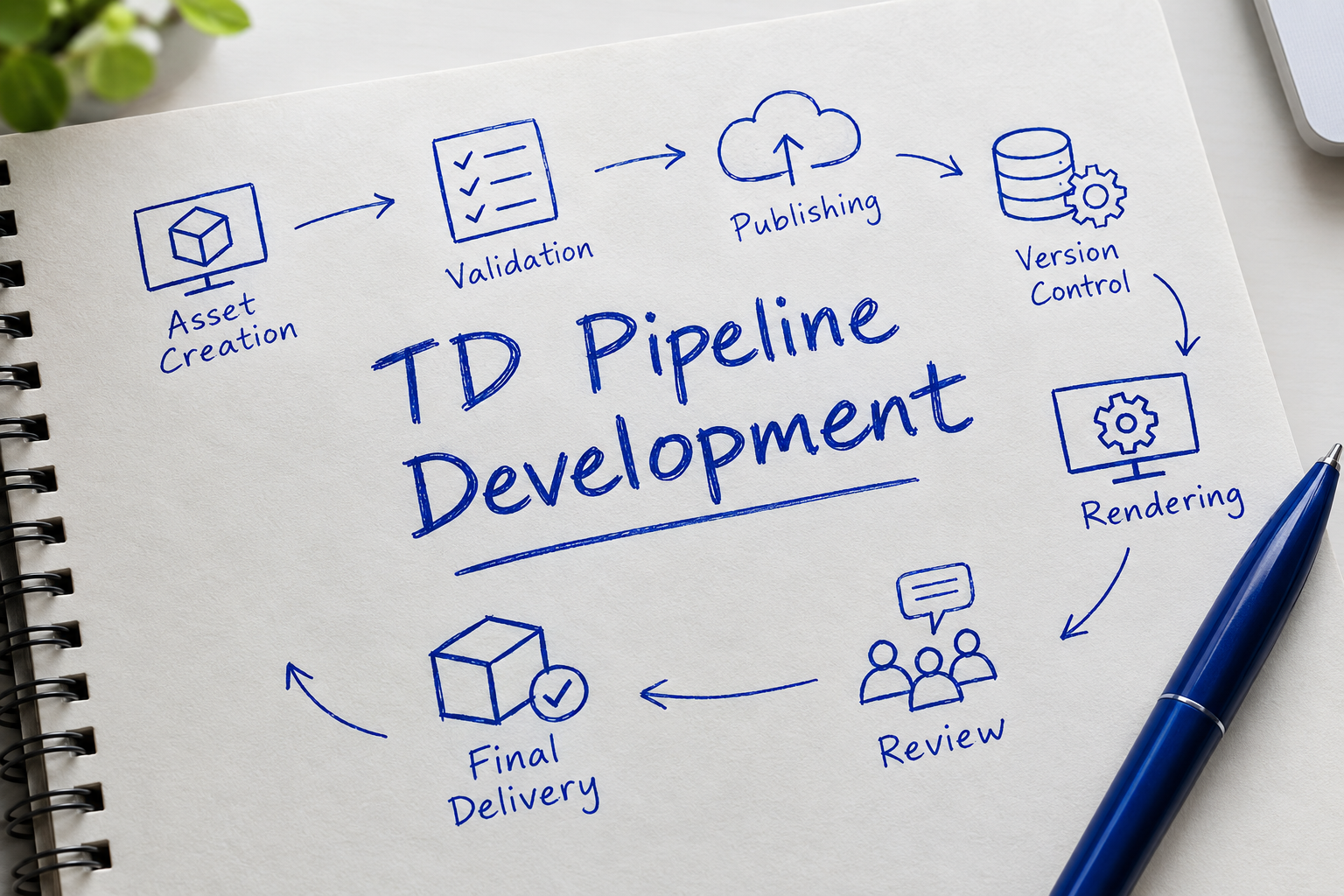
Modern digital production is rarely handled by one person or one software application. Whether a team is creating visual effects, animation, games, virtual production content, or advertising assets, dozens of tasks need to work together smoothly. When those tasks are connected through an organized technical workflow, production becomes easier to manage and scale.
This is where TD Pipeline Development becomes important.
TD Pipeline Development focuses on creating tools, automation, workflows, and integrations that connect different stages of a digital production process. A well-designed pipeline helps artists spend more time creating while technical systems take care of repetitive processes, file management, publishing, rendering, and other production tasks.
What Is TD Pipeline Development?
TD Pipeline Development is the process of designing, developing, and maintaining technical pipelines that support creative production teams.
Here, TD commonly refers to Technical Director. A Pipeline TD works between creative professionals and software engineering teams. Their job is to understand how artists work and then develop technical solutions that make those workflows more efficient.
For example, a production pipeline may connect:
- Asset creation
- Modeling
- Texturing
- Rigging
- Animation
- Simulation
- Lighting
- Rendering
- Compositing
- Review and approval
- Final delivery
Instead of requiring artists to manually move files and perform repetitive tasks at every stage, the pipeline can automate many of these processes.
A pipeline can therefore act as the technical backbone of a production environment.
Why Is TD Pipeline Development Important?
Creative projects often involve large numbers of files, applications, people, and production stages. Without a structured workflow, small problems can quickly become expensive delays.
A well-developed pipeline can help teams maintain consistency while reducing unnecessary manual work.
1. Reduces Repetitive Work
Artists and production teams often perform the same technical actions repeatedly. For example, preparing files, creating folders, renaming assets, exporting versions, or submitting render jobs can consume valuable time.
Automation can handle many of these repetitive activities, allowing creative teams to concentrate on their primary work.
2. Improves Workflow Consistency
A pipeline can establish standard naming conventions, folder structures, publishing procedures, and versioning rules.
This becomes particularly useful when multiple artists or departments are working on the same project.
3. Connects Different Software
Modern production environments rarely depend on a single application. A studio might use Maya, Houdini, Blender, Nuke, Unreal Engine, or other specialized tools.
A Pipeline TD can build integrations that allow these applications and production systems to communicate more effectively.
4. Supports Scalability
A workflow that works for a small team may become difficult to manage when a studio grows.
Pipeline development creates repeatable processes that can be expanded as the number of artists, assets, shots, and projects increases.
Core Components of a TD Pipeline
A TD pipeline is not one single tool. It is usually a collection of interconnected systems and processes.
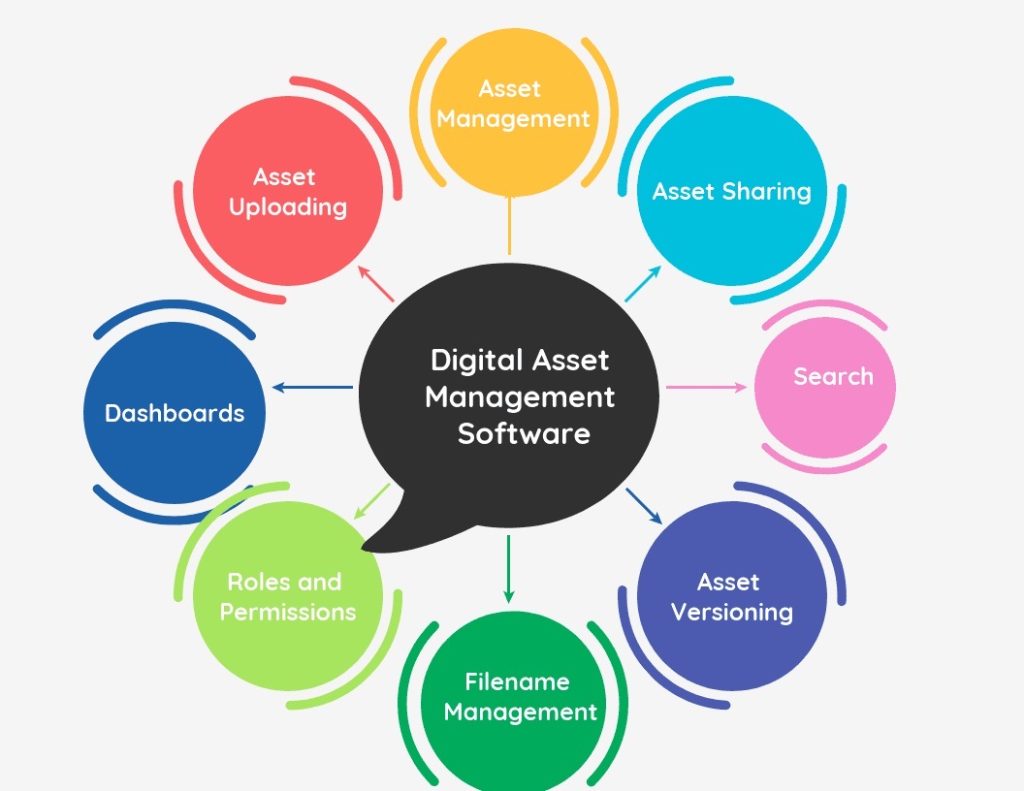
Asset Management
Asset management keeps production files organized and accessible.
A pipeline may define how assets are created, published, updated, archived, and retrieved. Versioning is also important because teams may need to compare or restore earlier versions.
Automation Tools
Automation is one of the most valuable parts of pipeline development.
Custom scripts and tools can automate activities such as:
- File creation
- Asset publishing
- Scene validation
- Exporting
- Render submission
- Version management
- Data transfer
- Status updates
Automation reduces the amount of manual intervention required during production.
Software Integration
Different departments may use different applications. A pipeline can connect these tools so information moves between them in a predictable way.
For example, an asset created in one application may need to move through texturing, animation, rendering, and compositing software.
Rendering and Compute Management
Rendering can require significant computing resources, especially for high-resolution animation and visual effects.
A pipeline can automate render submissions, monitor jobs, organize output, and notify teams when processes are completed or fail.
Review and Approval Systems
Creative teams need to review work at different stages.
A pipeline can connect publishing and review processes so artists can submit work, supervisors can review it, and feedback can be tracked without relying entirely on manual communication.
How Does TD Pipeline Development Work?
Developing a pipeline usually starts by understanding the actual production process rather than immediately writing code.
Step 1: Analyze the Existing Workflow
The first step is to understand how teams currently work.
A Pipeline TD may examine:
- Where files are stored
- How assets are named
- Which applications are used
- Where errors commonly occur
- Which tasks are repetitive
- How teams exchange information
This analysis helps identify opportunities for automation.
Step 2: Design the Pipeline
Once the workflow is understood, the technical architecture can be planned.
This includes deciding how applications, databases, storage systems, automation scripts, and production tracking tools will interact.
Step 3: Develop Tools and Integrations
The next stage involves building the actual pipeline components.
Depending on the production environment, this can include Python tools, plugins, APIs, desktop utilities, validation systems, publishing tools, or custom interfaces.
Step 4: Test the Pipeline
Testing is essential because a pipeline failure can affect multiple departments.
Teams can test individual tools first and then evaluate how the complete workflow behaves under realistic production conditions.
Step 5: Deploy and Maintain
A pipeline is not a one-time project. Production requirements change, software versions are updated, and new tools are introduced.
Continuous maintenance helps keep the pipeline reliable and compatible with the evolving production environment.
TD Pipeline Development and Automation
Automation is closely connected with modern software engineering practices. In software development, CI/CD pipelines automate activities such as building, testing, and deploying applications. IBM describes CI/CD pipelines as automated workflows that help streamline software delivery.
The same general principle applies to creative production pipelines: repetitive and predictable processes can be converted into structured automated workflows.
For example, instead of manually checking every asset before publishing, a validation tool can automatically check naming conventions, missing files, required attributes, or other predefined conditions.
This creates a more predictable production environment.
Common Technologies Used in TD Pipeline Development
The technology stack depends on the studio and project requirements.
Common technologies can include:
- Python for automation and pipeline tools
- Git or Perforce for version control
- APIs for application integration
- Databases for production information
- Cloud storage for scalable data management
- Render management systems for distributing rendering tasks
- Maya, Houdini, Blender, Nuke, and Unreal Engine for creative production
- Jira or production tracking platforms for task management
Modern development platforms can also provide ready-made automation capabilities. For example, GitHub Actions can automate build, test, and deployment workflows.
Best Practices for TD Pipeline Development
A successful pipeline should be useful to artists as well as technically reliable.
Keep the Artist Experience Simple
Artists should not need to understand every technical detail behind the pipeline. Tools should have clear interfaces and straightforward workflows.
Build for Flexibility
Production requirements can change quickly. Avoid designing a system that only works for one specific project when future projects may have different requirements.
Use Clear Naming and Versioning
Consistent naming conventions make assets easier to locate, identify, and manage.
Include Validation
Automated validation can identify problems before they move further through production.
Document the Pipeline
Documentation helps new team members understand how tools work and gives existing teams a reference when troubleshooting problems.
Monitor Performance
Pipeline tools should be monitored and improved as projects grow. A workflow that works with a few hundred assets may require optimization when thousands of assets are involved.
Common Challenges in TD Pipeline Development
Pipeline development can also introduce challenges.
One common issue is legacy software. Older applications may not provide modern APIs or integration options.
Another challenge is changing production requirements. Creative projects can evolve quickly, requiring technical teams to adapt tools and workflows.
User adoption is another important factor. Even technically advanced tools may fail to deliver their intended value if they make everyday work unnecessarily complicated.
Security and access management also become increasingly important when pipelines handle valuable intellectual property or cloud-based production data.
The Future of TD Pipeline Development
TD pipelines are increasingly moving toward automation, cloud workflows, real-time production, and more connected production environments.
Studios are also working with increasingly complex digital assets and larger teams. As a result, pipeline systems need to manage not only files but also metadata, dependencies, versions, approvals, and automated processes.
The broader DevOps principle of combining automation and collaboration is also relevant to technical production environments. IBM describes DevOps as an approach that combines development and operations while emphasizing automation and collaboration.
In the future, TD Pipeline Development is likely to become even more closely connected with cloud infrastructure, procedural workflows, real-time engines, machine learning, and intelligent automation.
How Businesses Can Benefit from TD Pipeline Development
For studios and production companies, investing in pipeline development can create a more organized technical foundation.
Instead of repeatedly solving the same workflow problems for individual projects, organizations can build reusable systems that support multiple productions.
The result can be a workflow where:
Artists create → Pipeline validates → Automation processes → Teams review → Production delivers
This structured approach can make complex production environments easier to operate and maintain.
Internal Links :
External Links :
Frequently Asked Questions (FAQ)
What is TD Pipeline Development?
TD Pipeline Development is the process of creating technical tools, automation, integrations, and workflows that help creative production teams manage assets and move work efficiently between production stages.
What does a Pipeline TD do?
A Pipeline TD develops and maintains tools and workflows that connect artists, software applications, production systems, and technical infrastructure.
Which industries use TD pipelines?
TD pipelines are commonly used in VFX, animation, gaming, virtual production, motion graphics, advertising, and other digital content industries.
What programming language is commonly used for pipeline development?
Python is widely used for pipeline automation because it can be integrated with many creative applications and used to build custom production tools.
Can TD pipelines be cloud-based?
Yes. Depending on project requirements, parts of a production pipeline can use cloud storage, cloud computing, remote collaboration systems, and cloud-based production infrastructure.
Why is automation important in TD Pipeline Development?
Automation reduces repetitive manual work, creates consistent processes, and can help teams identify workflow problems earlier.
Conclusion
TD Pipeline Development is an important part of modern digital production. It connects creative workflows with technology, automation, software integration, asset management, rendering, and production tracking.
A good pipeline does not replace creative professionals. Instead, it removes unnecessary technical friction so artists and production teams can focus on their work.
As VFX, animation, gaming, virtual production, advertising, and other digital industries continue to evolve, flexible and well-maintained pipelines can provide the technical foundation needed to manage increasingly complex workflows.
For organizations working with large creative teams or demanding digital production processes, TD Pipeline Development can be an important step toward building a more connected, automated, and scalable production environment.
📞 Contact: 919967940928
🌐 Visit: http://aibuzz.net