Big Data has revolutionized how businesses extract value from information. Yet, the traditional process—waiting on IT teams for reports and dashboard updates—has often delayed decision-making. Enter Big Data Self-Service, a powerful approach that gives business users the freedom to access, analyze, and visualize data independently.
As organizations evolve to be more agile and data-driven, the adoption of big data self-service tools has skyrocketed. This shift is not just technological—it’s cultural. It’s about empowering employees, streamlining operations, and fostering innovation across departments.
In this blog, we’ll explore the 9 empowering benefits of big data self-service, why it’s crucial in 2025, and how businesses can make the most of this transformation.
What is Big Data Self-Service?
Big data self-service refers to systems and platforms that allow non-technical users—like marketers, HR professionals, sales teams, and executives—to access large-scale data sets, run queries, and generate insights without relying heavily on IT or data analysts.
These tools often feature user-friendly dashboards, drag-and-drop analytics, intuitive data visualizations, and AI-powered suggestions, making data exploration faster and more efficient.
Why Big Data Self-Service is a Game Changer
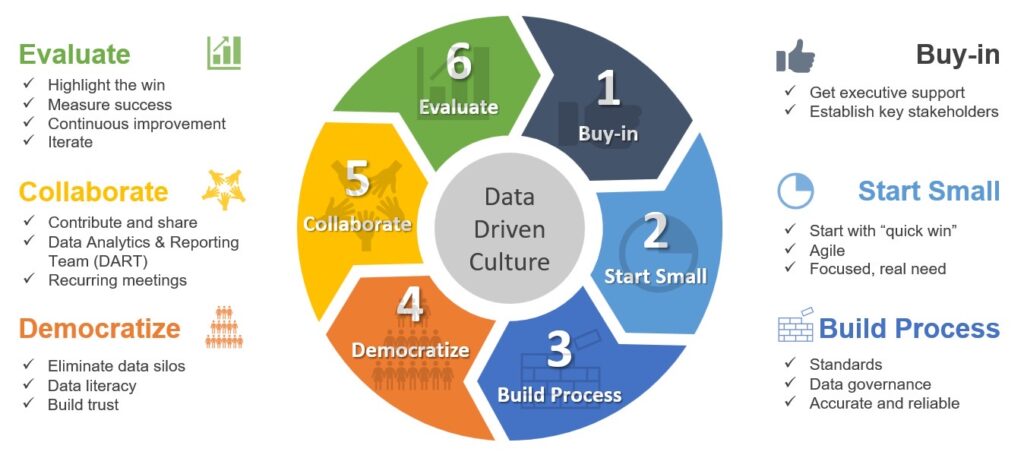
In a world of real-time decisions and hyper-competition, waiting for insights is no longer an option. Companies need instant data access and the ability to act on it. Big data self-service tools democratize data access, enabling every department to become insight-driven.
Let’s explore the 9 empowering benefits:
1. Faster Decision-Making
With big data self-service platforms, decision-makers no longer depend on IT to retrieve reports. They can explore data, spot trends, and act in real time. This significantly reduces turnaround time and supports proactive business strategies.
Imagine a retail manager spotting a sudden dip in regional sales and immediately adjusting promotional efforts—without logging a support ticket or waiting hours for a report.
2. Enhanced Productivity Across Teams
Teams spend less time requesting reports and more time analyzing, strategizing, and implementing. By giving employees tools to extract insights themselves, organizations improve overall productivity and reduce data bottlenecks.
Self-sufficiency fuels momentum. Teams no longer hit roadblocks waiting for analysis—they become the analysts.
3. Cost Efficiency and IT Optimization
While implementing big data self-service tools requires upfront investment, the long-term savings are substantial. IT teams are freed from repetitive reporting tasks and can focus on more critical infrastructure and innovation.
Businesses save on labor costs, boost IT morale, and get a higher return on data infrastructure.
4. Data Democratization and a Stronger Data Culture
Data democratization means giving data access to everyone—not just analysts and engineers. Big data self-service platforms encourage a data-first mindset, where every employee can confidently explore, question, and utilize data to back their decisions.
This shift builds a powerful data culture, where curiosity and innovation thrive.
5. Improved Data Literacy
As more employees engage with big data self-service tools, their comfort with data increases. They learn how to interpret charts, ask better questions, and draw meaningful conclusions.
Over time, this raises the organization’s collective data IQ, turning basic users into savvy problem-solvers.
6. Real-Time Insights and Dashboards
Big data self-service tools often come equipped with live dashboards and real-time analytics. This means data reflects the current state of business, not yesterday’s news.
Whether it’s website traffic, supply chain logistics, or customer sentiment, decisions can be made based on the latest data—no delay.
7. Reduced Data Silos
Traditionally, different departments often work in isolation, leading to fragmented insights. Big data self-service platforms centralize access and make data more shareable and unified.
This removes silos and promotes cross-functional collaboration, where marketing, sales, and operations align using the same data sets.
8. Customization and Personalization
Modern big data self-service platforms allow users to create personalized dashboards, KPIs, and reports. This customization helps users focus on what matters most to them without the noise.
Each department can tailor the tool to its workflow—marketing might track lead conversion, while finance monitors expense trends.
9. Boosted Innovation and Competitive Edge
When data access is open and easy, employees become innovators. They experiment, test hypotheses, and spot patterns others miss.
This often leads to new ideas, optimized processes, and product improvements, giving businesses a sharp competitive edge in fast-moving markets.
Short Paragraph: What is Software Development?
Software development is the process of designing, building, testing, and maintaining applications and systems that solve problems or deliver value to users. It combines coding, user interface design, and system integration to create functional solutions for businesses and individuals. From web platforms to AI tools and mobile apps, software development underpins much of today’s digital innovation.
Challenges of Big Data Self-Service (And How to Overcome Them)
While big data self-service has massive benefits, it’s not without its hurdles:
- Data Governance: With more users accessing data, the risk of misuse or misinterpretation increases. This can be mitigated with role-based permissions, audit trails, and training.
- Quality and Trust Issues: Users must trust the data. Ensuring data is accurate, clean, and consistent is essential.
- Training and Adoption: Not all employees are data-savvy. Businesses must invest in onboarding programs and tutorials to help teams make the most of self-service tools.
With the right implementation, these challenges can be turned into strengths.
Choosing the Right Big Data Self-Service Platform
When selecting a platform, consider:
- Ease of Use: Does the tool cater to non-technical users?
- Integration: Can it pull data from your existing systems like CRMs, ERPs, and cloud storage?
- Scalability: Can it handle the size and complexity of your data as you grow?
- Security: Does it comply with data protection standards?
- Collaboration Features: Does it allow sharing, commenting, and joint editing of dashboards?
Popular tools in this space include Tableau, Microsoft Power BI, Qlik, and Looker, each offering distinct features to empower your workforce.
The Future of Big Data Self-Service
In 2025 and beyond, AI and natural language processing will supercharge big data self-service tools. Users will be able to ask questions like, “What were our top-performing products last month?” in plain English and get visualized answers in seconds.
Voice-enabled analytics, predictive modeling, and auto-generated insights will soon become standard features, making big data self-service even more intuitive and powerful.
The trend is clear: businesses that adopt and evolve with these platforms will lead the way in innovation and agility.
Conclusion: Big Data Self-Service with aibuzz
Big data self-service is more than just a tech upgrade—it’s a cultural shift toward independence, speed, and smarter decisions. From empowering teams to accelerating business growth, the benefits are transformative.
aibuzz offers robust solutions in big data self-service, helping businesses harness the full potential of their data ecosystems. With expert guidance and cutting-edge technology, we ensure your teams are equipped, your data is secure, and your insights are impactful.
Partner with aibuzz to make your data work for you—not against you.
Leave a Reply