Artificial Intelligence (AI) has moved from being a futuristic idea to becoming part of everyday life. When you unlock a phone with your face, ask a virtual assistant a question, receive a personalized recommendation, or use a chatbot to solve a problem, there is a good chance that AI is working behind the scenes.
But AI is much more than chatbots and smart devices. It is a broad field of technology that allows machines and computer systems to perform tasks that normally require human intelligence, such as learning, recognizing patterns, understanding language, making decisions, and solving problems.
As businesses and individuals continue adopting AI, understanding how it works, where it is used, and what its limitations are has become increasingly important.
What Is Artificial Intelligence?
Artificial Intelligence is a branch of technology that enables computers and machines to simulate aspects of human intelligence. AI systems can process information, identify patterns, learn from data, generate content, and sometimes make decisions or take actions with limited human intervention.
A simple example is a recommendation system. When an online platform suggests a movie, product, or song based on your previous activity, AI may be analyzing patterns in your behavior to make that recommendation.
AI does not necessarily “think” exactly like a human. Instead, different AI systems are designed to perform specific tasks using algorithms, data, models, and computing power.
How Does Artificial Intelligence Work?
At a basic level, AI depends on data and algorithms.
1. Data
AI systems need information to learn patterns. Depending on the application, this could include text, images, audio, numbers, videos, or business records.
The quality of the data matters. Poor, incomplete, or biased data can affect the quality of an AI system’s results.
2. Machine Learning
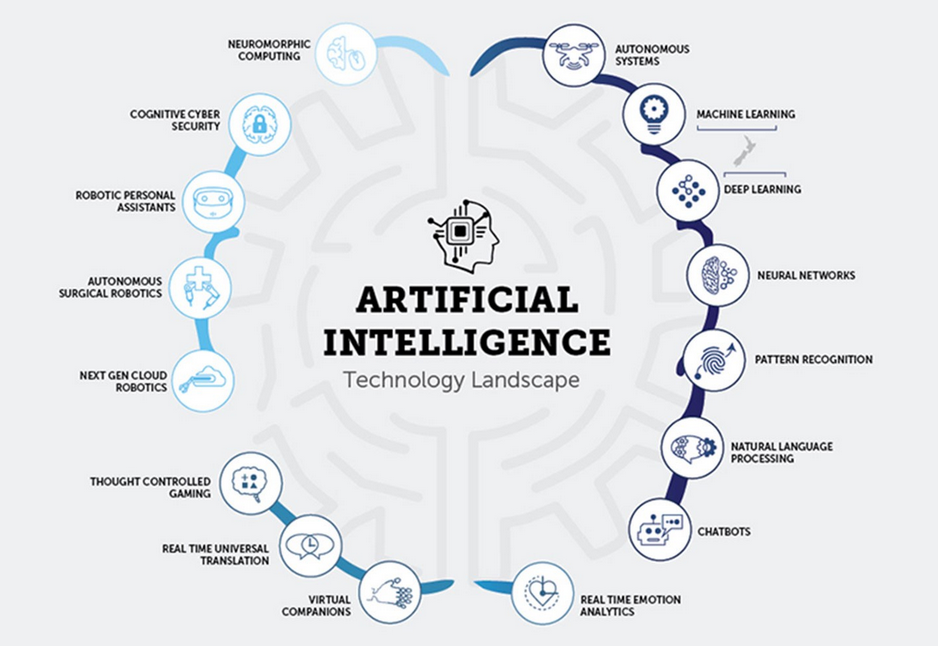
Machine learning is one of the most important areas of AI. Instead of programming every possible response manually, developers can train a system using data so it can identify patterns and make predictions.
For example, a machine-learning system trained with thousands of images can learn to recognize certain objects or characteristics in new images.
3. Deep Learning
Deep learning uses large neural networks with multiple layers to process complex information. It has played an important role in areas such as computer vision, speech recognition, and modern generative AI.
4. Generative AI
Generative AI is a type of AI that can create new content, including text, images, audio, video, and computer code. Its rapid development has made AI more accessible to everyday users and businesses.
A useful way to understand the relationship is that machine learning and deep learning provide important foundations for many modern AI applications, while generative AI focuses on producing new content.
Common Applications of Artificial Intelligence
AI is already being used across many industries. Its applications are not limited to large technology companies.
Healthcare
AI can help healthcare organizations analyze medical information, support research, assist with image analysis, and improve administrative processes. When used in sensitive healthcare environments, however, AI systems require careful validation and human oversight.
Finance
Banks and financial organizations use AI for areas such as fraud detection, risk analysis, customer support, and transaction monitoring. AI can identify unusual patterns in large volumes of financial data much faster than manual analysis.
Marketing and Advertising
AI is changing how businesses understand audiences and create marketing campaigns. It can help analyze customer behavior, personalize recommendations, generate content ideas, and automate parts of campaign management.
For businesses interested in digital growth, combining Artificial Intelligence with a strong digital marketing strategy can create more personalized customer experiences.
Education
AI-powered tools can support personalized learning, language practice, automated feedback, research, and administrative work. Instead of replacing teachers, AI can be used as an additional tool that helps educators save time and support students.
Customer Service
AI chatbots and virtual assistants can answer frequently asked questions, guide customers through basic processes, and provide support outside traditional business hours.
Manufacturing
In manufacturing, AI can help monitor equipment, identify defects, optimize production, and predict when machinery may require maintenance.
Benefits of Artificial Intelligence
The growing adoption of AI is largely driven by its ability to handle large amounts of information and automate repetitive tasks.
Improved Efficiency
AI can process large datasets and perform repetitive activities quickly. This can allow employees to spend more time on tasks that require creativity, communication, and strategic thinking.
Better Decision Support
AI can identify patterns that may be difficult to notice manually. Businesses can use these insights to support forecasting, planning, and operational decisions.
Personalization
From shopping recommendations to digital learning platforms, AI can help create experiences based on individual preferences and behavior.
24/7 Availability
AI-powered systems can operate continuously, making them useful for customer support, monitoring, and other services that need to be available around the clock.
Innovation
AI is also helping organizations explore products and services that were previously difficult or expensive to build. It is becoming a foundation for new approaches to software development, automation, research, and digital experiences.
Challenges and Risks of AI
AI has significant potential, but it is not a magic solution. Responsible implementation is important because AI systems can introduce technical, security, privacy, and social risks.
Data Privacy
AI systems may process large amounts of information. Organizations need to understand what data is being collected, where it is stored, who can access it, and how it is being used.
Bias
AI models can reproduce or amplify patterns present in their training data. If the underlying data is incomplete or biased, the resulting system may produce unfair or inaccurate outcomes.
Incorrect Results
AI-generated answers can sometimes be inaccurate. This is particularly important when AI is used in areas where mistakes can have serious consequences.
Security Risks
AI systems can face cybersecurity threats, while AI-generated content can also be misused. NIST notes that AI security involves concerns related to the confidentiality, integrity, and availability of AI systems and their data.
Lack of Human Oversight
AI should not automatically be trusted with every decision. Human review remains important, especially when decisions affect people’s finances, safety, rights, employment, or health.
NIST’s AI Risk Management Framework encourages organizations to consider trustworthiness throughout the design, development, deployment, evaluation, and use of AI systems.
How Businesses Can Adopt AI Responsibly
Businesses do not need to transform everything overnight. A practical approach is to begin with a specific problem.
First, identify a repetitive or data-heavy process where AI could provide measurable value. Next, evaluate the available data and choose an appropriate AI solution. The system should then be tested before being introduced on a larger scale.
It is also important to establish clear rules around data privacy, security, access, human review, and performance monitoring.
NIST’s AI Risk Management Framework organizes AI risk management around four functions: Govern, Map, Measure, and Manage. It is designed as a voluntary framework to help organizations develop and use AI more responsibly.
This approach is useful because AI adoption should not be viewed only as a technology project. It is also a business, people, security, and governance decision.
The Future of Artificial Intelligence
The future of AI is likely to involve deeper integration into everyday software and business operations. AI assistants may become more capable of handling multi-step tasks, while organizations may use AI agents to automate parts of workflows.
At the same time, the conversation around AI is shifting from simply asking “What can AI do?” to asking “How can we use AI effectively and responsibly?”
That distinction matters. Successful AI adoption will not depend only on having powerful models. It will also depend on good data, thoughtful implementation, cybersecurity, human oversight, and clear business objectives.
Frequently Asked Questions
What is Artificial Intelligence in simple words?
Artificial Intelligence is technology that enables computers and machines to perform tasks associated with human intelligence, such as learning, recognizing patterns, understanding language, and making predictions.
What is the difference between AI and Machine Learning?
AI is the broader field of creating systems that can perform intelligent tasks. Machine learning is a subset of AI in which systems learn patterns from data rather than relying entirely on explicitly programmed rules.
Is Generative AI the same as Artificial Intelligence?
No. Generative AI is a category within the broader AI field. It focuses on creating new content such as text, images, audio, video, and code.
Can AI replace humans?
AI can automate many tasks, but that does not mean it can replace human judgment in every situation. Human creativity, context, empathy, accountability, and decision-making remain important, particularly for complex or high-impact decisions.
Why is responsible AI important?
Responsible AI helps organizations address issues such as accuracy, privacy, security, bias, transparency, and human oversight. These considerations can make AI systems more trustworthy and useful.
Conclusion
Artificial Intelligence is no longer a technology reserved for research laboratories or futuristic movies. It is already influencing how people work, communicate, shop, learn, create, and make decisions.
Its biggest value comes from using technology to solve meaningful problems rather than adopting AI simply because it is popular. Businesses that combine useful AI applications with quality data, strong security, human expertise, and responsible practices are better positioned to gain long-term value from the technology.
AI will continue to evolve, but one thing is already clear: understanding Artificial Intelligence is becoming an important part of understanding the future of technology.
📞 Contact: 919967940928
🌐 Visit: http://aibuzz.net