Introduction
Technology is changing the way people learn, work, communicate, and experience the world. From virtual meetings to interactive training, digital tools are becoming part of everyday life. One technology making these experiences more realistic and engaging is Mixed Reality (MR).
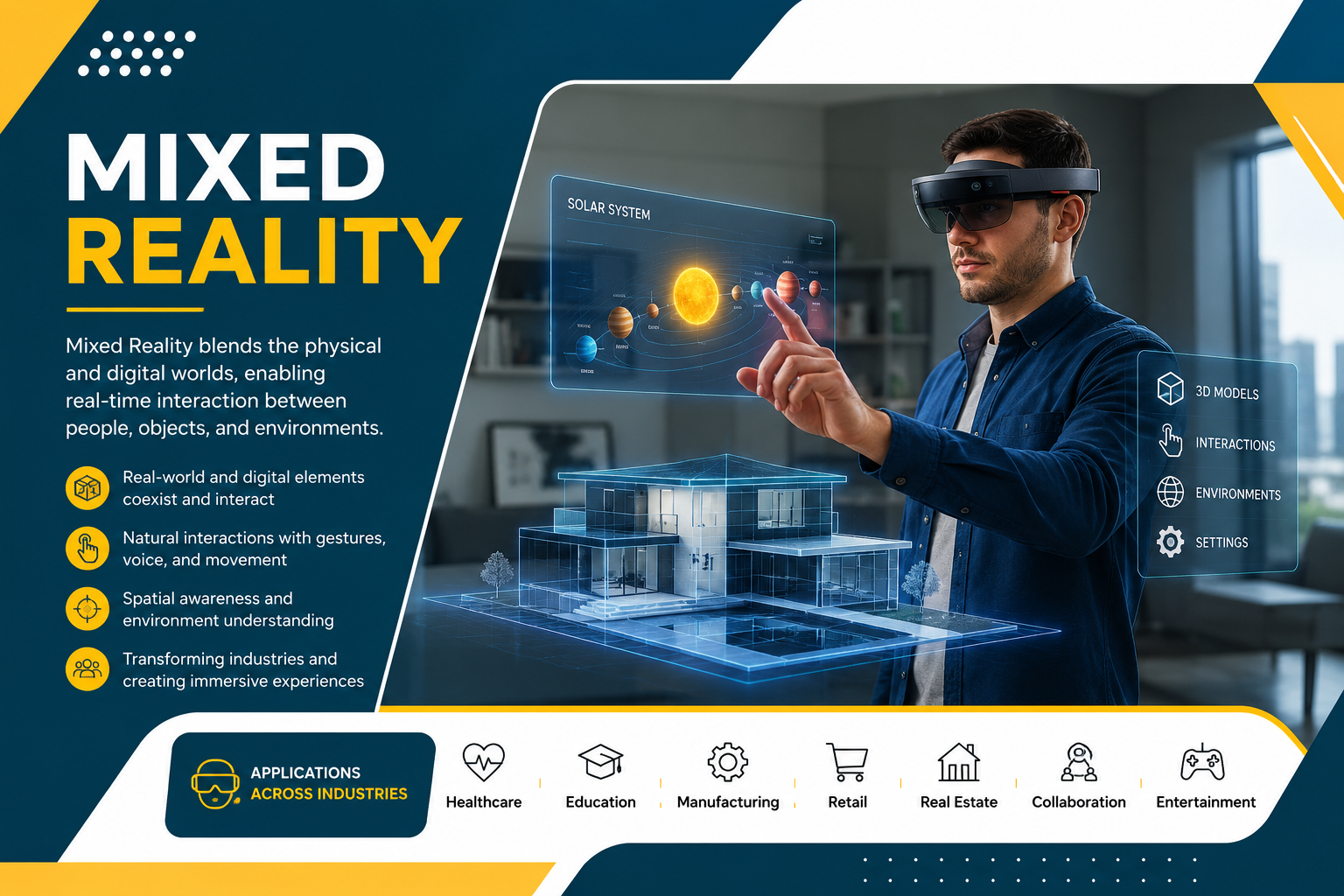
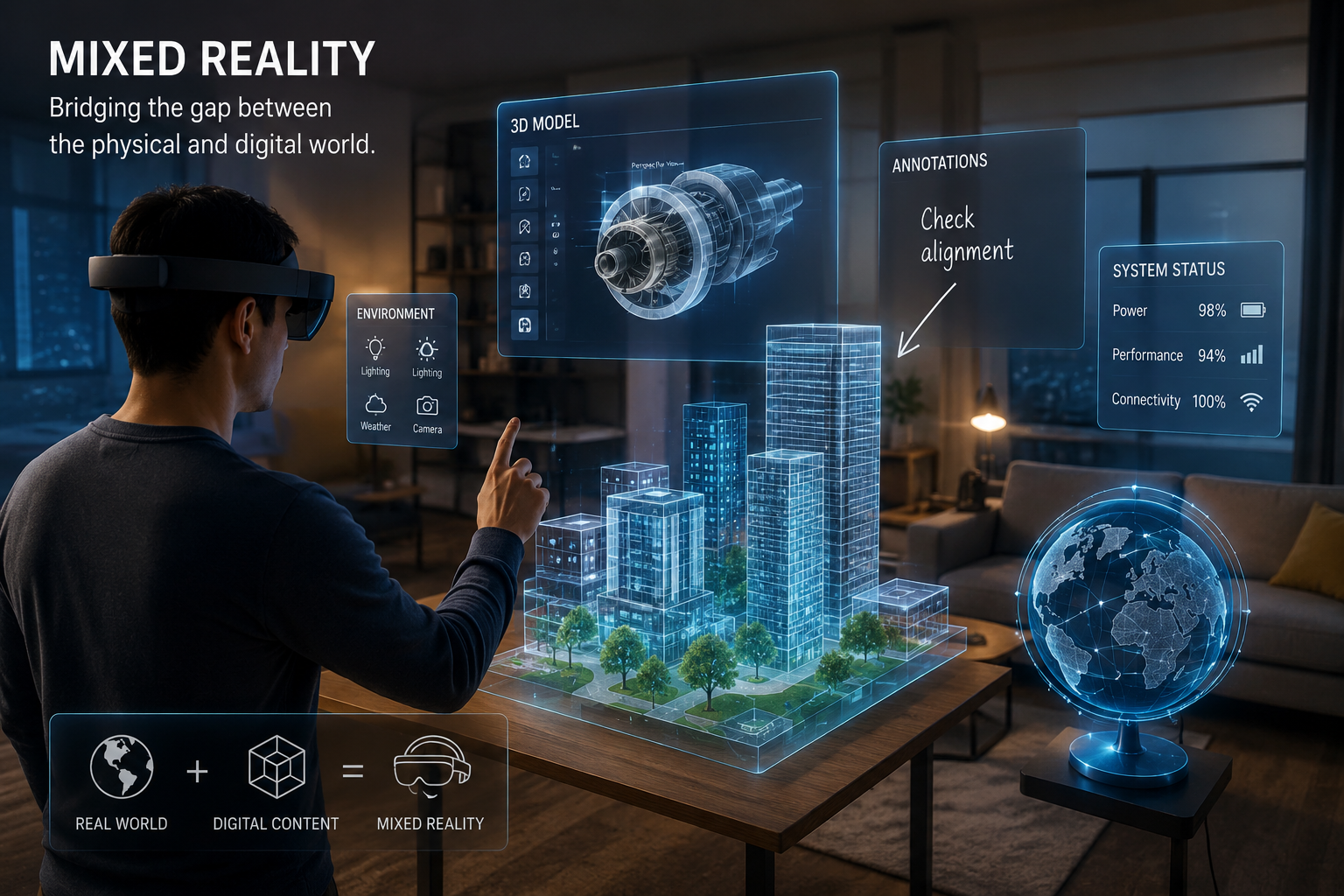
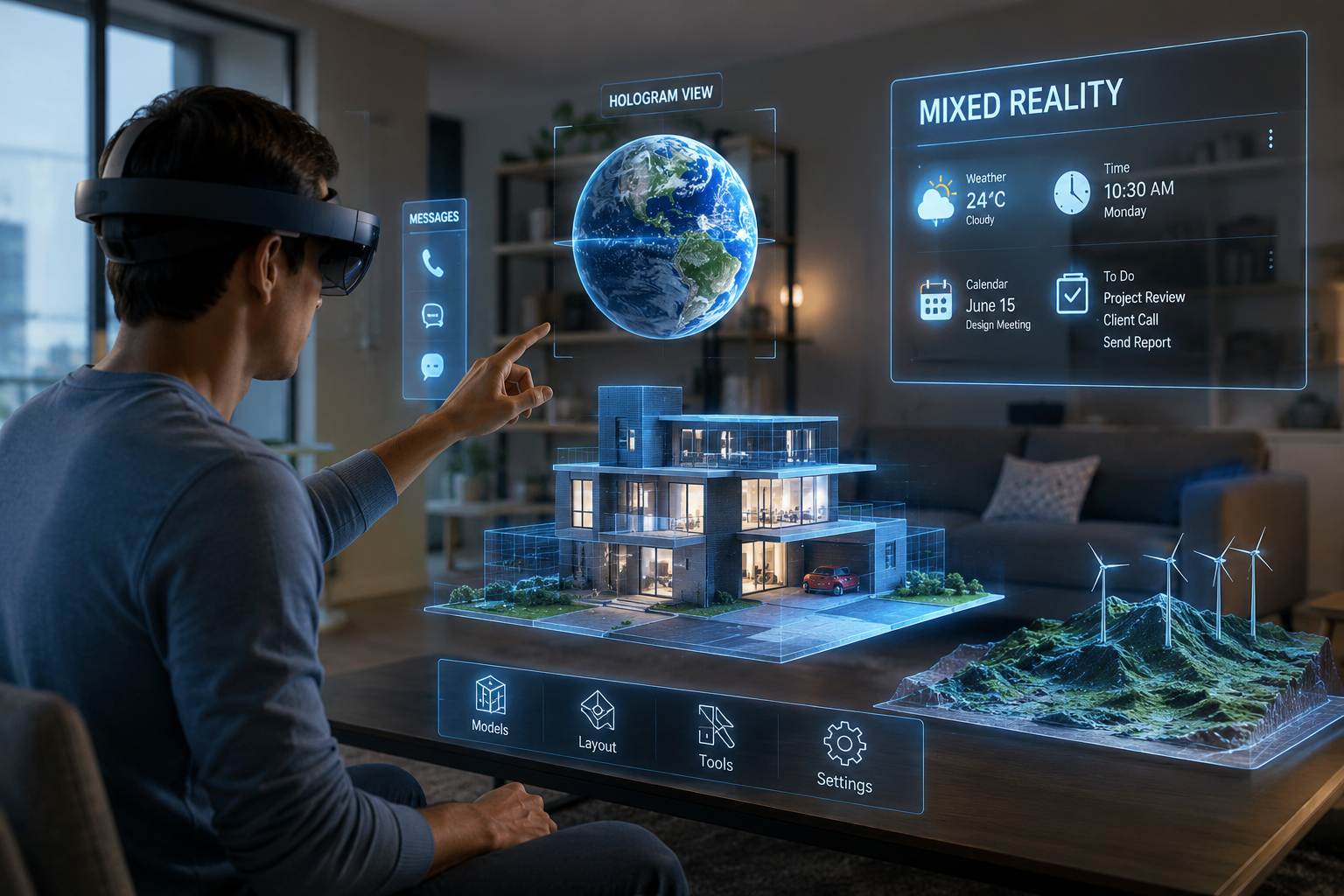
Mixed Reality combines elements of the physical and digital worlds, allowing users to interact with virtual objects in a real environment. Instead of simply looking at a digital image on a screen, users can see and interact with digital content that appears connected to their surroundings.
Today, Mixed Reality has applications in education, healthcare, manufacturing, retail, architecture, and business training. As devices and software continue to improve, MR is creating new opportunities for companies to solve problems, improve collaboration, and deliver better experiences.
In this article, we will explore what Mixed Reality is, how it works, its key benefits, practical applications, challenges, and future possibilities.
What Is Mixed Reality?
Mixed Reality is a technology that blends the physical environment with digital content, such as 3D models, animations, and interactive objects. These digital elements can respond to the user’s movements and surroundings, making the experience feel more natural.
For example, an engineer could view a digital model of a machine directly over the physical equipment. They could inspect individual components, understand how they fit together, and identify potential issues without relying only on drawings or a computer screen.
Unlike traditional digital experiences, Mixed Reality focuses on interaction between real-world surroundings and virtual elements.
Understanding Mixed Reality, Augmented Reality, and Virtual Reality
Although these technologies are related, they offer different experiences.
- Augmented Reality (AR): Adds digital information, such as labels or graphics, to a view of the real world.
- Virtual Reality (VR): Places users inside a computer-generated environment that replaces their normal view of the physical world.
- Mixed Reality (MR): Combines real and digital elements in ways that allow digital objects to interact with or respond to the surrounding environment.
These categories can overlap in modern devices, and the terms are sometimes used differently by manufacturers. However, understanding their general differences helps businesses choose the right technology for their needs.
How Does Mixed Reality Work?
Mixed Reality uses a combination of hardware and software to understand the user’s surroundings and display digital content in the appropriate position.
1. Sensors and Environmental Mapping
MR devices may use cameras, depth sensors, motion sensors, and other tracking technologies to understand nearby objects, surfaces, and movement. This information helps the system position digital content within the physical environment.
2. Spatial Computing
Spatial computing allows digital objects to be placed and manipulated in three-dimensional space. For example, a designer can examine a virtual product from different angles or position a digital model on a real table.
3. Interactive Software
Specialized applications make Mixed Reality useful for specific tasks. These applications may include 3D models, training simulations, product demonstrations, collaboration tools, and real-time data displays.
4. Compatible Devices
Mixed Reality experiences can run on supported headsets, smart glasses, and other compatible devices. The capabilities depend on the hardware, software platform, and type of experience being developed.
Key Benefits of Mixed Reality
Mixed Reality can offer practical benefits when it addresses a clear business or learning need.
Improved Learning and Training
MR makes it possible to practise complex tasks in an interactive environment. Employees can explore equipment, follow digital instructions, and learn procedures without always needing access to a physical training setup.
Better Visualization
Three-dimensional models help people understand products, buildings, machinery, and complex designs. This can make ideas easier to explain than traditional drawings or presentations.
More Effective Collaboration
Teams in different locations can review shared 3D models, discuss designs, and work through problems together. This can support remote collaboration, although the results depend on device access and application quality.
Reduced Training Risks
In suitable situations, MR simulations allow learners to practise procedures before working with real equipment. This can reduce exposure to certain training hazards, but it does not replace necessary safety training or supervised practical experience.
Engaging Customer Experiences
Businesses can use interactive product demonstrations to help customers understand a product’s features, size, design, or functionality before making a purchase.
Real-World Applications of Mixed Reality
Mixed Reality is not limited to entertainment. Its ability to connect digital information with physical environments makes it useful across several industries.
1. Healthcare
Healthcare professionals can use 3D visualizations to study anatomy, explain medical concepts, and support training. MR may also help clinicians understand complex spatial information during selected procedures.
Its use in patient care requires appropriate clinical validation, privacy safeguards, and professional oversight.
2. Education
Schools, colleges, and training institutions can use Mixed Reality to make lessons more interactive. Students may explore a virtual solar system, examine a 3D human heart, or investigate scientific concepts through visual demonstrations.
These experiences can help explain difficult topics, particularly when they complement teachers, practical activities, and other learning materials.
3. Manufacturing and Engineering
Manufacturers can display assembly instructions, inspect digital product models, and support maintenance training through MR applications. Engineers may compare a planned design with physical equipment to understand how components fit together.
When integrated with reliable operational data, these applications can help teams work more efficiently and identify issues earlier.
4. Retail and E-commerce
Retailers can use immersive demonstrations to help shoppers explore products in three dimensions. For example, customers might inspect furniture designs or understand how a product works before purchasing it.
The availability of these experiences depends on the retailer’s application and the customer’s device.
5. Architecture and Construction
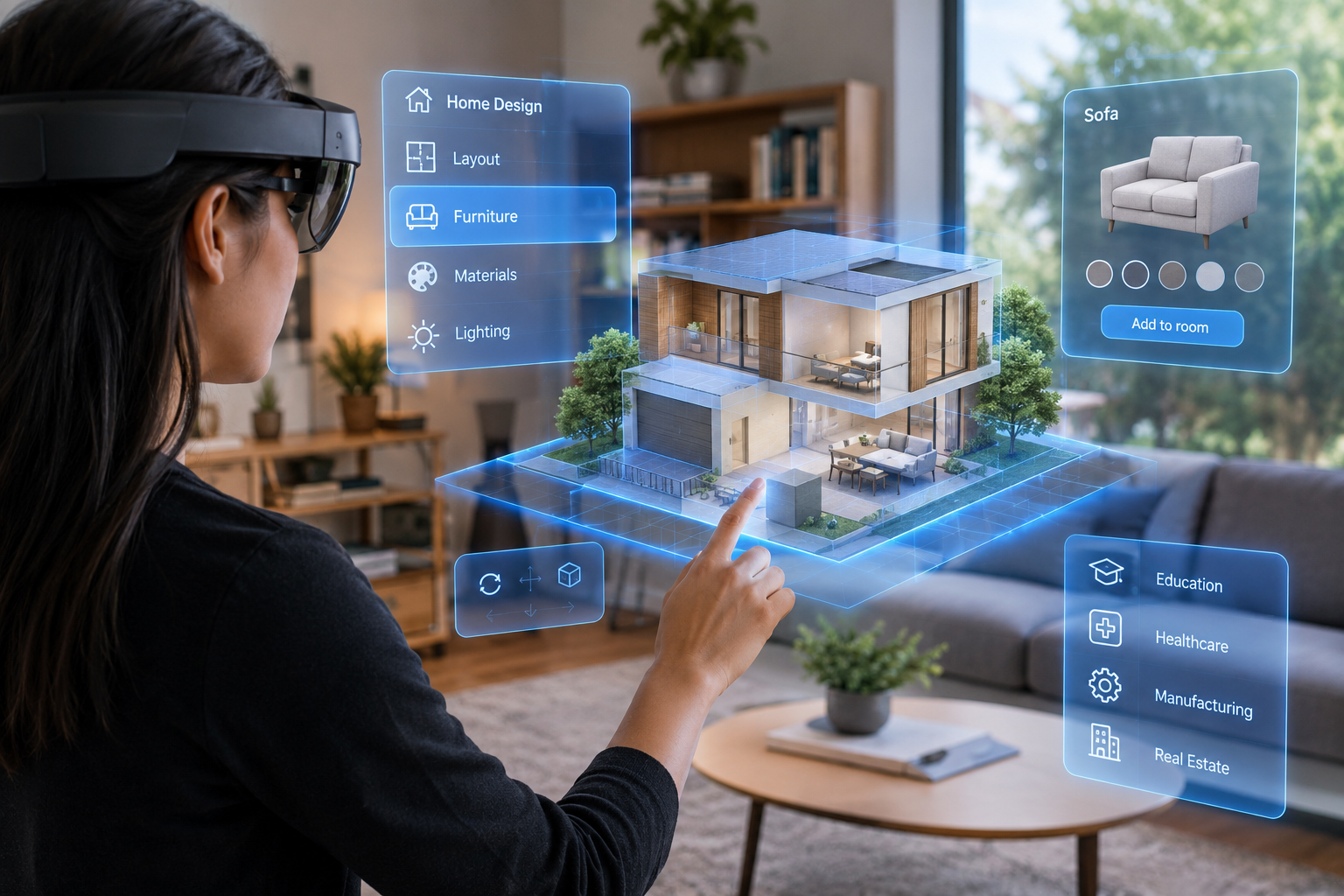
Architects and construction teams can use MR to visualize building designs within real spaces. This can help stakeholders understand layouts, identify design conflicts, and discuss proposed changes before construction progresses.
6. Business Training
Organizations can create interactive simulations for equipment handling, customer service, technical procedures, and workplace orientation. Employees can practise scenarios and receive guidance in a controlled digital environment.
Challenges Businesses Should Consider
Despite its potential, Mixed Reality is not the right solution for every situation.
Hardware and Development Costs
Compatible devices, application development, maintenance, and employee training can require a significant investment. Businesses should begin with a focused use case and evaluate its value before expanding.
Technical Complexity
Creating realistic 3D content and reliable spatial interactions requires appropriate development skills. Applications must also be tested across supported devices and real-world conditions.
Comfort and Accessibility
Some users may experience discomfort, eye strain, or difficulty using head-mounted devices. Organizations should consider session length, accessibility needs, workplace conditions, and alternative ways to access the same information.
Privacy and Data Security
Devices may collect environmental information, images, movement data, or other sensitive information. Businesses should establish clear data policies, secure their systems, and follow applicable privacy laws.
How Businesses Can Get Started with Mixed Reality
Companies do not need to transform every process at once. A gradual approach can help them determine whether the technology delivers measurable value.
- Identify a business problem: Choose a specific challenge, such as lengthy training, complex product demonstrations, or maintenance instructions.
- Select a suitable use case: Determine whether MR offers a meaningful advantage over a conventional application, video, or AR solution.
- Develop a pilot project: Create a small prototype for one team, product, or workflow.
- Test with real users: Collect feedback on usability, comfort, accuracy, and practical value.
- Measure the results: Track relevant indicators, such as training time, error rates, task completion, or customer engagement.
- Plan for expansion: Improve the application and scale it only when the pilot demonstrates clear benefits.
Working with an experienced technology partner can help businesses assess their requirements and build an appropriate solution.
The Future of Mixed Reality
The future of Mixed Reality will depend on improvements in hardware, software, spatial computing, artificial intelligence, and real-time 3D graphics.
AI may help make MR applications more responsive by supporting voice interaction, contextual information, and assistance based on the user’s task. Better device design could also make some experiences more comfortable and practical for everyday use.
In manufacturing, education, healthcare, and design, MR may become increasingly useful when it solves specific problems that are difficult to address through conventional screens alone.
However, wider adoption will depend on affordability, useful applications, accessibility, privacy, and reliable performance. Businesses should focus on real outcomes rather than adopting immersive technology simply because it is new.
Internal Links
External Links
Rich Media Link
Frequently Asked Questions (FAQs)
1. What is Mixed Reality in simple words?
Mixed Reality combines the physical world with digital objects that users can view and interact with in their surroundings.
2. What is the difference between Mixed Reality and Virtual Reality?
Virtual Reality places users inside a computer-generated environment, while Mixed Reality connects digital content with the physical environment.
3. Where is Mixed Reality used?
MR is used in education, healthcare, manufacturing, engineering, architecture, retail, employee training, and product demonstrations.
4. What devices are required for Mixed Reality?
Depending on the application, users may need a compatible headset, smart glasses, sensors, and specialized software. Device requirements vary by platform.
5. How can Mixed Reality help businesses?
It can support employee training, product visualization, technical assistance, design reviews, and remote collaboration. Its value depends on the use case and implementation.
Conclusion
Mixed Reality connects the physical and digital worlds in ways that can make learning, design, training, and collaboration more interactive. From helping engineers understand complex machinery to giving students new ways to explore scientific concepts, its applications continue to expand.
For businesses, the best starting point is a practical problem and a clearly defined goal. With the right planning, suitable technology, and careful testing, Mixed Reality can become a valuable part of a company’s digital transformation strategy.
📞 Contact: 919967940928
🌐 Visit: http://aibuzz.net