Tag: Software development

  • Software Development – The Invisible Engine Running Your Business :

    Software Development – The Invisible Engine Running Your Business :

    Let’s start with something simple.

    Software is everywhere.

    You wake up and check your phone.
    You transfer money.
    You book a cab.
    You scroll social media.
    You manage your work dashboard.

    All of that runs on software.

    But here’s the interesting part — most people only notice software when it breaks.

    When the app crashes.
    When payment fails.
    When the website loads slowly.

    That’s when we remember how important it actually is.

    For businesses, software development isn’t just about technology anymore. It’s about staying relevant. It’s about growth. It’s about survival.

    Whether it’s a startup trying to launch its first app or a global company like Amazon managing millions of transactions daily, software is the backbone.

    So let’s talk about what software development really means — in a real-world, practical way.


    What is Software Development (Without the Corporate Definition)? :

    In simple terms, software development is the process of turning an idea into a working digital solution.

    That’s it.

    Someone identifies a problem.
    A team designs a solution.
    Developers build it.
    Users interact with it.
    And over time, it improves.

    That solution could be:

    • A mobile app
    • An e-commerce platform
    • A CRM system
    • A billing tool
    • A cloud-based dashboard
    • An AI chatbot

    Companies like Microsoft and Google didn’t grow because they wrote complex code. They grew because they solved everyday problems at scale.

    That’s the heart of software development — solving real problems efficiently.


    Why Software Development Matters More Than Ever :

    There was a time when businesses could survive without digital systems.

    That time is over.

    Today, customers expect:

    • Fast responses
    • Easy payments
    • Smooth experiences
    • 24/7 availability
    • Personalization

    If your systems are slow, manual, or disconnected — customers will notice.

    And they won’t wait.

    Software allows businesses to:

    • Automate repetitive tasks
    • Reduce human error
    • Collect and analyze data
    • Improve decision-making
    • Scale operations smoothly

    It’s not about being “modern.”
    It’s about being competitive.


    The Human Side of Software Development :

    Let’s remove one myth.

    Software development is not just a developer sitting alone writing code.

    It’s collaborative.

    Behind every successful product, there’s a team:

    • Business analysts who understand requirements
    • Designers who care about user experience
    • Developers who build the logic
    • Testers who break things on purpose
    • Project managers who keep everything aligned

    It’s conversations.
    It’s brainstorming sessions.
    It’s debates about features.
    It’s late-night bug fixes before launch.

    It’s human effort.

    Even organizations like OpenAI emphasize research, collaboration, and iterative improvement — because innovation is always a team effort.


    How Software is Actually Built :

    Let’s break the process down in a way that makes sense.

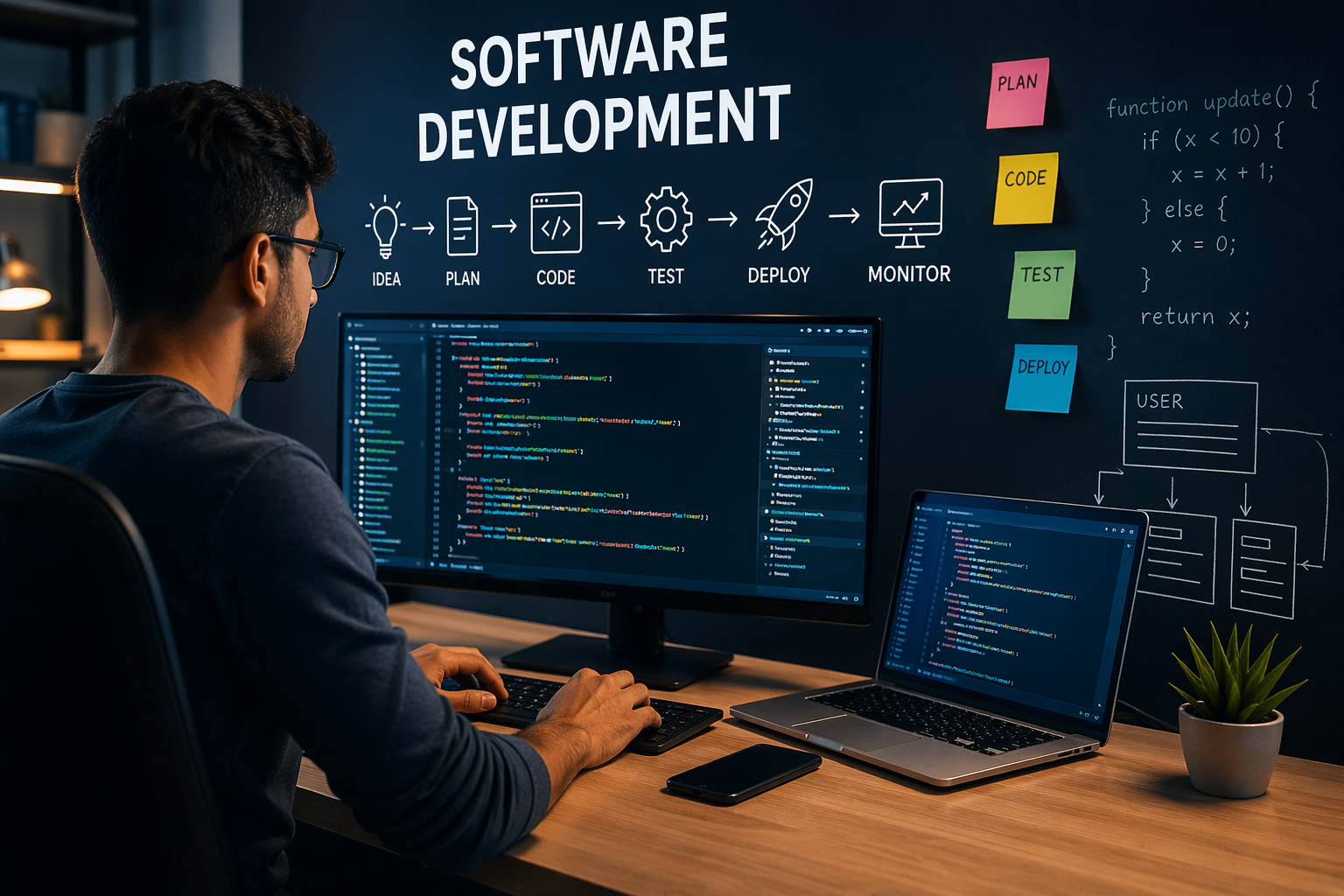
    1. Understanding the Real Problem

    This is where many projects fail.

    If you don’t clearly understand what problem you’re solving, everything after that becomes messy.

    Good development starts with listening — not coding.


    2. Planning the Approach

    Before building a house, you create a blueprint.

    Software is the same.

    Teams define:

    • Features
    • Timeline
    • Budget
    • Technology stack
    • Risks

    Planning reduces surprises later.


    3. Designing the User Experience

    Users don’t care about your backend architecture.

    They care about:

    • How easy it feels
    • How fast it responds
    • How clean it looks

    That’s why UI and UX matter so much.

    Even platforms like WordPress became popular because they made digital publishing simple and user-friendly.


    4. Development – Turning Ideas into Reality

    Now comes the technical part.

    Developers use languages like:

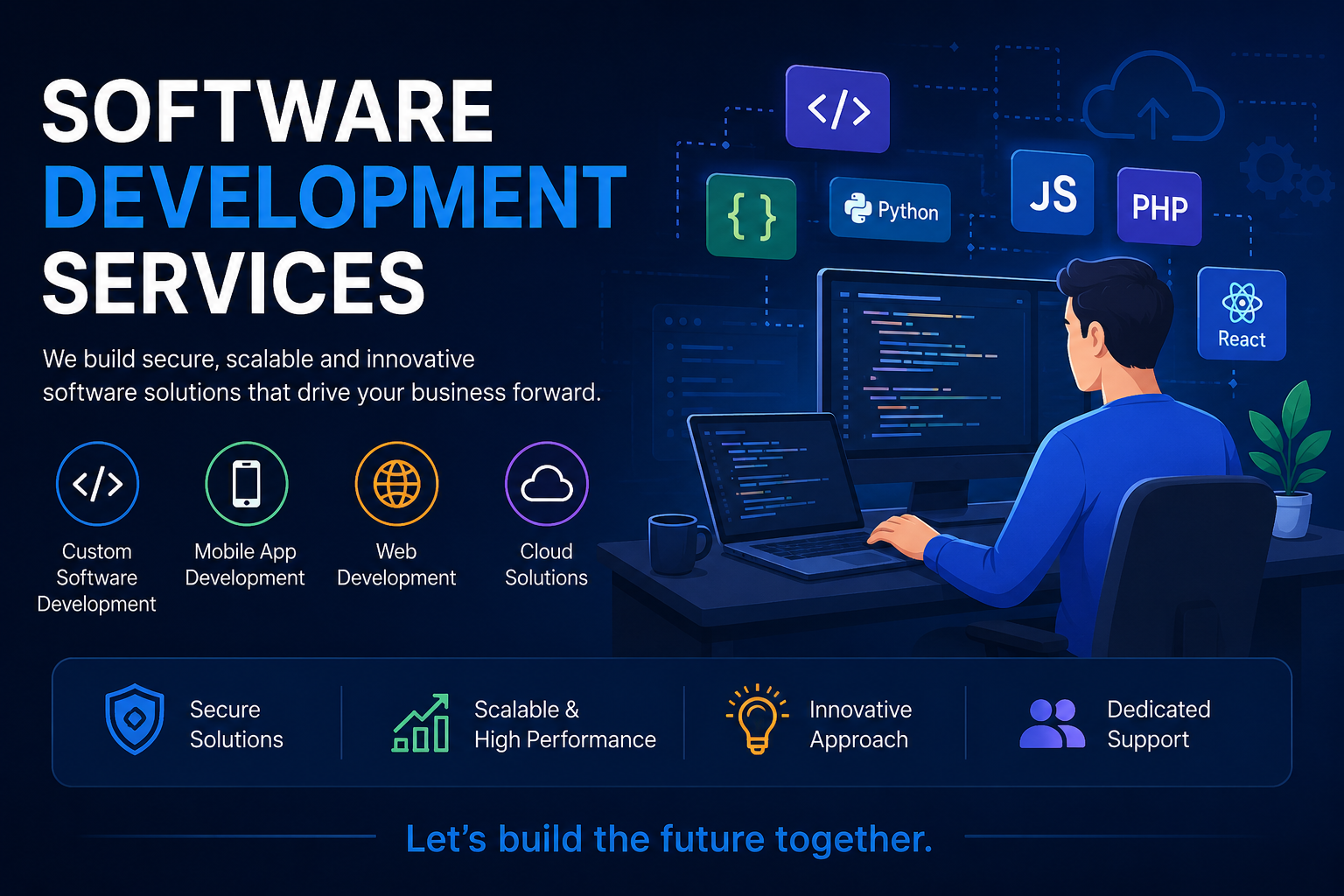
    • Python
    • JavaScript
    • Java
    • PHP

    They build the logic, connect databases, integrate APIs, and make sure everything communicates properly.

    This is where the invisible structure of your business gets built.


    5. Testing – The Most Underrated Stage

    No software is perfect at first.

    Testing identifies:

    • Bugs
    • Security flaws
    • Performance issues

    Skipping this stage is risky — especially when customer trust is involved.


    6. Launching the Product

    Launch day feels exciting.

    But software is never “finished.”

    It needs:

    • Updates
    • Improvements
    • Security patches
    • Performance optimization

    Software evolves, just like businesses do.


    Different Types of Software Development :

    Not all software serves the same purpose.

    Web Development :

    Business websites, e-commerce stores, dashboards.


    Mobile App Development :

    Apps distributed through platforms like Google Play.

    Mobile apps help businesses stay close to customers.


    Cloud-Based Development :

    Instead of installing software on local systems, businesses now use cloud platforms like Amazon Web Services to scale globally.

    Cloud means flexibility and growth without heavy infrastructure.


    Enterprise Software :

    Large organizations rely on enterprise systems from companies like IBM to manage operations efficiently.

    These systems handle massive data and workflows.


    The Real Challenges in Software Development :

    Let’s be transparent.

    It’s not always smooth.

    Common challenges include:

    • Changing requirements mid-project
    • Budget limitations
    • Tight deadlines
    • Integration complexities
    • Security threats

    But experienced teams plan for change. They adapt instead of panic.

    That’s where methodology matters.

    Frameworks promoted by Scrum Alliance encourage flexibility and continuous improvement.


    How to Choose the Right Software Development Partner :

    If you’re investing in software, choose carefully.

    Look beyond pricing.

    Ask:

    • Do they understand my business?
    • Can they explain technical things clearly?
    • Do they offer post-launch support?
    • Have they solved similar problems before?

    You’re not just hiring developers.

    You’re building a long-term partnership.


    Frequently Asked Questions (FAQ) :

    Is software development only for large companies?

    No. Small and medium businesses benefit even more from automation and digital presence.

    How long does it take to build software?

    It depends on complexity. A basic project may take 2–3 months. Larger systems may take 6–12 months.

    Is custom software worth the investment?

    If it solves a core business problem, absolutely yes.

    Can software grow with my business?

    Yes — if built with scalability in mind.


    Final Thoughts :

    At its core, software development is about progress.

    It’s about making work easier.
    It’s about reducing friction.
    It’s about giving customers better experiences.
    It’s about helping businesses move faster and smarter.

    Technology does not replace human intelligence.

    It amplifies it.

    And in 2026, businesses that understand this will lead — not because they have the most code, but because they have the smartest systems supporting them.

    ☎️ : 919967940928

    🌐: https://aibuzz.net/

  • Software Development: Building Technology That Feels Human

    Software Development: Building Technology That Feels Human

    Let us be honest.
    When most people hear software development, they imagine complicated screens full of code, technical experts typing at lightning speed, and conversations filled with confusing jargon.

    But real software development is not about complicated code.

    It is about people.

    It is about noticing a small daily frustration — waiting in long queues, managing endless spreadsheets, missing customer follow-ups — and asking a simple question:

    “Can we make this easier?”

    That question is where software development truly begins.

    What is Software Development — Really?

    Software development is the journey of turning an idea into a working digital solution.

    It starts with a problem:

    • Customers cannot track orders.
    • Employees spend hours doing repetitive tasks.
    • Students need better online learning systems.
    • Businesses struggle to manage data.

    Developers step in, understand the problem deeply, and design a solution that works smoothly.

    That solution might become:

    • A website
    • A mobile app
    • An internal business tool
    • A cloud platform
    • An AI-powered system

    Companies like Microsoft, Google, and Apple Inc. did not succeed just because they could write code. They succeeded because they built products that made people’s lives simpler.

    Software development is empathy + logic + creativity.


    Why Software Development Feels Invisible :

    Think about your day:

    • You unlock your phone.
    • You scroll social media.
    • You transfer money online.
    • You book a cab.
    • You attend a video meeting.

    Each of these actions depends on software built by development teams.

    We rarely think about it because good software feels natural. It works quietly in the background.

    That is the real goal of software development — to make technology feel effortless.


    The Different Faces of Software Development :

    Not all software is the same. Let us look at it in a more relatable way.


    1. Web Development — Your Digital Storefront :

    Every business today needs an online presence. Web development builds:

    • Company websites
    • E-commerce platforms
    • Online booking systems
    • SaaS tools

    When someone opens a browser and visits your website, web development is doing its job.


    2. Mobile App Development — Technology in Your Pocket :

    Smartphones changed everything.

    Apps built for:

    • Android
    • iOS by Apple Inc.

    allow businesses to connect directly with users.

    Food delivery, fitness tracking, digital banking — all powered by mobile app development.


    3. Enterprise Software — The Engine Behind Big Companies :

    Large organizations use complex internal systems to manage:

    • Payroll
    • Customer data
    • Inventory
    • Operations

    Cloud platforms like Amazon Web Services and Microsoft Azure host many of these systems.

    Enterprise software may not be visible to customers, but it keeps businesses running.


    4. AI and Intelligent Software — Smarter Systems :

    Artificial intelligence is now part of modern software.

    Organizations such as OpenAI are building systems that can generate text, analyze data, and assist with complex tasks.

    But even AI tools are created by developers who first understand human needs.


    The Software Development Life Cycle (SDLC) :

    Software is not built randomly. There is a structured process.

    1. Listening First

    Developers talk to stakeholders and users.
    They ask questions. They observe. They understand pain points.

    2. Planning the Blueprint

    Just like architects design before construction, software teams create detailed plans.

    3. Designing the Experience

    How will it look?
    How will users navigate it?
    How easy will it feel?

    4. Writing the Code

    Now the technical work begins. Developers build the actual system.

    5. Testing and Fixing

    Bugs are natural. Testing ensures the software is reliable and secure.

    6. Launching to the World

    The product goes live.

    7. Continuous Improvement

    Software is never truly finished. Updates, improvements, and security upgrades continue.

    The best software evolves with its users.


    How Modern Teams Work :

    Traditional development followed strict step-by-step methods.

    Today, many teams use Agile.

    Agile means:

    • Smaller work cycles
    • Frequent feedback
    • Continuous improvement

    Companies like Spotify use squad-based Agile models to innovate quickly.

    Agile feels more human because it allows adaptation. It accepts that change is normal.


    Programming Languages :

    Languages like:

    • Python
    • Java
    • JavaScript
    • C#
    • Go

    are simply tools.

    The goal is not to master every language.
    The goal is to solve problems effectively.

    For official learning:


    Real Challenges Developers Face :

    Software development is rewarding, but it is not always easy.

    Common struggles include:

    • Changing client expectations
    • Tight deadlines
    • Communication gaps
    • Technical debt
    • Security concerns

    Sometimes the hardest part is not coding — it is aligning people’s expectations.

    Strong communication skills are as important as technical skills.


    Why Businesses Choose Custom Software :

    Ready-made tools are convenient, but custom software offers:

    • Full control
    • Better scalability
    • Stronger security
    • Competitive advantage
    • Tailored user experiences

    Custom solutions grow with the business.


    The Future of Software Development :

    The future feels exciting and slightly unpredictable.

    AI-Assisted Coding

    Developers now use intelligent assistants to speed up coding.

    Cloud-Native Systems

    Applications are designed specifically for scalability and flexibility.

    Cybersecurity-First Approach

    Security is no longer optional. It is built from the start.

    Low-Code Platforms

    Even non-developers can create simple tools.

    Technology will evolve, but the need for creative problem-solvers will remain constant.


    Is Software Development a Good Career? :

    Absolutely.

    It offers:

    • High demand globally
    • Competitive salaries
    • Remote work flexibility
    • Continuous learning opportunities

    But more importantly, it gives you the ability to build something meaningful.

    Few careers allow you to create tools that millions of people might use daily.


    Internal Linking Opportunities :

    For better SEO structure, connect this blog with:

    • Artificial Intelligence Guide
    • Big Data Services Guide
    • Virtual Reality Guide
    • Cryptocurrency Development Guide

    Internal linking improves website authority and Rank Math SEO score.


    Rich Media Suggestions :

    To improve engagement and dwell time:

    • Add an SDLC infographic
    • Embed a beginner-friendly YouTube explanation video
    • Include workflow diagrams
    • Add a real-world case study example

    Rich content improves both user experience and search performance.


    Frequently Asked Questions (FAQ) :

    1. Is software development only for tech experts?

    No. Anyone willing to learn and practice can enter the field.

    2. How long does it take to learn?

    Basic understanding can take months. Mastery takes years of practice.

    3. Is coding the most important skill?

    Problem-solving and logical thinking are equally important.

    4. Can small businesses benefit from software development?

    Yes. Even simple automation tools can increase efficiency significantly.

    5. Will AI replace software developers?

    AI will assist developers, not replace them. Human creativity and problem-solving remain essential.


    Final Thoughts :

    At the end of the day, software development is not about machines.

    It is about understanding people.

    It is about building something that saves time, reduces stress, and creates opportunities.

    The next time you open an app and think,
    “Wow, this makes life easier,”

    remember — behind that simplicity is a team of developers who cared enough to solve a real problem.

    And that is what software development truly is.

    ☎️: 919967940928

    🌐:https://aibuzz.net/

  • IT and Tech Services 2025: 10 Essential Innovations Driving Digital Transformation

    IT and Tech Services 2025: 10 Essential Innovations Driving Digital Transformation

    Introduction

    The digital world is transforming faster than ever, and software development lies at the heart of that evolution. In 2025, organizations are focusing on smarter, faster, and more adaptable development practices to stay competitive. From low-code automation and artificial intelligence to cloud-native infrastructure, innovation is redefining how businesses operate and scale.

    At AIBuzz Technoventures Pvt Ltd, we combine deep technical expertise with creative problem-solving to craft intelligent, scalable, and secure software solutions. Our mission is simple — empower businesses through technology that’s built to last.


    1. Low-Code and No-Code Development: Accelerating Innovation

    Software creation has become more inclusive than ever. Low-code and no-code platforms empower users — even those with minimal programming knowledge — to build applications quickly using drag-and-drop interfaces. This approach saves time, reduces costs, and enhances business agility.

    In 2025, these platforms are essential for rapid prototyping, process automation, and internal tools. They enable faster innovation cycles while freeing up developers to focus on complex challenges.
    At AIBuzz, we implement low-code frameworks that merge speed with flexibility — delivering powerful apps without sacrificing performance or scalability.


    2. Artificial Intelligence Integration

    Artificial Intelligence (AI) is transforming the software landscape by enabling automation, predictive decision-making, and real-time analytics. Modern applications are built to learn, adapt, and optimize based on user behavior and data insights.

    From AI-driven chatbots and CRMs to intelligent ERP systems, this integration enhances personalization, speeds up processes, and increases efficiency.
    AIBuzz incorporates AI into every stage of software development — from backend automation to intuitive user experiences — ensuring intelligent, efficient, and future-ready solutions.


    3. Cloud-Native Development: Building for the Future

    As businesses embrace digital-first strategies, cloud-native development has become the foundation of scalable and resilient systems. This model uses microservices, containers, and Kubernetes to create flexible architectures that adapt seamlessly to changing demands.

    Cloud-native applications offer unmatched agility, reliability, and cost efficiency. At AIBuzz, our developers engineer cloud-native software that enhances performance, supports global scalability, and minimizes operational complexity — ensuring continuous delivery and business continuity.


    4. Cybersecurity-Driven Software Engineering

    With increasing cyber threats and data breaches, security by design has become a non-negotiable principle in 2025. Developers are embedding advanced encryption, real-time monitoring, and zero-trust models into applications from the ground up.

    AIBuzz takes a proactive approach to software security, implementing DevSecOps practices that integrate vulnerability scanning and compliance checks within every development phase. The result is robust, resilient software that protects business integrity and user trust.


    5. Cross-Platform Development: Unifying the User Experience

    In a multi-device world, users expect seamless interactions across mobile, web, and desktop. Cross-platform development frameworks like Flutter, React Native, and Xamarin make it possible to build apps that deliver native performance while sharing a unified codebase.

    This approach reduces costs, shortens development time, and ensures consistent experiences.
    AIBuzz’s cross-platform solutions help brands connect with users everywhere — offering speed, efficiency, and flawless performance across all touchpoints.


    6. DevOps and Continuous Integration/Continuous Deployment (CI/CD)

    Efficiency, collaboration, and automation define the modern development lifecycle. DevOps bridges the gap between developers and IT operations, ensuring faster delivery, fewer errors, and continuous improvement.

    Through CI/CD pipelines, updates and new features can be deployed in real-time without downtime.
    At AIBuzz, we use DevOps principles to streamline workflows, enhance productivity, and maintain software quality — enabling our clients to deliver innovations faster and more reliably.


    7. Edge Computing and IoT-Driven Software

    With billions of connected devices worldwide, edge computing is revolutionizing how software processes data. Instead of relying solely on cloud servers, data is processed closer to its source — reducing latency and improving response time.

    Industries like healthcare, manufacturing, and logistics are using edge-enabled software for real-time analytics and automation.
    AIBuzz designs IoT and edge-based software solutions that enhance operational efficiency and empower smart decision-making across industries.


    8. Predictive Analytics and Data Intelligence

    Businesses are moving beyond descriptive data analysis to predictive intelligence. Using AI and big data, modern software can forecast trends, detect risks, and automate business decisions.

    Predictive analytics tools are now integrated into ERP systems, marketing platforms, and customer support software — helping businesses anticipate user behavior and optimize performance.
    At AIBuzz, we embed advanced analytics modules into our software, transforming raw data into actionable insights that drive growth.


    9. Sustainable Software Engineering

    As climate awareness grows, green software development is emerging as a key trend. Developers are now optimizing algorithms, minimizing resource consumption, and designing systems with lower carbon footprints.

    AIBuzz adopts sustainable engineering practices that promote efficient computing and responsible innovation.
    From cloud optimization to lightweight coding, we believe in building software that’s good for both business and the planet.


    10. The Future of Software Development: Intelligent, Connected, and Adaptive

    The next phase of software evolution lies in automation, AI-driven coding assistants, and autonomous systems. Quantum computing, blockchain integration, and hyperautomation will soon redefine what’s possible in software architecture.

    AIBuzz continues to invest in these futuristic technologies — ensuring our clients are always at the forefront of digital transformation.


    About AIBuzz Technoventures Pvt Ltd

    AIBuzz Technoventures Pvt Ltd is a leading technology solutions provider dedicated to delivering high-impact digital transformation services.
    Their diverse portfolio spans:

    Through their expertise, AIBuzz helps organizations innovate, integrate, and accelerate digital growth in a connected world.


    Conclusion

    Software development in 2025 is about more than coding — it’s about creating intelligent ecosystems that evolve with your business. From AI integration and DevOps automation to sustainable design, innovation defines the future of technology.

    At AIBuzz Technoventures Pvt Ltd, we specialize in delivering customized, secure, and scalable software solutionsbuilt for the digital era. Whether you’re a startup or an enterprise, we turn your vision into powerful, data-driven applications that deliver real results.

    Contact: +91 99679 40928
    Visit: www.aibuzz.net
    Mail: info@aibuzz.net

  • Software Development 2025: 7 Powerful Innovations Transforming Business Efficiency

    Software Development 2025: 7 Powerful Innovations Transforming Business Efficiency

    In the ever-evolving world of technology, Software Development is no longer just about coding—it’s about creating intelligent, scalable, and future-ready solutions that drive digital transformation. From startups to global enterprises, every business today relies on software to streamline operations, enhance customer experiences, and stay ahead of the curve.

    As we step into 2025, Software Development continues to redefine industries, enabling automation, innovation, and seamless digital integration. Companies like AIBuzz Technoventures Pvt Ltd are at the forefront, crafting tailor-made software solutions that blend creativity, efficiency, and cutting-edge technology.


    The Evolution of Software Development

    Gone are the days when development was limited to basic web and desktop applications. Today’s software landscape encompasses cloud-native platforms, AI integration, blockchain, and immersive technologies like Virtual and Mixed Reality.

    Software Development in 2025 focuses on creating intelligent ecosystems—applications that adapt, learn, and deliver value through automation and real-time insights. Businesses are leveraging these advancements to improve efficiency, reduce costs, and boost competitiveness.


    1. Agile and DevOps Integration: Speed with Stability

    Agile and DevOps methodologies have revolutionized how software is built, tested, and deployed. By merging flexibility with automation, these approaches enable faster delivery without compromising quality.

    Continuous integration and continuous delivery (CI/CD) pipelines ensure software updates roll out seamlessly, minimizing downtime. This shift towards agile-driven Software Development empowers teams to innovate rapidly and respond to market demands in real time.


    2. AI-Driven Software Development

    Artificial Intelligence (AI) is reshaping software creation. AI-assisted coding tools, predictive analytics, and automated debugging allow developers to build smarter systems faster.

    In 2025, AI enables software to “think” — predicting user needs, automating repetitive tasks, and enhancing user experiences. This blend of human creativity and machine intelligence ensures scalable and efficient Software Development across industries.


    3. Cloud-Native Development: Building for the Future

    The shift to cloud-native applications has transformed scalability and deployment efficiency. With microservices architecture and containerization, cloud-native Software Development enables seamless updates, high availability, and rapid scaling.

    Businesses benefit from reduced infrastructure costs, enhanced security, and improved collaboration between teams. The result? Software that grows as your business grows.


    4. Cross-Platform Compatibility: One Code, Many Platforms

    Modern users demand consistent experiences across devices. Cross-platform frameworks like Flutter, React Native, and Xamarin make it possible to develop apps that run smoothly on Android, iOS, and the web—without writing separate code for each.

    This not only accelerates Software Development timelines but also reduces maintenance costs and ensures uniform functionality, design, and performance.


    5. Enhanced Security in Software Design

    In today’s digital ecosystem, security cannot be an afterthought. Developers are now adopting a “security-by-design”approach, integrating protection measures from the initial stages of Software Development.

    Advanced encryption, secure authentication, and regular vulnerability testing ensure that applications remain safe from evolving cyber threats. AIBuzz focuses on implementing top-tier cybersecurity protocols in every software product they develop.


    6. The Role of Artificial Intelligence in Software

    Artificial Intelligence (AI) refers to the simulation of human intelligence processes by machines, especially computer systems. It encompasses learning (the acquisition of information and rules), reasoning (using rules to reach conclusions), and self-correction.

    In Software Development, AI enhances automation, data analysis, and personalization—helping businesses make faster and smarter decisions. From chatbots and recommendation systems to predictive analytics and intelligent automation, AI is the driving force behind next-gen applications.


    7. Emerging Technologies: Blockchain, VR, and Big Data Integration

    The future of Software Development lies in convergence. Blockchain ensures transparency and trust, Virtual and Mixed Reality redefine user interaction, and Big Data enables intelligent insights.

    These technologies are transforming industries like healthcare, finance, and retail by providing secure, data-driven, and immersive software solutions.

    AIBuzz’s developers leverage this synergy to create innovative platforms that go beyond traditional functionality—delivering meaningful digital experiences.


    How Do We Deliver Effective and Scalable Software Solutions?

    At AIBuzz Technoventures Pvt Ltd, we specialize in building custom Software Development solutions that enhance performance, scalability, and ROI. From ideation and design to deployment and support, AIBuzz ensures a seamless development journey tailored to your business needs.

    Our strategy combines data-driven insights with creative innovation, ensuring your applications perform optimally across all platforms. Whether web, mobile, or enterprise-grade systems, AIBuzz delivers technology that empowers growth.


    About AIBuzz Technoventures Pvt Ltd

    AIBuzz Technoventures Pvt Ltd is a leading technology solutions provider dedicated to delivering high-impact digital transformation services. Their diverse portfolio spans:

    By combining technology and innovation, AIBuzz transforms ideas into impactful digital realities.


    Conclusion: Building the Future with AIBuzz

    In 2025, Software Development isn’t just a business necessity—it’s a competitive advantage. With expertise in AI, cloud, and emerging technologies, AIBuzz Technoventures Pvt Ltd helps businesses create scalable, secure, and intelligent software solutions that power the digital future.

    Contact: +91 99679 40928
    Visit: www.aibuzz.net
    Mail: info@aibuzz.net

  • Top 10 Power Moves in Software Development for 2025: Transform Your Tech Strategy Today!

    Top 10 Power Moves in Software Development for 2025: Transform Your Tech Strategy Today!

    In today’s hyper-connected digital world, software development is no longer just a back-end operation. It’s the enginebehind innovation, efficiency, and user experience across all industries. From healthcare and finance to education and entertainment, the demand for smarter, faster, and scalable solutions is fueling an exciting era in it software development.

    The year 2025 is proving to be a turning point. With AI, cloud computing, and agile methodologies converging, companies are reshaping how they develop, deploy, and scale software solutions. Whether you’re a business leader, startup founder, or tech enthusiast, mastering these evolving strategies can set you miles ahead.

    What is Software Development? 

    Software development is the process of designing, coding, testing, and maintaining applications, frameworks, or other software components. It involves methodologies like agile or waterfall and tools like programming languages, databases, and cloud platforms. The goal? To solve real-world problems through powerful, scalable digital solutions.

    Let’s explore the top 10 power moves that define successful software development today.


    1. Agile Development is No Longer Optional

    Agile isn’t a buzzword anymore — it’s the backbone of modern software development. In 2025, agile is evolving beyond scrum boards and sprints into continuous delivery systems and real-time feedback loops.

    • Why it matters: Agile shortens delivery time, reduces risk, and increases team collaboration.
    • Power Tip: Combine agile with DevOps for a streamlined CI/CD pipeline.

    Using agile principles helps ensure it software development stays customer-focused and adaptable, especially in rapidly changing markets.


    2. AI-Enhanced Coding and Automation

    Artificial Intelligence is transforming the software development process from line-by-line coding to smart suggestions, bug detection, and automated testing.

    • Why it matters: AI speeds up development and improves code quality.
    • Power Tip: Use tools like GitHub Copilot or Tabnine for AI-assisted coding.

    In it software development, AI is not replacing developers — it’s empowering them to work smarter and more creatively.


    3. Cloud-Native Software is the New Standard

    Gone are the days when applications lived in local servers. In 2025, cloud-native development is the industry standard.

    • Why it matters: Scalability, cost-efficiency, and remote accessibility.
    • Power Tip: Leverage platforms like AWS, Azure, or Google Cloud to build scalable microservices.

    For businesses relying on custom software development, cloud platforms reduce deployment times and improve user experience.


    4. Low-Code & No-Code Platforms Empower Everyone

    Low-code and no-code tools are enabling entrepreneurs, marketers, and non-tech professionals to build applications without writing complex code.

    • Why it matters: Democratizes software development and speeds up prototyping.
    • Power Tip: Tools like Bubble, OutSystems, and Webflow are leading this revolution.

    In it software development, these platforms are not replacing developers but complementing their efforts by offloading repetitive tasks.


    5. Cybersecurity-First Approach is Critical

    With cyber threats growing more sophisticated, security must be embedded throughout the development lifecycle.

    • Why it matters: Prevents data breaches, builds customer trust.
    • Power Tip: Adopt DevSecOps to integrate security checks into each phase of development.

    A secure software development process protects not only data but also the integrity of your brand.


    6. Progressive Web Apps (PWAs) Lead the Mobile Frontier

    PWAs combine the best of web and mobile apps, offering faster loading times, offline functionality, and a native-like experience.

    • Why it matters: Reduced development cost, faster launch, and improved performance.
    • Power Tip: Use service workers and responsive design to enhance your PWA.

    For companies focused on user experience, PWAs are the future of it software development on mobile.


    7. Cross-Platform Development for Wider Reach

    Why build two apps when you can build one? Tools like Flutter and React Native are enabling developers to create applications that work across iOS and Android platforms.

    • Why it matters: Saves time, reduces cost, and simplifies maintenance.
    • Power Tip: Choose the right framework based on your app’s complexity and performance needs.

    This power move makes enterprise software solutions more accessible and manageable.


    8. DevOps is Driving Collaboration

    Development and operations teams are no longer siloed. DevOps practices have become essential to deploy applications faster and more reliably.

    • Why it matters: Faster time-to-market and improved collaboration.
    • Power Tip: Use Jenkins, Docker, and Kubernetes for automation and containerization.

    DevOps transforms it software development into a seamless, end-to-end lifecycle that’s always delivery-ready.


    9. User-Centric Design Wins Every Time

    Your software can be technically perfect, but if users don’t love it — it fails. UI/UX is now at the core of every successful software product.

    • Why it matters: Boosts user engagement, retention, and satisfaction.
    • Power Tip: Use A/B testing and heatmaps to refine design decisions based on real user behavior.

    Today’s custom software development demands a balance between performance and experience.


    10. Ethical and Sustainable Coding Practices

    2025 has ushered in a renewed focus on ethical software development. This includes inclusivity in design, energy-efficient code, and fair AI practices.

    • Why it matters: Consumers and businesses alike value ethical innovation.
    • Power Tip: Regularly audit your algorithms for bias and optimize your codebase for lower energy consumption.

    Sustainability in it software development is more than a trend — it’s a responsibility.

    The Future of IT Software Development: A Positive Outlook

    The Future of IT Software Development: A Positive Outlook

    As we look ahead, the synergy between human creativity and machine efficiency is setting a new gold standard in it software development. Organizations that embrace agile processes, leverage cloud-native tools, and adopt ethical practices will dominate their sectors. Whether building enterprise-grade platforms or MVPs for startups, the power lies in staying updated, staying agile, and always coding forward.


    Conclusion: Partner with AIBuzz for Cutting-Edge Software Development

    At AIBuzz, we specialize in delivering custom software development solutions that are agile, secure, scalable, and future-proof. From cloud transformation to AI integration, our expert team ensures that your vision becomes a powerful reality. Whether you’re upgrading legacy systems or launching a new digital product, we’re your go-to partner for all things it software development. Let’s build the future — together.

  • Top 10 Powerful Software Development Services to Transform Your Business in 2025

    Top 10 Powerful Software Development Services to Transform Your Business in 2025


    In today’s digital-first world, software isn’t just a tool — it’s the backbone of every thriving enterprise. Whether you’re a startup, an e-commerce brand, a healthcare provider, or a manufacturing company, investing in the right software development services can revolutionize your business operations, boost productivity, and ensure scalability for the future.

    As we move into the second half of 2025, companies are actively upgrading their digital infrastructure. Businesses that harness high-performing software gain a serious edge in this competitive environment. This blog explores 10 powerful software development services that are transforming businesses and why your organization should consider them today.


    What Is Software Development?

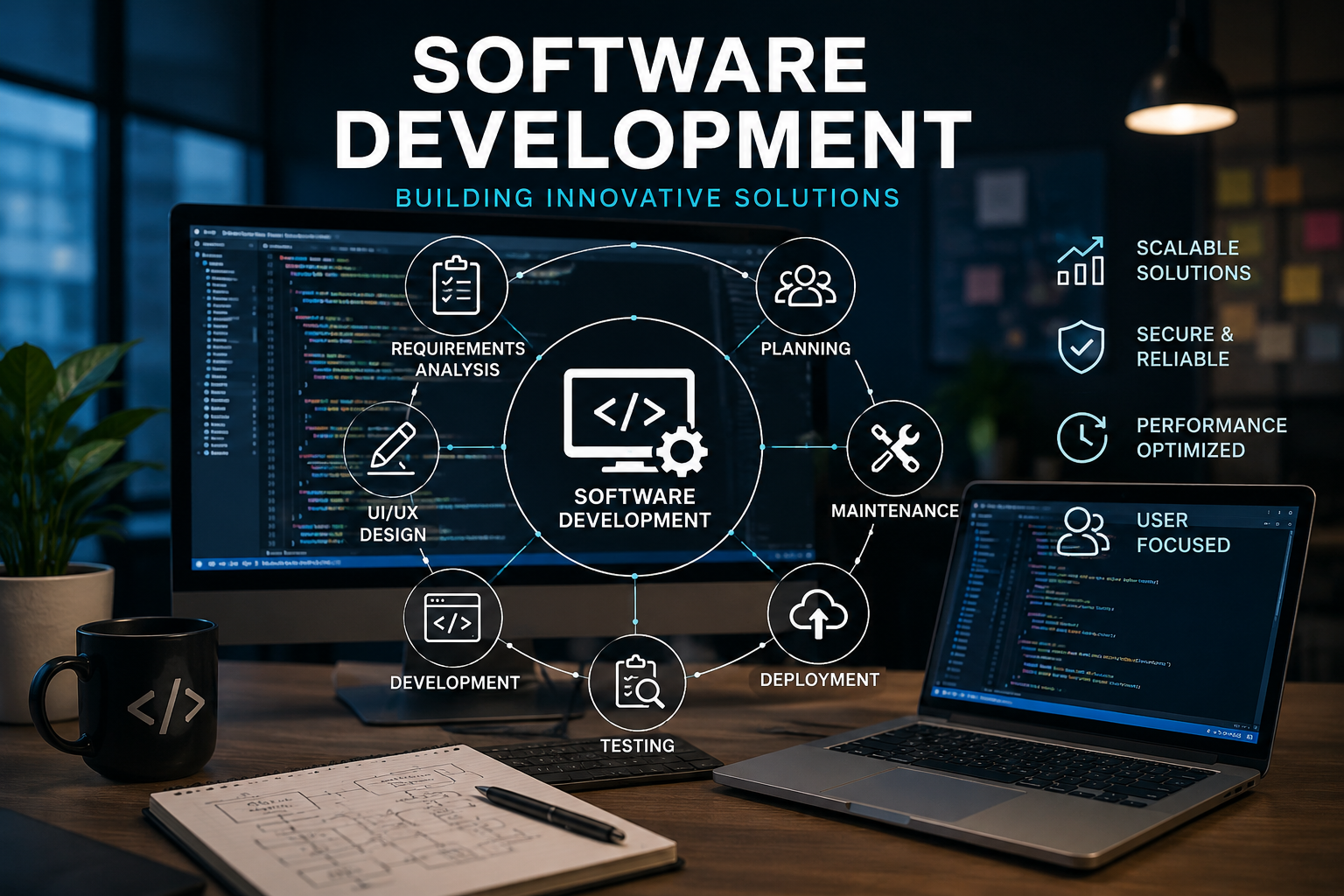
    Software development is the process of designing, creating, testing, and maintaining applications, frameworks, or other software components. It involves a series of steps including requirement analysis, planning, development, testing, deployment, and maintenance. The goal is to create custom solutions tailored to business needs — whether that’s streamlining operations, enabling automation, or enhancing customer experience.

    Let’s dive into the top 10 impactful software development services available in 2025.


    1. Custom Software Development

    Custom software is built specifically to address your unique business needs. Unlike off-the-shelf applications, custom software is scalable, secure, and integrates seamlessly with your existing systems.

    From inventory systems to tailored CRM platforms, custom software development services offer complete flexibility — ideal for businesses seeking a competitive advantage in a crowded market.


    2. Mobile App Development

    With mobile usage skyrocketing, businesses must meet their customers where they are — on their phones. Whether Android or iOS, mobile apps improve accessibility and user engagement.

    Modern software development services now use cross-platform frameworks like Flutter and React Native to deliver faster, cost-efficient app solutions that don’t compromise on performance.


    3. Web Application Development

    A high-performance web app can be the face of your business. Be it an e-commerce platform, booking system, or customer portal, businesses rely heavily on responsive, dynamic web applications.

    Today’s software development services include progressive web apps (PWAs), which offer native app-like experiences on browsers — providing speed, reliability, and offline access.


    4. Enterprise Software Solutions

    Enterprise applications are large-scale systems that cater to the needs of an organization rather than individual users. These may include ERP systems, supply chain management platforms, HRM tools, or financial software.

    Companies prefer enterprise software development services to automate workflows, increase operational visibility, and ensure secure data handling — all critical for large-scale businesses.


    5. Cloud-Based Software Development

    Cloud-native software allows businesses to move away from hardware dependence and embrace scalability. With platforms like AWS, Microsoft Azure, and Google Cloud, businesses now build, deploy, and scale apps effortlessly.

    Cloud software development services reduce IT costs, improve flexibility, and support real-time collaboration — making them essential in the era of hybrid work and remote teams.


    6. SaaS (Software as a Service) Development

    SaaS-based models are revolutionizing how software is used and delivered. Instead of installing and maintaining software, users access it via the internet.

    Businesses providing SaaS offerings rely heavily on specialized software development services that focus on multi-tenancy architecture, subscription management, and data security — enabling them to serve users globally with minimal downtime.


    7. DevOps and Continuous Integration Services

    DevOps combines development and IT operations to streamline software delivery. Through automation, testing, and continuous integration/deployment (CI/CD), software products are built and released faster and more reliably.

    Modern software development services include full-scale DevOps support — helping businesses accelerate their release cycles, reduce errors, and maintain system uptime.


    8. UI/UX Design and Development

    An application’s design defines its success. Poor navigation or confusing interfaces can drive users away, no matter how powerful your backend may be.

    Professional software development services include UI/UX design to ensure your app is intuitive, responsive, and user-centric. Prototypes, wireframes, and design sprints are used to bring your ideas to life with clarity and creativity.


    9. API Development and Integration

    APIs (Application Programming Interfaces) are the bridges that connect different software systems. They allow your app to communicate with third-party services like payment gateways, analytics tools, CRM systems, and more.

    Businesses seeking scalable and connected ecosystems must leverage API development services — a core component of modern software development services that promotes automation and seamless data exchange.


    10. Software Maintenance and Support

    Software doesn’t end at deployment. It needs regular updates, security patches, bug fixes, and performance enhancements. Maintenance ensures your software remains competitive, compliant, and aligned with evolving user needs.

    Leading software development services offer ongoing support to maximize uptime, avoid performance degradation, and ensure your digital investments stay future-proof.


    Key Industries Leveraging Software Development Services

    While software development is now vital across all sectors, certain industries rely more heavily on bespoke solutions:

    • Healthcare: For EHR systems, telemedicine apps, and AI-powered diagnostics.
    • Finance: For fraud detection, mobile banking apps, and automated trading platforms.
    • E-commerce: For customer engagement, logistics management, and inventory control.
    • Education: For e-learning platforms, student information systems, and gamified learning.

    Benefits of Using Expert Software Development Services

    ✔️ Scalability: Adapt quickly to changing business needs without starting from scratch.

    ✔️ Efficiency: Automate routine tasks and free up resources for high-impact initiatives.

    ✔️ Security: Robust coding standards and regular updates protect against data breaches.

    ✔️ Innovation: Stay ahead of the curve with AI, IoT, AR/VR, and blockchain integrations.

    ✔️ Cost-Effective: Custom software reduces long-term overheads compared to multiple third-party tools.


    Trends Shaping Software Development in 2025

    The landscape of software development services is rapidly evolving with these game-changing trends:

    • Low-Code/No-Code Platforms: Enabling faster development with visual interfaces.
    • AI-Powered Development: Code suggestions, bug detection, and testing powered by machine learning.
    • Microservices Architecture: Breaking apps into small, independent services for better scalability.
    • Edge Computing: Delivering faster software solutions with local data processing.
    • Blockchain Integration: Creating tamper-proof, transparent, and decentralized systems.

    Choosing the Right Software Development Partner

    When selecting a software development partner, consider:

    • Experience & Portfolio: Review past projects and industry-specific experience.
    • Technology Stack: Ensure they use modern and scalable tools.
    • Agile Methodologies: Flexibility and speed are key in dynamic markets.
    • Security Practices: Prioritize partners with stringent security protocols.
    • Post-Deployment Support: Ensure they offer maintenance and upgrade services.

    The right partner doesn’t just write code — they understand your business goals and create solutions that deliver tangible outcomes.


    Final Thoughts

    The need for efficient, secure, and scalable digital solutions has never been higher. As technology becomes the heartbeat of businesses worldwide, software development services play a crucial role in driving innovation and growth.

    Whether you’re looking to build a customer-facing mobile app, optimize your internal operations with a custom ERP, or explore AI integrations for your business processes — now is the time to act.

    Choosing the right software development services can mean the difference between staying competitive and becoming obsolete. With the right partner by your side, your business is well-equipped to tackle the digital future head-on.


    Conclusion

    At aibuzz, we specialize in delivering cutting-edge software development services tailored to your business needs. Our team builds scalable, secure, and intuitive applications using modern technologies and agile practices. In addition to software, we offer solutions in big data and AI to help businesses uncover deep insights and drive innovation. Partner with aibuzz today to build a smarter, data-driven tomorrow.

  • 9 Powerful Reasons Why Computer Tech Support Is Essential for Every Business in 2025

    9 Powerful Reasons Why Computer Tech Support Is Essential for Every Business in 2025

    In today’s digital-first world, businesses of all sizes rely heavily on technology. From software tools to hardware infrastructure, everything needs to work seamlessly. But what happens when things break down or systems go haywire? That’s where computer tech support becomes the backbone of your business continuity. In 2025, the need for efficient, responsive, and strategic tech support has never been more urgent—or more empowering.

    This blog explores the 9 powerful reasons why computer tech support is not just helpful but essential. Whether you’re running a startup, managing an enterprise, or building a hybrid workspace, the value of smart tech support can’t be overstated.


    1. Immediate Issue Resolution Increases Productivity

    One of the biggest advantages of computer tech support is the speed at which issues can be resolved. When a printer stops working or a crucial application crashes, your employees lose valuable hours. Reliable computer tech support ensures that such issues are resolved in real-time, minimizing downtime and maximizing team output.

    With remote diagnostics and AI-based ticketing systems, tech teams today can resolve problems within minutes. This efficiency translates to improved business operations and happier employees.


    2. Enhanced Data Security and Risk Management

    Cyberattacks are growing more sophisticated, and small to mid-sized businesses are prime targets. Effective computer tech support ensures that your antivirus programs are updated, firewalls are active, and systems are regularly patched. It also includes regular data backups and security audits, reducing your exposure to potential threats.

    Proactive support also ensures compliance with international regulations such as GDPR, HIPAA, or ISO, depending on your industry.


    3. Cost-Efficiency Through Outsourced and Scalable Support

    Instead of investing heavily in an internal IT team, many businesses are turning to outsourced computer tech support. These services offer flexible payment models—hourly, monthly, or per-incident—that make budgeting easier.

    Moreover, you only pay for what you need. As your business grows, you can scale your tech support requirements without overcommitting to resources, saving costs and boosting ROI.


    4. Expert Guidance and Technological Innovation

    A top-tier computer tech support service isn’t just reactive—it’s also strategic. With constant tech evolution, businesses can’t afford to fall behind. Support teams offer expert advice on adopting new technologies, streamlining operations, or upgrading infrastructure.

    Want to integrate AI into your CRM? Thinking about migrating to the cloud? Your tech support partner can guide you through it, making innovation less intimidating.


    5. Reliable Network and System Uptime

    Nothing is more frustrating than a lagging network during a major product launch or sales call. With effective computer tech support, you gain access to professionals who monitor your networks 24/7, resolve bottlenecks, and ensure optimal performance.

    This kind of proactive management reduces the likelihood of major outages and keeps your business running smoothly.


    6. Boosting Customer Satisfaction and Support

    When your internal systems work efficiently, your customer support teams can do their jobs better. Smooth-running CRMs, payment gateways, and live chat systems allow customers to get their issues resolved quickly, resulting in higher satisfaction and stronger brand loyalty.

    Computer tech support indirectly boosts your customer experience by ensuring that the tools your team uses to serve clients are always operational.


    7. Support for Remote and Hybrid Workforces

    With remote work becoming the norm, businesses must support teams scattered across multiple locations. Computer tech support plays a key role in managing VPNs, remote desktops, collaboration tools, and endpoint security.

    Employees can work confidently from anywhere, knowing there’s a dedicated team ready to resolve their technical issues instantly.


    8. 24/7 Availability for Global Operations

    In a global economy, your operations might span across different time zones. Whether it’s late-night shifts in Asia or early morning logins in Europe, your business needs tech support that’s always on.

    Round-the-clock computer tech support ensures that no matter where your team is or what time it is, they have the help they need.


    9. Future-Proofing Through Preventive Maintenance

    Preventive maintenance is often overlooked until something breaks. Top-quality computer tech support includes regular system checks, software updates, hardware inspections, and performance reviews.

    This forward-thinking approach not only reduces the risk of critical failures but also extends the life of your infrastructure, ensuring you get the most from your tech investments.


    The Role of IT and Tech in Today’s Digital Era

    Information Technology (IT) and tech services are more than just back-end support—they’re the drivers of digital transformation. From cloud infrastructure to artificial intelligence, from cybersecurity to software development, IT is the foundation on which businesses build resilience, scalability, and growth. A strong IT setup powered by reliable tech support ensures that businesses are not only surviving—but thriving.


    How to Choose the Right Computer Tech Support Partner

    Here are some key features to look for when choosing a tech support service:

    • Certifications & Expertise: Ensure the team is certified and up-to-date with current technologies.
    • Responsiveness: SLAs and ticket resolution times matter.
    • Security Capabilities: Look for partners who can provide cybersecurity as part of their services.
    • Custom Solutions: Tech support should be tailored to your industry and business needs.
    • Scalability: As you grow, your support partner should grow with you.

    Emerging Trends in Computer Tech Support in 2025

    🔹 AI-Powered Chatbots for Instant Assistance

    Modern tech support includes AI bots that can handle low-level requests like password resets or FAQ queries, reducing the burden on human agents.

    🔹 Predictive Analytics for System Health

    Using data analytics, support teams can now predict failures before they occur, creating a more proactive service environment.

    🔹 Virtual Reality (VR) Support Training

    Some tech teams are even using VR to train support agents, offering a more immersive learning experience that shortens the onboarding curve.

    🔹 Green IT Practices

    Eco-friendly support, including energy monitoring and sustainable hardware disposal, is becoming standard practice.


    Final Thoughts

    In a hyper-connected world, the importance of reliable and smart computer tech support cannot be overstated. It’s no longer just about fixing problems; it’s about empowering growth, securing operations, and future-proofing your business.

    Whether you’re a small business owner, an enterprise executive, or a tech-savvy entrepreneur, investing in the right tech support is one of the most critical decisions you’ll make in 2025.


    Conclusion: Trust Aibuzz for Smart Support & Software Development

    At Aibuzz, we understand the unique needs of modern businesses. Our robust computer tech support solutions are designed to keep your systems running smoothly, your data secure, and your operations uninterrupted. Beyond support, we also specialize in cutting-edge software development tailored to your goals—whether you’re building mobile apps, enterprise software, or cloud solutions.

    Partner with Aibuzz and transform tech challenges into opportunities for growth.

  • 7 Powerful Reasons Why IT Support and Maintenance is Essential for Business Success in 2025

    7 Powerful Reasons Why IT Support and Maintenance is Essential for Business Success in 2025


    Introduction: The Backbone of Modern Business

    In today’s tech-driven era, IT support and maintenance isn’t just a luxury — it’s the foundation of efficiency, security, and growth. Whether you’re a startup, SME, or enterprise, seamless IT operations are vital to staying competitive in 2025. With rising digital threats, increasing automation, and complex infrastructure, the need for IT support and maintenance has reached new heights. In this blog, we explore the top seven reasons why investing in IT upkeep is a game-changerfor modern businesses.


    1. Minimize Downtime and Maximize Productivity

    Every minute your system is down, your business loses money, reputation, and client trust. Proactive IT support and maintenance ensures systems are monitored, issues are resolved promptly, and potential breakdowns are avoided altogether. This leads to:

    • Increased uptime
    • Enhanced employee productivity
    • Faster workflow and process execution

    By maintaining healthy IT infrastructure, companies can focus more on growth rather than troubleshooting problems.


    2. Strengthen Cybersecurity and Data Protection

    With cybercrime expected to cost the world $10.5 trillion annually by 2025, cybersecurity is a top concern. IT support and maintenance services include regular software updates, patch management, antivirus configurations, and network monitoring. These help in:

    • Identifying vulnerabilities early
    • Preventing unauthorized access
    • Ensuring compliance with data protection laws (like GDPR and HIPAA)

    It’s no longer enough to install firewalls; ongoing IT vigilance is essential to keep your digital assets secure.


    3. Ensure Scalability with Future-Ready Solutions

    As your business grows, your tech must scale accordingly. Proper IT support and maintenance provides the infrastructure and planning needed for:

    • Smooth onboarding of new employees
    • Expanding server capacity
    • Integrating new tools and platforms
    • Upgrading outdated systems

    This allows your business to evolve without facing bottlenecks or performance issues.


    4. Boost Client Trust and Operational Transparency

    Clients value reliability. A company with strong IT support and maintenance in place ensures:

    • 24/7 customer service availability
    • Secure transaction processing
    • Reliable website and software performance

    When systems work flawlessly, client trust grows — and so does loyalty. This operational transparency builds a solid reputation in competitive industries.


    5. Stay Compliant with Industry Standards

    Different industries have different regulatory requirements for IT systems — especially healthcare, finance, and legal sectors. IT support and maintenance ensures your business:

    • Meets compliance standards like ISO, PCI DSS, HIPAA
    • Avoids legal penalties and fines
    • Maintains a clean audit trail

    Regular IT assessments and documentation can make the difference between passing or failing a compliance audit.


    6. Access to Expert IT Guidance and Innovation

    Having a dedicated team or outsourced partner for IT support and maintenance gives you access to:

    • IT experts with up-to-date knowledge
    • Recommendations on new tools and platforms
    • Early warnings on technology risks
    • Continuous improvement opportunities

    Instead of reacting to issues, you gain insights that help shape proactive, tech-forward business strategies.


    7. Reduce Long-Term IT Costs

    Many businesses believe IT maintenance is an added cost — but in truth, it prevents larger, unexpected expenses. Think about:

    • Server crashes requiring emergency recovery
    • Security breaches resulting in legal action
    • Outdated hardware causing poor employee performance

    Through routine IT support and maintenance, companies save significantly over time. Preventive care is always cheaper than crisis management.


    What Does IT Support and Maintenance Include?

    Let’s break down the key services involved in IT support and maintenance:

    • Monitoring: Real-time oversight of systems, networks, and servers
    • Help Desk Support: Troubleshooting software/hardware issues
    • Patch Management: Updating systems to fix vulnerabilities
    • Backup & Recovery: Ensuring data is safe and restorable
    • Network Configuration: Securing internal and external connectivity
    • System Optimization: Keeping systems running at peak performance

    Having these essentials covered ensures that IT supports — not hinders — business operations.


    A Short Note About IT and Tech in 2025

    Information Technology (IT) has transcended its original role as a support function. In 2025, it’s the driving force behind innovation, automation, and intelligent business models. IT integrates deeply with AI, cloud computing, big data, and remote work ecosystems. Businesses that treat IT as a strategic partner — not just a service — unlock new levels of efficiency, scalability, and customer satisfaction. Tech is no longer a cost center; it’s a value generator.


    Real-World Use Case: Mid-Sized E-commerce Business

    A mid-sized online retailer saw repeated checkout errors and lagging website performance, especially during peak shopping seasons. By partnering with a professional IT support and maintenance provider, they:

    • Deployed faster, scalable cloud infrastructure
    • Secured payment gateways against threats
    • Automated inventory management
    • Provided real-time customer support tools

    Result: Website downtime dropped by 90%, customer satisfaction increased by 30%, and sales grew by 45% year over year.


    Emerging Trends in IT Support and Maintenance

    1. AI-Powered Support Systems
    Chatbots and predictive diagnostics now assist help desks, reducing human workload.

    2. Remote Monitoring Tools (RMMs)
    Businesses can now manage their entire IT infrastructure remotely and securely.

    3. Cloud-First Maintenance
    Maintaining virtual environments is becoming just as crucial as physical systems.

    4. Green IT
    Eco-friendly IT practices — from energy-efficient servers to e-waste recycling — are becoming a part of maintenance routines.


    How to Choose the Right IT Support Partner?

    When selecting a service provider for IT support and maintenance, look for:

    • Proven track record with businesses of your size
    • 24/7 availability and proactive monitoring
    • Customizable service packages
    • Transparent pricing models
    • Security-first approach

    Avoid one-size-fits-all vendors. Choose a partner that understands your business goals and aligns tech accordingly.


    Common Myths About IT Support and Maintenance

    Myth 1: “We’re too small to need support.”
    Even small businesses can face data loss, hacking, or hardware failure.

    Myth 2: “We can handle IT internally.”
    Without expert guidance, internal teams can struggle with complex updates and threats.

    Myth 3: “Support is only needed during a problem.”
    Preventive care avoids problems altogether — and that’s the real win.


    Final Thoughts: Empower Your Business with IT Excellence

    IT support and maintenance is no longer optional — it’s a strategic investment. In an age where every click, file, and interaction depends on technology, businesses that prioritize IT thrive while others fall behind. With the right IT partner, you gain not just peace of mind but a serious edge in your market.


    Conclusion: Aibuzz — Your Partner in Smart IT Solutions

    At Aibuzz, we specialize in delivering reliable, scalable, and secure IT support and maintenance tailored to your business needs. Whether you’re a startup or a seasoned enterprise, our team ensures your tech infrastructure is not only maintained — but optimized for performance and growth.

    We also offer cutting-edge software development services, enabling you to build custom platforms, automate operations, and launch next-gen digital products. From IT support to full-scale software innovation — we power your digital success.

  • 9 Game-Changing Benefits of IT and Tech Services for Modern Businesses

    9 Game-Changing Benefits of IT and Tech Services for Modern Businesses


    In today’s hyper-digital era, businesses that embrace robust IT and Tech Services are not only surviving—but thriving. From cloud infrastructure and cybersecurity to automation and data analytics, the right technology solutions can supercharge your productivity, secure your assets, and future-proof your organization. Whether you’re a startup founder, a mid-size company, or a large-scale enterprise, understanding the true power behind IT and Tech Services can redefine your success trajectory.

    In this blog, we’ll explore the top 9 game-changing benefits of integrating IT and Tech Services into your business model. Along the way, we’ll dive into important concepts like Big Datasoftware development, and digital transformation to help you stay ahead of the competition.


    1. Scalable Infrastructure for Every Stage of Growth

    As businesses scale, so should their IT backbone. One of the biggest advantages of modern IT and Tech Services is their scalability. Whether you’re expanding your user base, launching new applications, or growing into new markets, IT service providers can help you scale without system breakdowns.

    With options like cloud-based serversvirtual machines, and remote collaboration tools, you no longer need to invest in expensive on-premise infrastructure. This not only reduces costs but allows companies to remain agile and responsive.


    2. Seamless Integration with Cloud Computing

    Cloud adoption has become a key trend across all industries. By working with cloud-ready IT and Tech Service providers, businesses gain access to on-demand resources, better collaboration tools, and real-time backups.

    Popular platforms like AWSGoogle Cloud, and Azure offer advanced functionalities like machine learning, container orchestration, and secure storage. When integrated correctly, these tools enable remote teams to work securely and efficiently from anywhere in the world.


    3. Cybersecurity That’s Proactive, Not Reactive

    Cyber threats are evolving—so should your defense strategy. Trusted IT and Tech Service companies now offer 24/7 monitoringthreat detection, and incident response solutions that reduce your risk of costly breaches.

    From multi-factor authentication to encryption and security audits, businesses get a full spectrum of protection. More importantly, IT providers now use AI-powered analytics to proactively identify vulnerabilities before they become threats.


    4. Data-Driven Decision Making with Big Data

    Big Data is revolutionizing how companies make decisions. By collecting, analyzing, and acting on large data sets, businesses can gain insights into customer behavior, market trends, and operational efficiency.

    Here’s a simple definition:

    Big Data refers to extremely large datasets that traditional software can’t handle efficiently. It includes structured and unstructured data collected from social media, sensors, transactions, and more.

    When paired with effective IT and Tech Services, companies can unlock the power of real-time dashboardspredictive analytics, and data visualization tools like Power BI and Tableau—helping them outpace competitors.


    5. Custom Software Development for Unique Business Needs

    Off-the-shelf software rarely fits every business. That’s why software development plays a critical role in modern IT and Tech Services.

    Software development is the process of designing, coding, testing, and deploying custom programs or applications that solve specific problems for a business.

    Whether it’s a customer relationship management (CRM) system, a mobile app, or a backend automation tool, custom solutions offer better functionality, efficiency, and competitive advantage.

    Partnering with the right development team ensures your software aligns with your business goals and scales with your needs.


    6. Remote IT Support for Modern Workplaces

    With remote work now a permanent fixture, businesses need flexible IT and Tech Service solutions. Remote IT support ensures your team stays productive, even when scattered across time zones.

    From virtual desktops to VPN configurations and remote troubleshooting, IT providers ensure your team is never more than a call or chat away from help. It saves time, boosts uptime, and improves user experience—especially for remote-first or hybrid organizations.


    7. Business Continuity Through Disaster Recovery Solutions

    No business is immune to disasters—whether it’s cyber-attacks, natural calamities, or system failures. One of the most overlooked benefits of professional IT and Tech Services is business continuity planning.

    Disaster recovery (DR) solutions include automated backupsredundant systems, and failover mechanisms that minimize downtime and ensure your business stays operational. Cloud-based DR solutions are fast, scalable, and cost-effective—making them a must for every modern enterprise.


    8. AI and Automation for Operational Excellence

    Automation is no longer a luxury—it’s a necessity. IT and Tech Services that incorporate AI-powered botsmachine learning algorithms, and automated workflows reduce human error, save time, and improve accuracy.

    Common use cases include:

    • Chatbots for customer support
    • Automated invoice processing
    • Predictive maintenance in manufacturing
    • Smart inventory management

    By automating routine tasks, companies can redirect human talent toward innovation and strategy.


    9. 24/7 Monitoring and Maintenance

    Proactive monitoring is key to avoiding downtime and tech failures. IT and Tech Service providers now offer round-the-clock monitoring for networks, servers, applications, and even user activity.

    This ensures immediate alerts, quick resolutions, and seamless performance. Regular updates, patch management, and performance optimizations are part of this ongoing service—helping businesses stay up to date and secure.


    Why IT and Tech Services Are the Backbone of Digital Transformation

    Digital transformation isn’t just about going paperless—it’s about leveraging technology to improve how you serve customers, manage operations, and innovate faster. IT and Tech Services provide the foundation for this change by offering the tools, support, and strategies needed to digitize every layer of your business.

    Companies that embrace this shift will:

    • Improve customer experience
    • Launch products faster
    • Adapt quickly to market changes
    • Secure their digital assets
    • Future-proof their operations

    Final Thoughts

    As you can see, embracing the full range of IT and Tech Services can transform your business in remarkable ways. From Big Data analytics and custom software development to AI automation and cybersecurity, the opportunities are endless for organizations ready to grow in a tech-first world.

    If you’re looking to upgrade your technology capabilities and unlock digital success, now is the time to invest in powerful IT and Tech Service solutions.


    About aibuzz

    At aibuzz, we specialize in providing cutting-edge IT and Tech Services tailored to your unique business needs. Whether you’re exploring cloud adoption, AI integration, or custom software solutions, our experts are ready to guide you every step of the way. Empower your business with the technology it deserves—explore aibuzz today and experience the future of tech-enabled success.

  • 7 Powerful Reasons to Choose the Right Website Programming Partner in 2025

    7 Powerful Reasons to Choose the Right Website Programming Partner in 2025


    Introduction

    In 2025, having a high-performing website is more important than ever. Your online presence needs to be fast, secure, and engaging—no small task in a world that’s increasingly digital. But it’s not just about having a website; it’s about partnering with the right team to bring it to life. That’s where a trusted website programming company comes in. Here are seven reasons why choosing the right website programming company is crucial for your business growth.

    Discover 7 key reasons to choose the perfect website programming company for your business in 2025. Learn how the right company can drive your success.

    1. Deep Technical Expertise

    A skilled website programming company brings technical mastery in essential languages like HTML, CSS, and JavaScript. They also know how to use frameworks like React and Angular to build responsive, modern websites. This expertise means your site will look and function beautifully on every device, from desktops to smartphones.

    For example, if you need real-time updates or custom features, the right website programming company can leverage Node.js or integrate APIs that make your site more dynamic and engaging.


    2. Custom Solutions that Fit Your Brand

    Forget generic templates—today’s digital users expect personalized experiences. A great website programming company will work closely with you to create a custom solution that reflects your brand’s values and goals. This tailored approach ensures your site stands out and keeps visitors coming back.


    3. SEO and Mobile-First Optimization

    Search engine rankings and mobile compatibility are critical in 2025. A capable website programming companyunderstands how to optimize everything from image sizes to URL structures. They’ll ensure your site is easy to find on search engines and works seamlessly on mobile devices—no matter where your customers are browsing.


    4. Big Data Integration

    Data is king in today’s digital world. A smart website programming company knows how to use big data to gain insights into customer behavior and improve your website’s performance. Big data isn’t just a buzzword; it’s a powerful tool for creating content and features that resonate with your audience.

    For instance, by analyzing visitor data, your website programming company can personalize recommendations, track engagement, and help you make smarter decisions for your business.


    5. Communication and Project Management

    Building a website is a team effort. Your website programming company should keep you in the loop with clear updates and transparent timelines. Look for a team that uses tools like Trello or Asana to manage tasks and share progress.

    Good communication builds trust and ensures you’re never left guessing about what’s next.


    6. Scalability and Security

    As your business grows, so will your website needs. The right website programming company will design your site with scalability in mind, ensuring it can handle increased traffic and new features down the road.

    Security is just as essential. With rising threats online, your website programming company must build your website on secure coding practices and robust defenses like HTTPS encryption. This protects your customers and your brand reputation.


    7. Ongoing Support and Maintenance

    Even after launch, your website will need updates and tweaks to stay competitive. A reliable website programming company offers ongoing support—fixing bugs, updating software, and optimizing performance—so your site keeps running smoothly.

    This long-term commitment means you’re not just hiring a team for a one-time job; you’re building a relationship that helps your business grow.


    Big Data and Software Development: A Short Note

    Big data and software development are at the core of modern web experiences. Big data helps you unlock insights that make your website smarter and more effective. Meanwhile, software development ensures your website works perfectly, whether you’re integrating payment gateways, launching eCommerce features, or automating business processes.

    A capable website programming company doesn’t just build websites—they help you turn ideas into results.


    Conclusion: Why AIBuzz is Your Perfect Partner

    Choosing the right website programming company can set your website apart in 2025. At aibuzz, we combine creativity with technical excellence to build fast, secure, and engaging websites that reflect your brand and captivate your audience.

    Our comprehensive software development services ensure that your website isn’t just functional—it’s a powerful tool for growth. From big data integration to seamless design, we’re ready to help your website shine.