Introduction
Managing requirement changes is often viewed as a negative disruption in projects. In reality, when handled correctly, requirement changes can create positive outcomes such as improved user satisfaction, stronger alignment with business goals, and higher-quality solutions.
In today’s fast-changing digital landscape, requirements rarely stay fixed. Customer expectations evolve, regulations change, and new insights emerge during development. The real challenge is not avoiding change, but managing requirement changes in a controlled, structured, and value-driven way.
This informational guide explains a simple, proven change control playbook that helps teams manage requirement changes effectively while protecting scope, budget, and timelines.
What Are Requirement Changes?
Requirement changes refer to any modification, addition, or removal of project requirements after they have been formally approved. These changes may occur at any stage of the project lifecycle.
Common Reasons for Requirement Changes
- Business strategy or market shifts
- Customer or stakeholder feedback
- Regulatory or compliance updates
- Technical or architectural constraints
- Clarification of unclear initial requirements
Understanding why changes happen helps teams respond proactively instead of reactively.
Why Managing Requirement Changes Is Important
Uncontrolled requirement changes are a leading cause of project delays and failures. A structured change control process ensures that changes are evaluated, approved, and implemented responsibly.
Benefits of Effective Change Control
- Prevents scope creep and uncontrolled expansion
- Reduces project risk and uncertainty
- Improves delivery predictability
- Strengthens stakeholder trust
- Improves overall product quality
Managing requirement changes well turns uncertainty into opportunity.
7-Step Change Control Playbook
Step 1: Change Identification
Every change must start with formal identification. Any stakeholder should be able to raise a documented change request.
Best Practices:
- Use a standard change request form
- Clearly define the requested change
- Capture the business reason and urgency
Step 2: Change Documentation
All requirement changes must be documented clearly to avoid confusion.
Documentation Should Include:
- Existing requirement reference
- Detailed change description
- Reason and expected benefit
- Priority and urgency
- Impacted systems or features
Step 3: Impact Analysis
Impact analysis is the most critical step in managing requirement changes.
Areas to Assess
- Scope: Does the change expand project boundaries?
- Timeline: Will delivery dates be affected?
- Cost: Are additional resources required?
- Risk: Does it introduce dependencies or complexity?
- Quality: Will it improve or reduce outcomes?
This ensures decisions are data-driven, not emotional.
Step 4: Review and Approval
A Change Control Board (CCB) or authorized stakeholders review each change.
Approval Criteria:
- Alignment with business goals
- Value versus cost
- Risk impact
- Resource availability
Only approved changes move forward.
Step 5: Prioritization and Planning
Not all approved changes should be implemented immediately.
Common Prioritization Techniques:
- MoSCoW method
- Value vs effort matrix
- Risk-based prioritization
Step 6: Implementation
Approved changes are implemented with full traceability.
Implementation Best Practices:
- Update requirement documents and user stories
- Maintain version control
- Communicate changes across teams
Step 7: Validation and Closure
Each change must be tested, validated, and formally closed.
Closure Activities:
- Functional and regression testing
- Stakeholder confirmation
- Documentation updates
Tools That Support Managing Requirement Changes
- Jira and Confluence
- Azure DevOps
- ServiceNow
- IBM DOORS
These tools improve transparency and governance.
Best Practices for Long-Term Success
- Establish change control early
- Avoid informal requirement changes
- Educate stakeholders on change impact
- Review change metrics regularly
Internal and External Resources
Internal Links
External Resources (DoFollow)
- Project Management Institute – Change Management Overview
https://www.pmi.org/learning/library/change-management-approaches-8436 - Atlassian ITSM Change Management Guide
https://www.atlassian.com/itsm/change-management
Rich Media (Recommended)
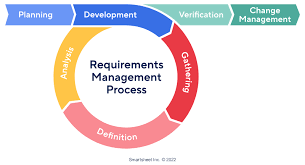
Image Suggestion: Change Control Workflow Diagram
- Alt Text: Managing Requirement Changes Change Control Workflow
Video Resource:
https://www.youtube.com/watch?v=5qap5aO4i9A
Frequently Asked Questions (FAQ)
What is the goal of managing requirement changes?
To control scope, reduce risk, and ensure only valuable changes are implemented.
Who approves requirement changes?
Typically a Change Control Board, product owner, or senior stakeholders.
Are requirement changes allowed in agile?
Yes, but they must still be prioritized and agreed upon.
How can scope creep be avoided?
By enforcing formal change requests and impact analysis.
What documents need updates after a change?
Requirements, designs, test cases, and traceability matrices.
Conclusion
Managing requirement changes does not have to be complex or risky. With a simple, structured change control playbook, teams can embrace change while maintaining control.
By following these 7 powerful steps, organizations can reduce uncertainty, improve delivery success, and turn requirement changes into a positive force for project outcomes.
Leave a Reply