Think about the first 20 minutes of your morning. You turn off your smartphone alarm, scroll through a few notifications, fire off a quick reply to a teammate on Slack, and maybe check if your paycheck hit your account.
We rarely pause to think about it, but behind every single one of those seamless taps is an invisible, living maze of logic. Software.
It’s easy to treat software like a utility—like electricity or running water. But the truth is, software has become the literal nervous system of the modern economy. It doesn’t matter if you’re a scrappy two-person team trying to launch a disruptive idea or an established brand keeping thousands of clients happy; your software dictates exactly how fast your business can run.
But let’s be entirely honest: building software today isn’t about sitting in a dark room manually typing out thousands of lines of basic code anymore. In 2026, the landscape has completely shifted. With AI acting as an active co-pilot and multi-agent systems handling routine plumbing, the job of “developing software” has evolved into something much more human. It’s about architecture, system design, and deep problem-solving.
If you’re trying to build a digital product, let’s pull back the curtain on how it actually works, what the real journey looks like, and how to build something your users will genuinely love.
What Are We Actually Talking About Here? :
If you open an old textbook, it’ll tell you software development is “the systematic process of designing, coding, and maintaining applications.”
If you ask a real builder: Software development is simply the creative, sometimes messy journey of turning a “What if?” into a functional digital tool that removes a human headache.
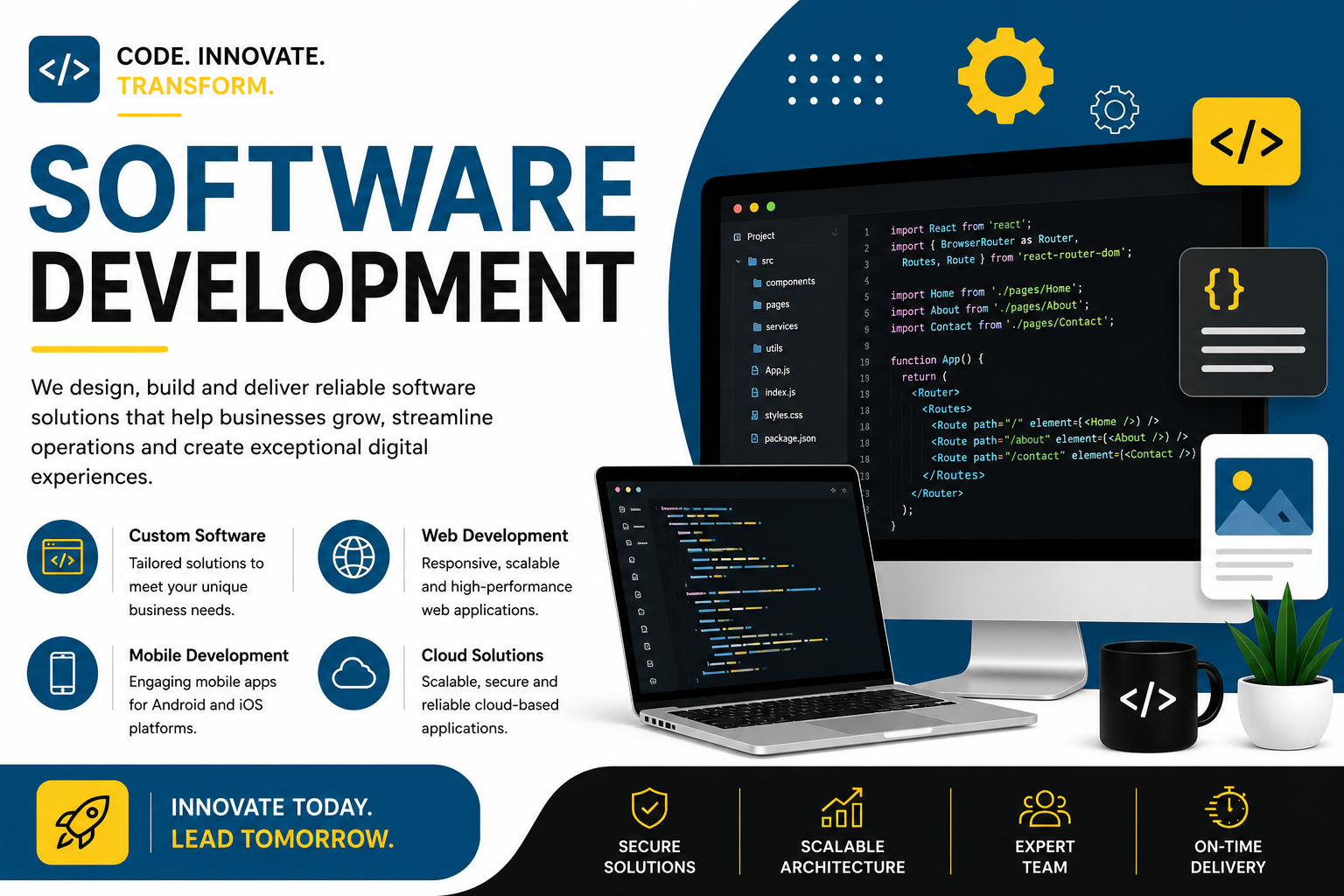
We are miles past the era of buying software on a physical CD-ROM. Today’s tech ecosystem is a collection of moving parts that have to talk to each other perfectly:
- Pocket Tech (Mobile Apps): The highly optimized apps that live on iOS and Android.
- Web Platforms (SaaS): Powerful tools like Notion, Figma, or Canva that run beautifully right inside a browser tab.
- The Internal Infrastructure: The heavy-duty systems (like CRMs or ERPs) keeping massive supply chains and operations teams from melting down.
- The Cloud Backbone: Secure servers (AWS, Azure, Google Cloud) that host the code and let your app scale instantly from ten users to ten million.
The point isn’t to build tech for the sake of tech. The goal is to build something so reliable and effortless that your users don’t even have to think about the engineering behind it.
The Hidden Tax of “Good Enough” Systems :
When a business decides to lean on outdated tools, manual tracking, or an absolute mountain of duct-taped spreadsheets, it pays a silent, compounding tax every single day.
You see it when:
- Your best employees burn hours on mind-numbing manual data entry instead of strategic work.
- Tiny human errors slide through the cracks and cost real money.
- Your business hits a growth wall because your tools literally can’t handle a surge in traffic.
- Customers get frustrated by a clunky interface and quietly slide over to a competitor who has a smooth, modern app.
Investing in software isn’t about checking an IT box. It’s about buying your team’s time back, automating the repetitive loops, and securing clean data so you can make confident, calculated business moves.
Choosing Your Weapon: The Tech Setup
You don’t need to become an overnight engineer, but understanding the basic flavors of development helps you ask the right questions when you’re ready to build.
1. Web & Browser Apps :
Web apps have become incredibly sophisticated. Instead of static pages, we’re building dynamic, real-time spaces.
- The Standard Stack: Modern web ecosystems lean heavily on TypeScript, React, and Node.js. TypeScript has quickly skyrocketed to become a developer favorite because it catches bugs before the code even runs.
- 👉 Curious about how modern web structures are put together? Take a look at our Web Development Services.
2. Mobile App Strategy :
When building for phones, you have two real options. You can build Native Apps (using Swift for iOS and Kotlin for Android) to get absolute max performance out of the hardware. Or, you can use Cross-Platform Frameworks like Flutter or React Native. The cross-platform route lets you write the codebase once and deploy it across both stores—a massive shortcut for teams watching their budget.
3. Custom vs. Off-The-Shelf :
Think of off-the-shelf software like a suit you buy off a rack at a department store. It mostly fits, but the shoulders are tight and the sleeves are too long. Custom software is a tailored suit. It’s built entirely around your specific operational DNA, meaning you don’t have to warp your company’s workflows to fit into someone else’s generic app structure.
The Real Lifecycle: How an Idea Becomes Reality :
Forget the overly technical jargon for a minute. When a great product team builds software, they follow a common-sense roadmap that looks like this:
[The Deep Dive] ➔ [The Strategy] ➔ [Designing the Vibe] ➔ [The Architecture & Build] ➔ [Trying to Break It] ➔ [The Release]
- The Deep Dive: Before a single line of code is mapped, you have to nail the fundamentals. Who is the actual user? What is their biggest day-to-day frustration? What problem are we explicitly solving?
- The Strategy: This is where you outline boundaries. Project managers lock down the features for version 1.0 (your Minimum Viable Product), map timelines, allocate budgets, and select the right tech stack.
- Designing the Vibe: UI (User Interface) is how it looks; UX (User Experience) is how it feels. Designers build interactive, clickable prototypes. This means you can physically test the user journey before engineers spend weeks wiring up the backend logic.
- The Architecture & Build: This is where the heavy engineering happens. Front-end developers craft the interface you interact with, while back-end developers build the engines, logic circuits, and database structures that power everything from behind the scenes.
- Trying to Break It: Quality Assurance (QA) teams are paid to be professional skeptics. They run code reviews, automate test suites, and hunt down bugs or security vulnerabilities before your actual users ever get the chance to find them.
- The Release & The Long Haul: The app goes live on cloud servers. But remember, software is a living thing. The moment it launches, the journey shifts to optimization—pushing security updates, tweaking performance based on real analytics, and rolling out new features based on user feedback.
How Modern Teams Deliver Fast (Agile & DevOps) :
The old days of a development team locking themselves away for a year and emerging with a massive, unverified product are long gone. It was too risky and led to broken timelines.
Today, top teams rely on highly collaborative methodologies:
- Agile & Scrum: Instead of building everything at once, projects are broken down into small, digestible chunks called sprints (usually 2-week blocks). You build a specific feature, put it in front of stakeholders, get feedback, and pivot based on real-world inputs.
- DevOps & Hyperautomation: This bridges the gap between building code and running it on servers. By using automated pipelines, whenever a developer updates code, it automatically goes through security checks and testing scripts, allowing teams to ship safe updates seamlessly.
The Uncomfortable Hurdles of Product Development :
Let’s cut through the sales pitches: building software can be challenging. If you want to finish your project on time and on budget, you need to watch out for three classic traps:
- Scope Creep: It starts with a simple phrase: “Hey, while you’re in there, can we add this one tiny feature?” Do this five times, and your project is suddenly three months late. Stand firm on your core features for your initial launch. You can always build version 2.0 later.
- The Shiny Object Syndrome: New tech frameworks and models pop up every single week. The trick is choosing stable, battle-tested, highly supported languages rather than chasing every single trend on tech forums.
- Communication Silos: The biggest failures in tech rarely happen because a developer didn’t know how to code. They happen because the business team and the engineering team weren’t speaking the same language. Keep communication lines clear, transparent, and direct.
External link :
- Custom Software Development Services
- Web Development Services
- Mobile App Development Services
- Artificial Intelligence Development Services
- Cloud Computing Solutions
Rich Media Links :
- AWS: The Absolute Basics of Cloud Computing
- MDN Web Docs (The Standard for Modern Web Building)
- Python Software Foundation
Internal Links :
(Frequently Asked Question)FAQ :
How long does a software project actually take?
There’s no generic timeline. A focused, streamlined MVP can take anywhere from 8 to 12 weeks. A massive, ground-up enterprise tool or specialized platform might take several months of continuous iteration. The smartest move is always to launch a lean version early and build onto it over time.
Should we buy existing software or build custom?
Look at it through this lens: Is this specific tool going to be your competitive advantage or part of your company’s secret sauce? If the answer is yes, build it custom. If it’s a non-core business function—like your company’s internal email client or payroll processing—save your capital and subscribe to a trusted off-the-shelf platform.
What’s the best language for my app?
Honestly, don’t lose sleep over the language choice. Let your technical lead or development partner pick the tool that best fits your exact performance and database requirements. What matters far more is choosing an ecosystem with a huge developer community so you can easily bring on talent to maintain it down the road.
Final Thoughts :
When you peel back the layers, great software development isn’t really about algorithms or cloud configurations. It’s about empathy. It’s about looking at an everyday frustration someone experiences and building a clean, digital bridge to solve it.
Whether you are launching your first startup product or breathing new life into an old system that your company has outgrown, the secret to success remains completely unchanged: stay incredibly close to your actual users, build in small iterations, and choose development partners who care about your bottom line just as much as they care about their code.
☎️ 919967940928
🌐 https://aibuzz.net/
Leave a Reply