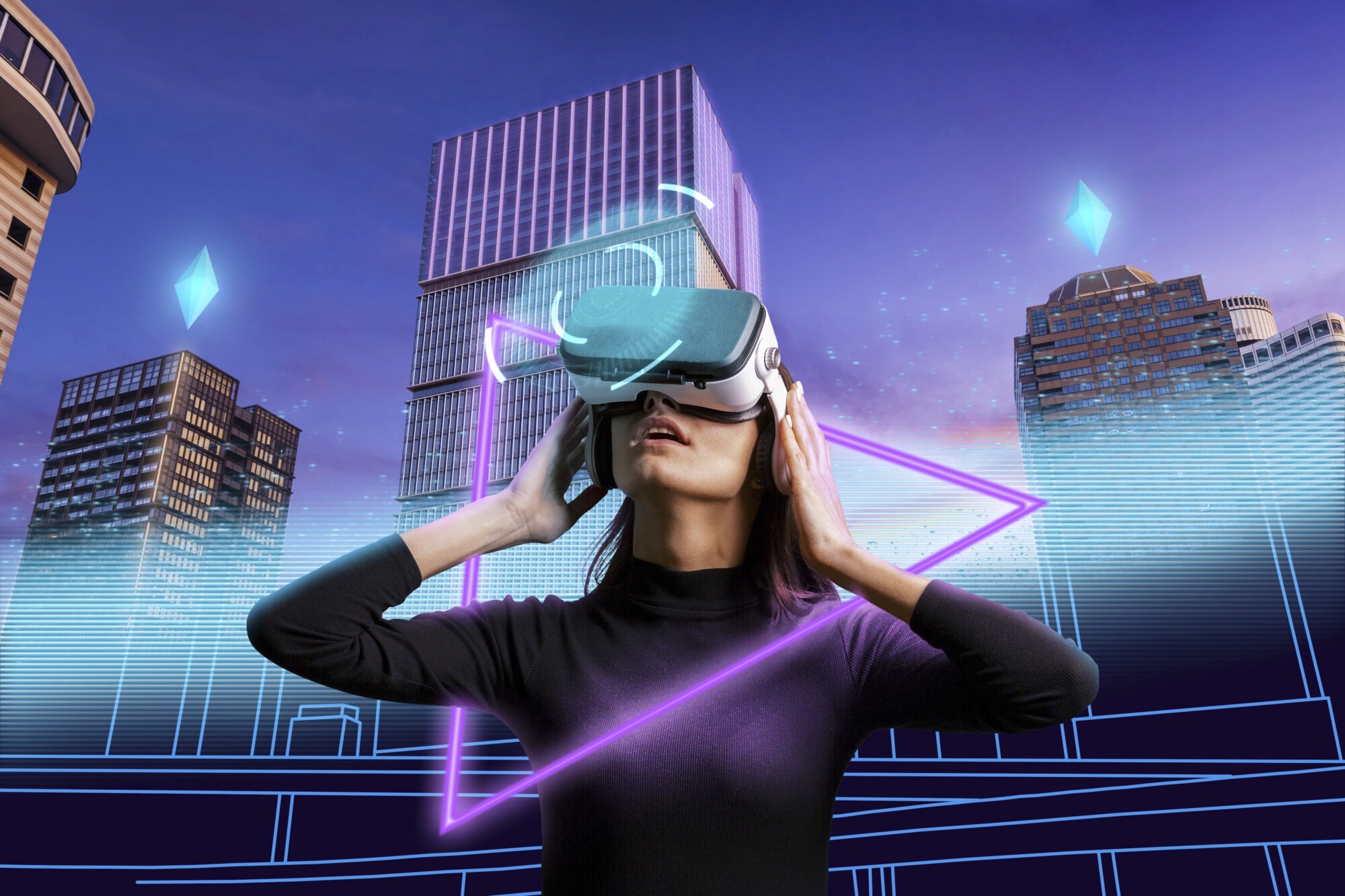
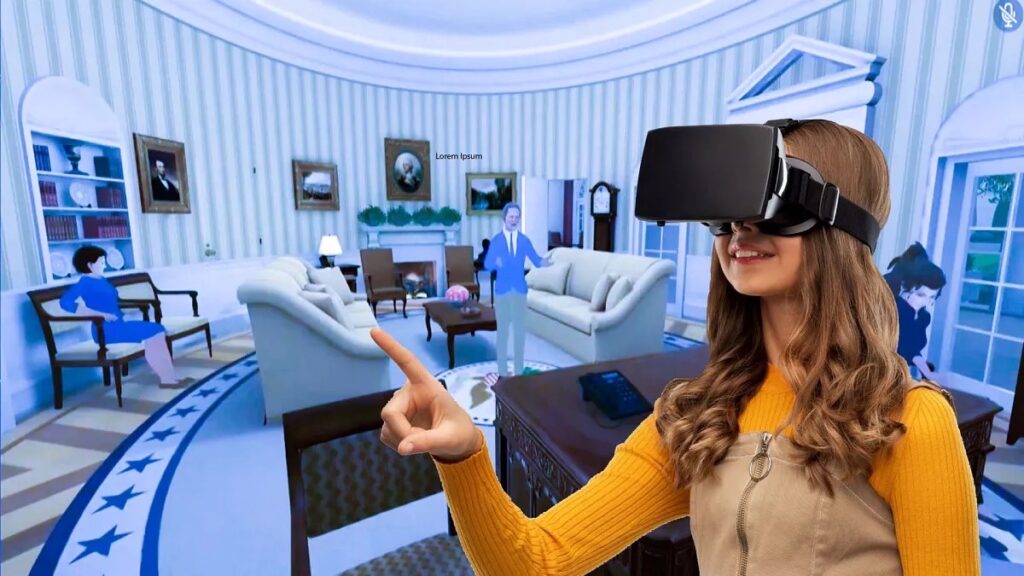
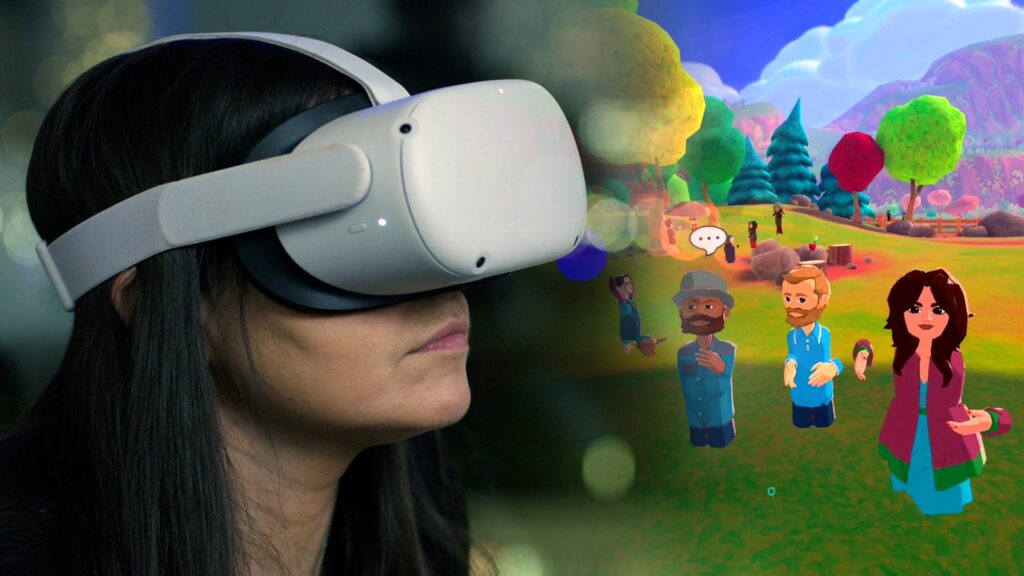
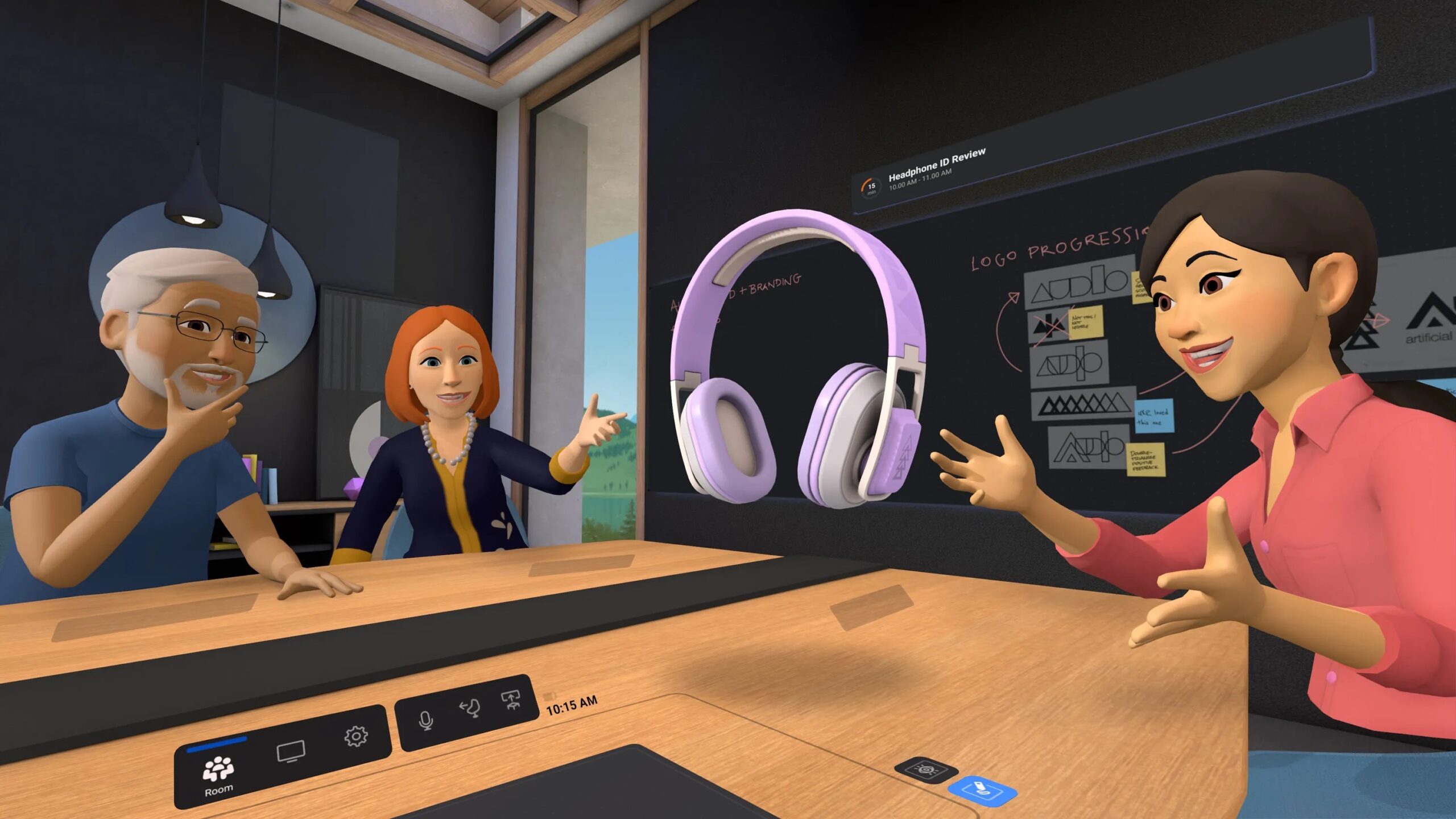
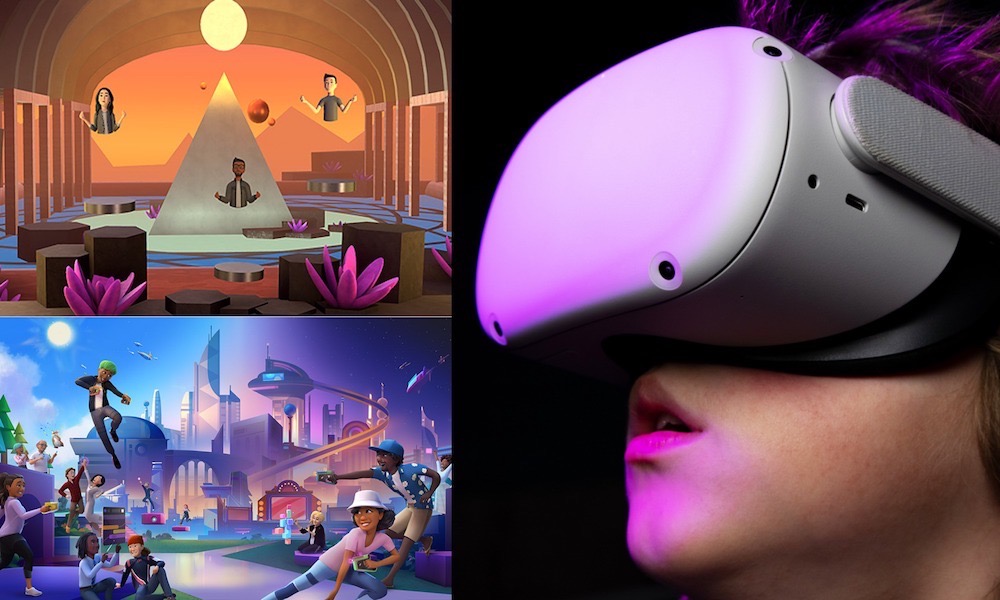
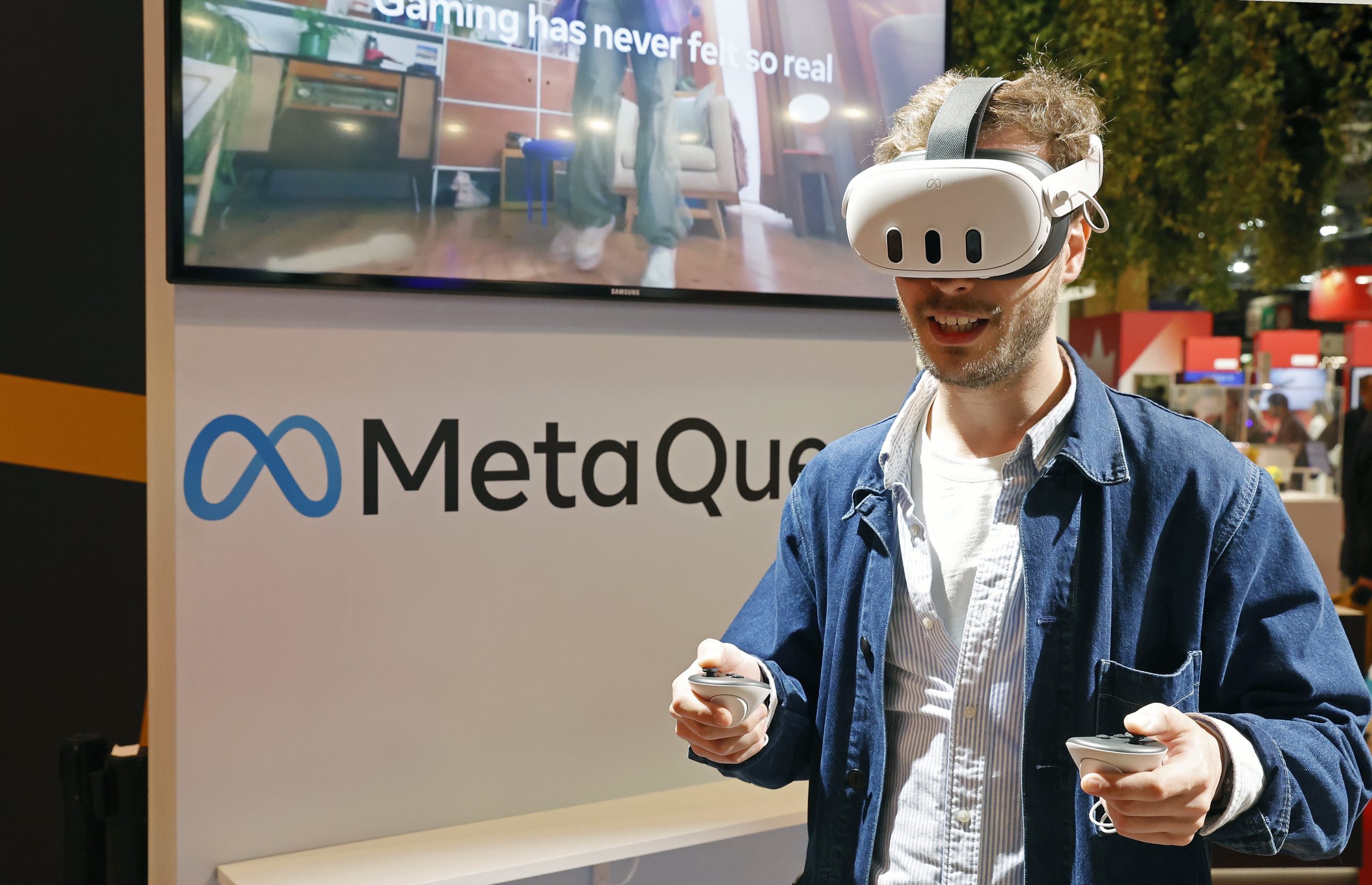
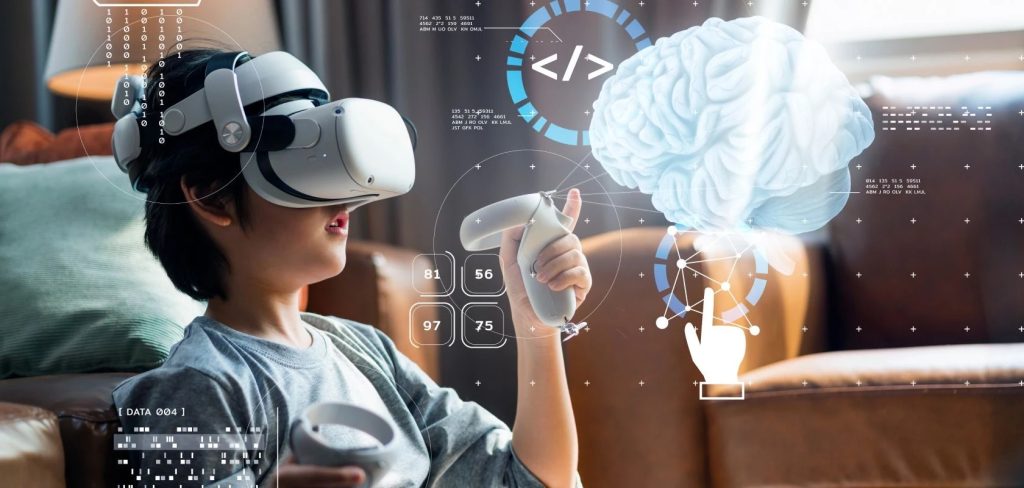
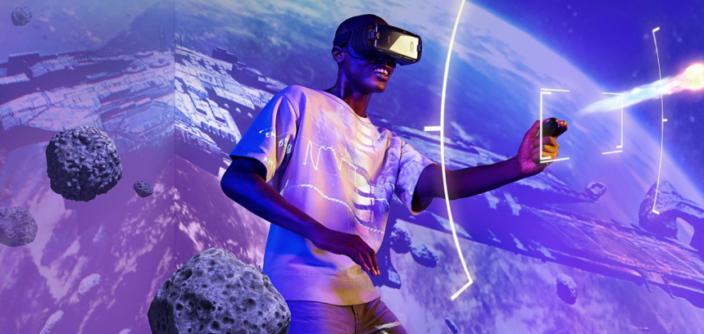
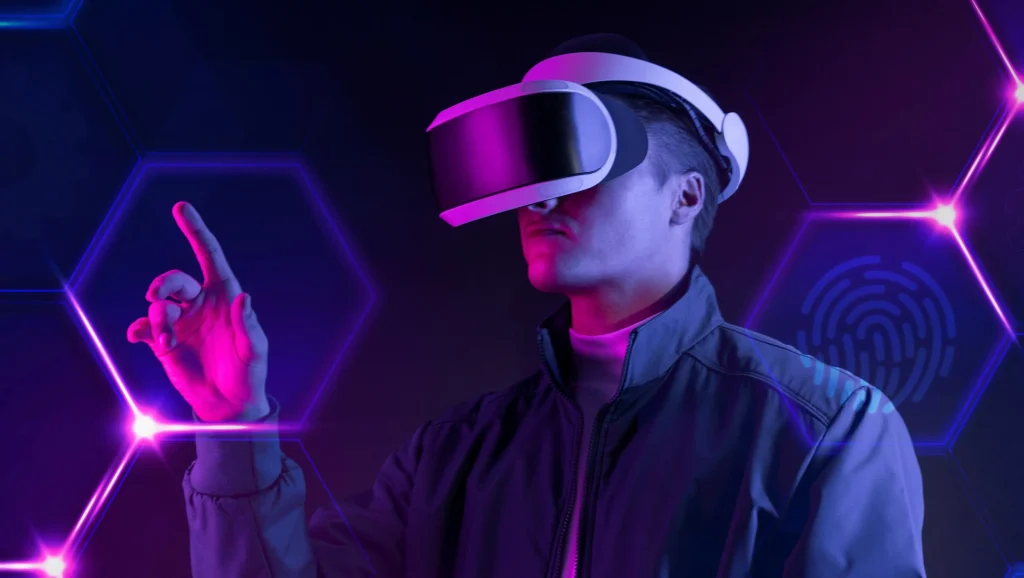
Technology has evolved at a breathtaking pace, and with it, the world of immersive experiences has entered a whole new dimension—literally. While Virtual Reality (VR) and Augmented Reality (AR) have already made their mark, a new frontier called 9D Virtual Reality is redefining how we interact, learn, and entertain ourselves in 2025.
But what exactly is 9D Virtual Reality, and why is it being hailed as the future of immersive experiences? Let’s dive into the technology, explore its benefits, and see how businesses can harness it to stay ahead.
What is 9D Virtual Reality?
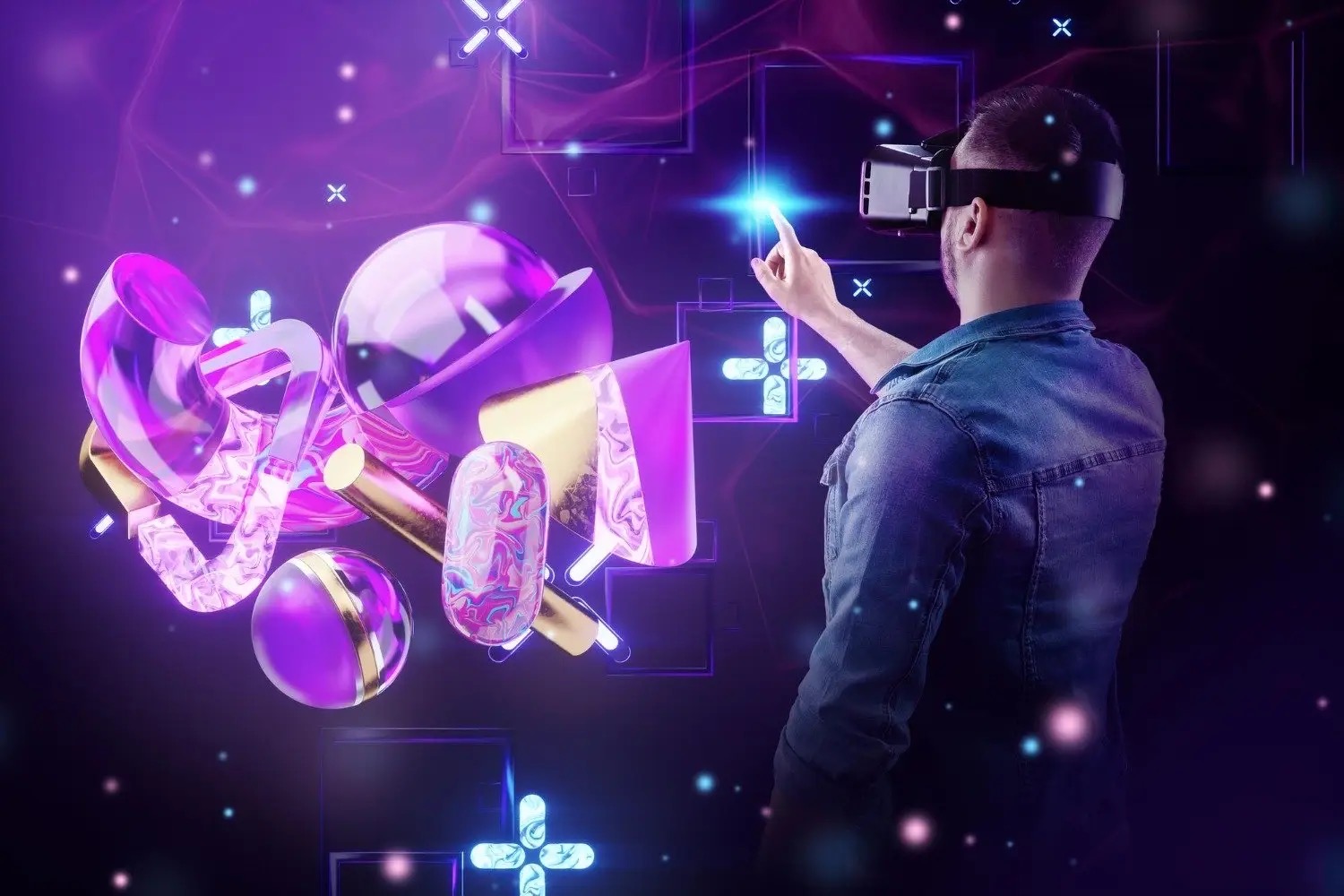
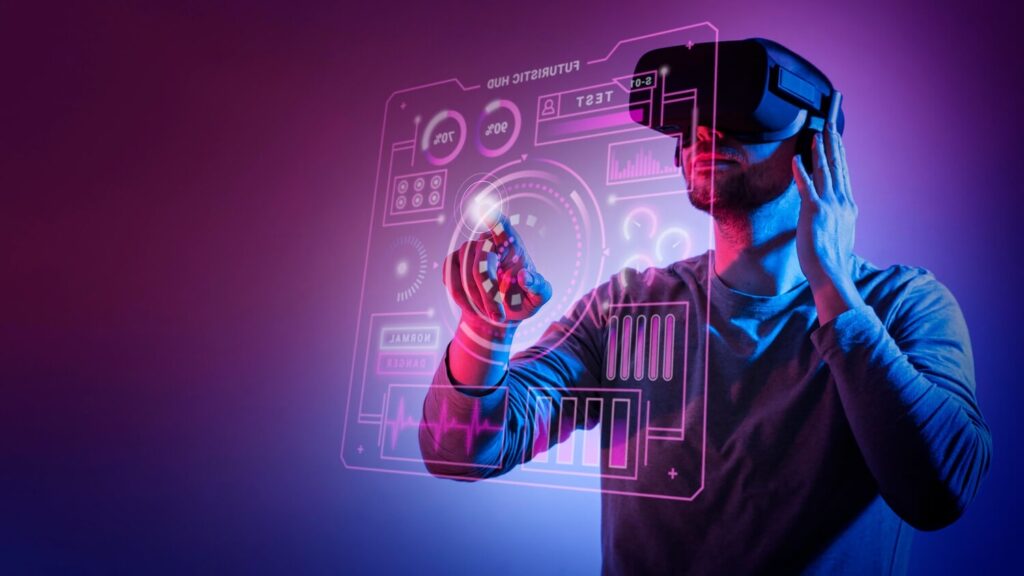
9D Virtual Reality is the next evolution of VR, designed to provide users with a multi-sensory immersive experiencethat goes far beyond sight and sound. Unlike traditional VR, which primarily engages the eyes and ears, 9D VR stimulates all senses—including touch, motion, smell, and even environmental effects like wind, vibration, and temperature.
This is achieved through advanced VR pods, simulators, motion chairs, and haptic devices that respond in real-time to the virtual environment. Imagine flying through space and actually feeling the motion, or diving underwater and experiencing vibrations, sprays of mist, and sound all around you. That’s the power of 9D Virtual Reality.
7 Powerful Benefits of 9D Virtual Reality
1. Unmatched Immersion
9D VR offers a fully immersive experience by engaging multiple senses. This creates the illusion of being physically present in a digital world—an experience far superior to conventional VR.
2. Interactive Storytelling
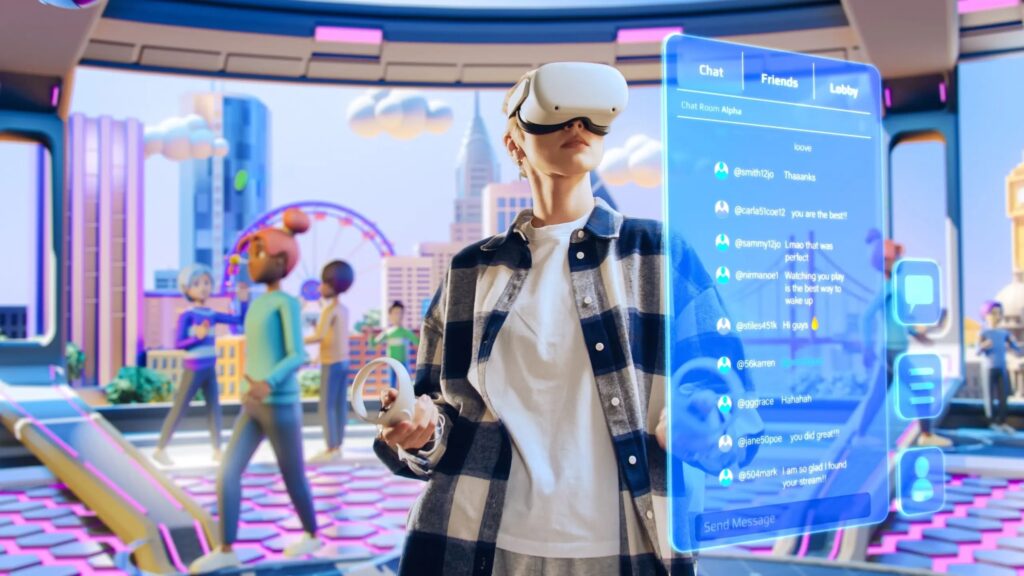
Users are no longer just viewers—they become participants. With 9D Virtual Reality, stories come alive, and the audience can interact with characters, environments, and outcomes in ways that traditional media cannot match.
3. Realistic Training Environments
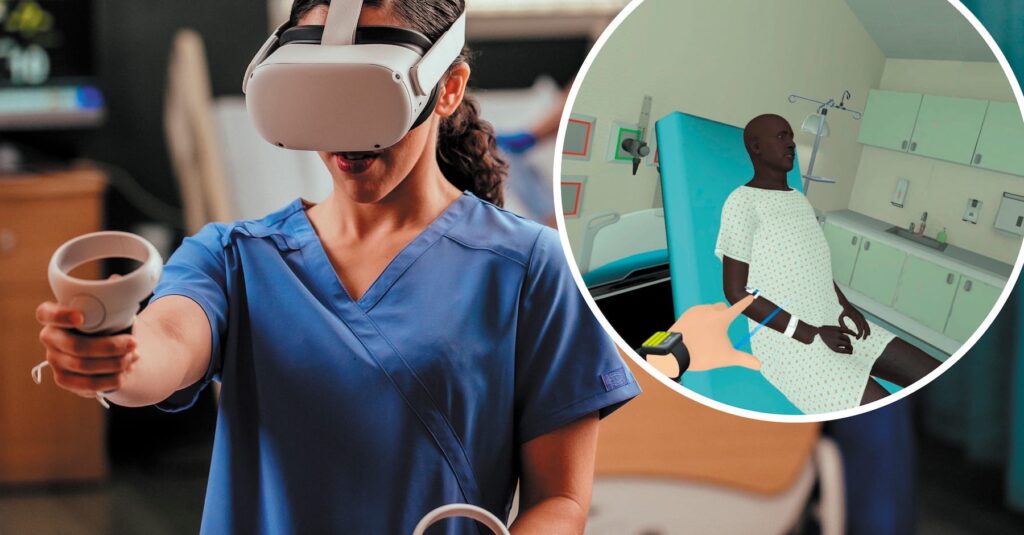
Industries like healthcare, aviation, and defense are adopting 9D VR for training simulations. Trainees can practice in safe, controlled environments that replicate real-life conditions with astonishing realism.
4. Enhanced Entertainment Experiences
From theme parks to gaming arcades, 9D VR pods and simulators deliver thrilling experiences that attract crowds. Roller coasters, space rides, and horror simulations feel lifelike, making them unforgettable.
5. Personalized Learning
Education powered by 9D Virtual Reality is revolutionizing classrooms. Students can experience historical events, explore the human body, or visit distant planets—all with interactive engagement.
6. Global Business Opportunities
The rise of VR arcades, 9D cinemas, and entertainment centers has opened new revenue streams worldwide. Entrepreneurs and investors are capitalizing on the demand for these next-generation experiences.
7. Future-Proof Technology
As consumers demand more immersive experiences, 9D Virtual Reality is set to dominate industries from gaming to healthcare. Investing in this technology now ensures businesses remain ahead of the curve.
Industry Applications of 9D Virtual Reality
Gaming & Entertainment
9D VR is redefining gaming arcades and theme parks by offering ultra-immersive simulations that thrill players and boost engagement.
Healthcare
Doctors and medical students can use 9D VR to simulate surgeries, understand anatomy, and practice complex procedures in risk-free environments.
Education
Virtual field trips, 3D experiments, and immersive storytelling allow students to grasp difficult concepts faster and more effectively.
Corporate Training
Enterprises are adopting 9D VR to train employees in areas like safety, customer interaction, and technical workflows without real-world risks.
Tourism & Real Estate
9D VR allows customers to explore destinations or properties virtually—making decisions easier and experiences more interactive.
How Do We Deliver Effective and Scalable VR Solutions?
Performance-Driven Strategy
At AIBuzz, we specialize in building high-impact VR solutions designed to maximize engagement, immersion, and ROI. Whether it’s VR simulations, 9D pods, educational applications, or enterprise solutions, we ensure your virtual experiences reach the right audience at the right time.
Our approach combines data-driven insights with creative excellence, ensuring every VR project is optimized for both performance and reach. From concept design and content creation to hardware integration and analytics, AIBuzz handles the entire 9D VR journey with precision—helping your business thrive in today’s experience-driven digital landscape.
The AIBuzz Advantage in Digital Transformation
AIBuzz Technoventures Pvt Ltd is a leading technology solutions provider dedicated to delivering high-impact digital transformation services. Their portfolio spans:
- Advertising Services – Creative, data-driven campaigns for brand visibility.
- IT and Tech Services – Complete infrastructure management, cloud solutions, and security.
- Software Development – Tailored applications to meet unique business needs.
- Artificial Intelligence – AI-driven insights, automation, and predictive analytics.
- Cryptocurrency Development – Secure blockchain-based solutions and token creation.
- Virtual Reality & Mixed Reality – Immersive experiences for training, marketing, and simulation.
- TD Pipeline Development – Streamlined data processing and workflow optimization.
- Big Data Service – Advanced analytics and data strategy for smarter decision-making..
With such diverse expertise, AIBuzz doesn’t just create VR content—it builds future-ready immersive ecosystems for businesses worldwide.
Conclusion: Step Into the Future with 9D Virtual Reality
In 2025, 9D Virtual Reality is no longer science fiction—it’s a powerful tool transforming industries, creating new business models, and delivering unforgettable user experiences. From entertainment and education to healthcare and corporate training, its potential is limitless.
At AIBuzz Technoventures Pvt Ltd, we deliver cutting-edge 9D Virtual Reality solutions tailored to your business needs, ensuring scalability, performance, and innovation. With our end-to-end expertise, we can help you harness VR technology to stay ahead of the competition.
📞 Contact AIBuzz: +91 9967940928
🌐 Visit: www.aibuzz.net
📧 Mail: info@aibuzz.net