Augmented Reality (AR) is no longer just a futuristic concept—it’s here and shaping our present reality in ways we never imagined. From revolutionizing industries like retail and healthcare to transforming gaming and education, AR is bridging the gap between the physical and digital worlds. But that’s not all. The integration of Virtual Reality (VR) and Mixed Reality (MR) is amplifying the impact of AR, creating even more immersive experiences for users worldwide.
In this blog, we’ll dive deep into seven essential ways AR is reshaping the world and how it is blending with MR and VR to create an innovative future.
1. Augmented Reality in Retail: Enhancing Shopping Experiences
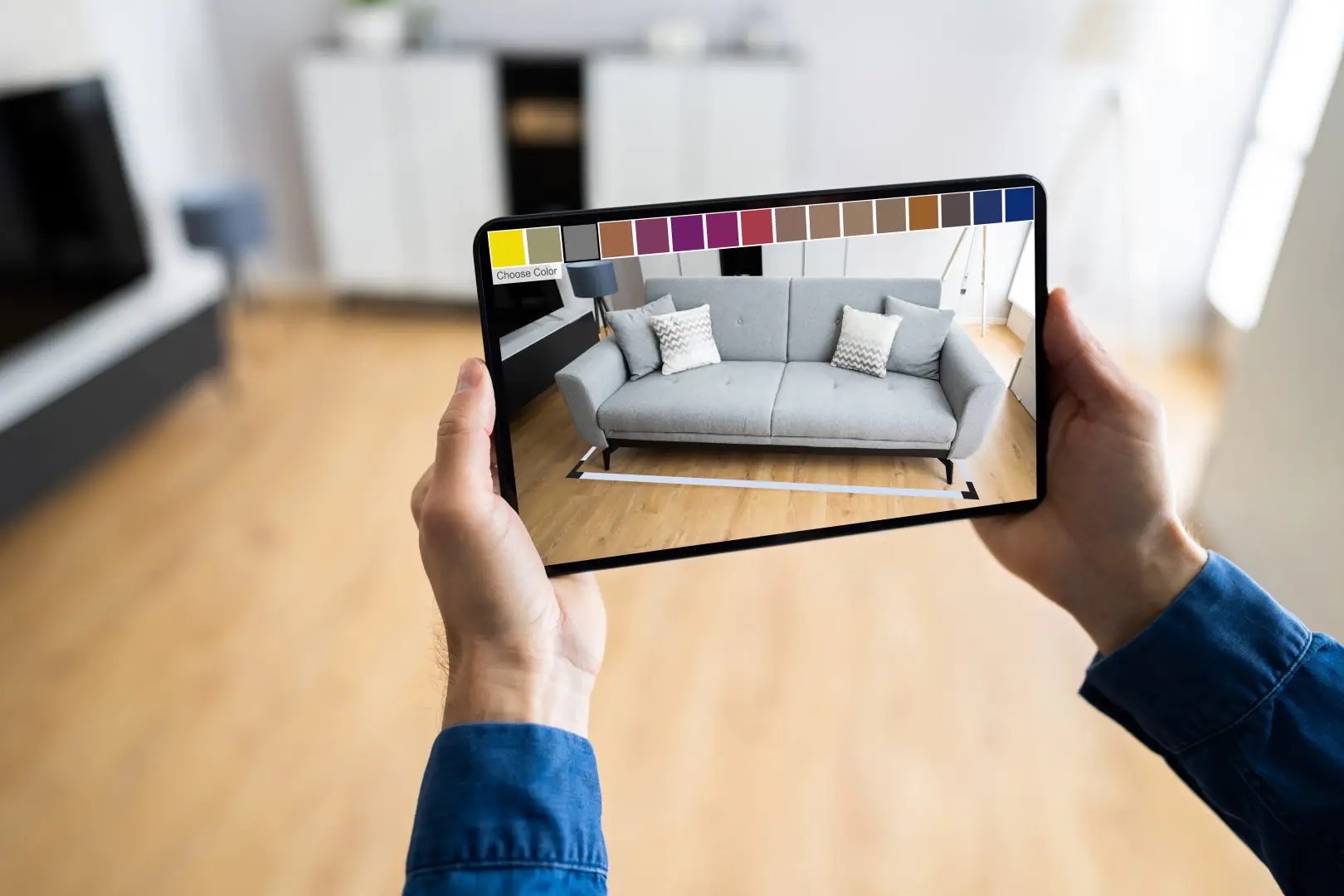
Online shopping has taken a new turn with AR-powered try-ons and product visualizations. Consumers can now see how a piece of furniture fits into their living room before purchasing or how a pair of shoes looks on their feet—all from the comfort of their homes.
Retail giants like IKEA and Sephora have integrated AR into their platforms, allowing customers to make more informed purchasing decisions. This interactive shopping experience reduces return rates and increases customer satisfaction, making AR an essential tool for the future of retail.
2. Augmented Reality in Healthcare: A Medical Game Changer
The healthcare industry is experiencing a major transformation with AR. Surgeons now use AR to overlay 3D models of organs onto a patient’s body, allowing for more precise surgeries. Medical students can practice procedures in AR environments before working on real patients, reducing the risk of errors.
Beyond surgery and education, AR is also improving patient care. For instance, AR-powered smart glasses help visually impaired individuals navigate their surroundings, while AR apps assist in diagnosing and treating conditions more effectively.
3. Augmented Reality in Education: Making Learning Immersive
Forget traditional textbooks—learning has become far more interactive with AR. Imagine students exploring the solar system in 3D, dissecting a frog virtually, or walking through historical sites without leaving their classroom. AR brings lessons to life, making education engaging and effective.
Apps like Google Expeditions and Merge Cube allow students to interact with digital models of complex subjects, making learning an experiential process rather than just theory.
4. Augmented Reality in Gaming: The Next-Level Entertainment
Gaming was one of the first industries to adopt AR, and it continues to thrive with titles like Pokémon GO and Harry Potter: Wizards Unite. These games merge the digital world with the real world, making users interact with their surroundings in exciting new ways.
But AR in gaming isn’t stopping there. Virtual Reality (VR) and Mixed Reality (MR) are stepping in to enhance the experience further, allowing gamers to step inside virtual environments while still engaging with the physical world around them.
5. Mixed Reality (MR) and Virtual Reality (VR): The Future of Immersive Technology
While AR overlays digital content onto the real world, Mixed Reality (MR) and Virtual Reality (VR) take immersion to the next level.
- Virtual Reality (VR) creates a fully immersive digital world where users can explore and interact with their surroundings without any connection to reality. VR is widely used in gaming, training simulations, and virtual tourism.
- Mixed Reality (MR) blends AR and VR, allowing users to interact with digital objects while still being connected to their real-world environment. Industries like manufacturing, medical training, and architecture benefit greatly from MR’s ability to provide real-time, hands-on interactions.
For example, in industrial training, MR allows workers to practice assembling complex machinery without the risk of damaging real equipment. In real estate, VR and MR help potential buyers take virtual property tours before making investment decisions.
6. Augmented Reality in Manufacturing and Engineering
Manufacturing is undergoing a major overhaul with AR’s real-time data overlays, step-by-step assembly guides, and remote assistance capabilities. Workers equipped with AR smart glasses can receive live instructions, inspect machinery without dismantling it, and increase their efficiency while reducing errors.
Companies like Boeing and Ford are using AR to train their workforce and streamline production. AR enhances workplace safety and reduces downtime, making it an essential component of Industry 4.0.
7. Augmented Reality in Travel and Tourism: Exploring Like Never Before
The tourism industry is leveraging AR to offer interactive and engaging experiences. AR-powered apps allow travelers to point their smartphones at landmarks and receive real-time historical information, directions, and even visual reconstructions of ancient ruins.
Additionally, VR tourism experiences enable users to explore destinations virtually before booking trips, while MR-powered interactive museum exhibits make learning about history more engaging than ever.
The Future of Augmented Reality: What’s Next?
AR, VR, and MR are shaping the future of how we interact with technology, and advancements in 5G, AI, and AR wearables will further enhance these experiences. As AR continues to evolve, we can expect even more practical applications across industries, from remote work and telemedicine to social AR interactions.
How AIBuzz is Leading the AR Revolution
At aibuzz, we are at the forefront of technological innovation, integrating Augmented Reality, Virtual Reality, and Mixed Reality into cutting-edge solutions for businesses worldwide. Whether you’re looking to enhance customer engagement, improve training processes, or revolutionize your industry with immersive experiences, our expertise in AR-driven applications can help you stay ahead in the digital era. Explore the endless possibilities of AR with aibuzz today!
Leave a Reply