
In today’s fast-paced digital world, businesses must embrace automation, agility, and efficiency to stay ahead of the competition. DevOps is a modern approach that integrates artificial intelligence (AI) and machine learning (ML) into traditional DevOps pipelines. This enhances software development and deployment by optimizing processes, improving decision-making, and ensuring continuous delivery

But what does an effective DevOps pipeline architecture look like? Let’s explore the seven essential components that make it successful and understand how they can revolutionize software development.
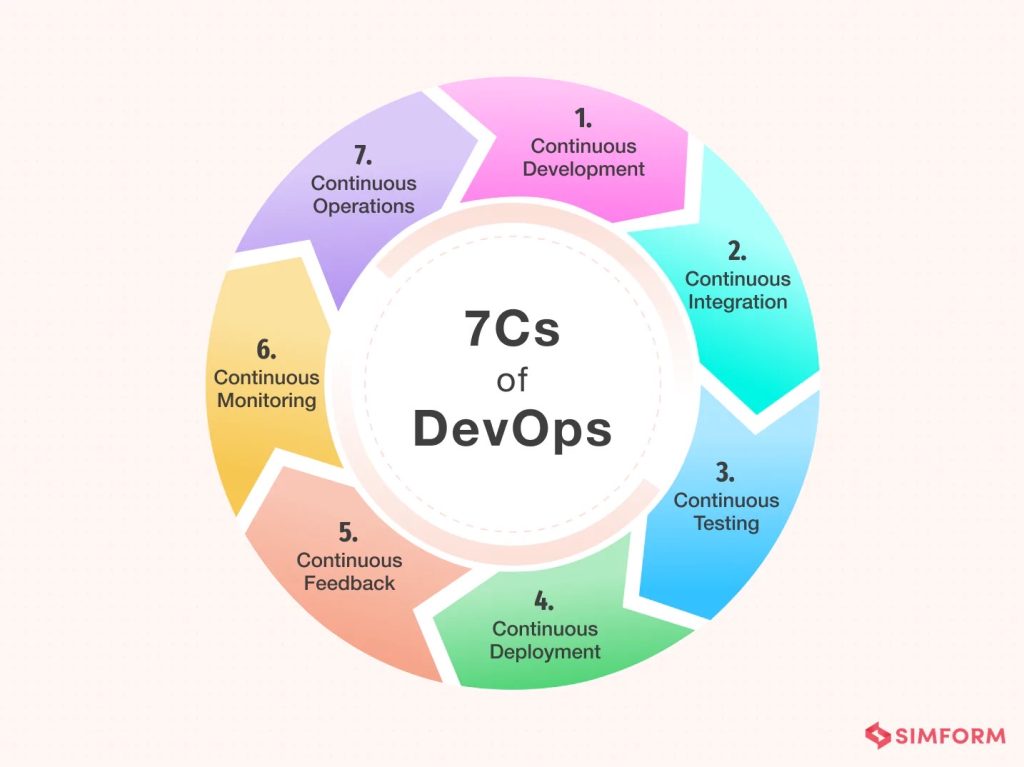
1. Intelligent Continuous Integration (CI)
Continuous Integration (CI) is the backbone of DevOps, allowing developers to merge code changes frequently. This approach ensures that any code updates do not break the existing system. In a DevOps pipeline, AI-powered CI tools detect anomalies, predict build failures, and recommend optimizations before issues escalate. Automated testing at this stage ensures code quality before it progresses further down the pipeline.
Key Features:
- AI-driven test automation that identifies patterns in coding errors and suggests improvements.
- Predictive failure analysis that detects potential integration issues before they occur.
- Smart error detection and resolution to minimize development downtime.
2. Intelligent Continuous Delivery (CD)
Continuous Delivery (CD) ensures that new code is always in a deployable state. The DevOps pipeline leverages AI to analyze historical deployment patterns and optimize release cycles. It automates testing, security checks, and rollback mechanisms, reducing risks associated with deployments.
Key Features:
- Smart deployment automation that dynamically adjusts release schedules based on application performance metrics.
- AI-based rollback triggers that prevent faulty releases from affecting end users.
- Performance-based release decisions, using real-time data to ensure seamless rollouts.
3. AI-Powered Monitoring and Observability
An efficient DevOps pipeline incorporates AI-powered observability tools that monitor application health, detect anomalies, and predict failures before they occur. These tools use ML algorithms to analyze logs, metrics, and traces in real-time, ensuring rapid incident resolution.
Key Features:
- Automated root cause analysis that speeds up problem identification and resolution.
- Predictive issue detection that helps prevent system outages before they impact operations.
- Proactive alerting and incident response using AI-powered anomaly detection systems.
4. Intelligent Security (DevSecOps)
Security must be embedded throughout the development lifecycle. DevOps integrates AI-driven security mechanismsto detect vulnerabilities, identify threats, and enforce compliance without slowing down development.
Key Features:
- AI-based vulnerability scanning that automatically identifies security flaws in code.
- Automated compliance checks that ensure industry standards are met without manual intervention.
- Intelligent threat analysis that predicts security risks based on past attack patterns.
5. Automated Infrastructure as Code (IaC)
Infrastructure as Code (IaC) plays a crucial role in a DevOps pipeline, ensuring consistent and scalable infrastructure management. AI-powered automation helps predict infrastructure failures, optimize resource allocation, and dynamically scale services.
Key Features:
- Self-healing infrastructure that automatically detects and fixes issues before they impact users.
- Predictive scaling that dynamically adjusts resource allocation based on usage trends.
- Intelligent configuration management that optimizes cloud and on-premises infrastructure.
6. Machine Learning-Powered Feedback Loops
Continuous feedback is critical for improvement in DevOps. DevOps leverages ML-powered feedback loops that analyze user behavior, application performance, and system metrics to provide actionable insights.
Key Features:
- AI-driven user feedback analysis that helps teams make data-driven development decisions.
- Automated performance tuning that dynamically adjusts application behavior based on user engagement.
- Continuous learning and optimization to refine processes and enhance efficiency over time.
7. Intelligent Workflow Automation
Automation is at the heart of DevOps. AI-driven workflows reduce manual intervention, speed up processes, and enhance efficiency across the software development lifecycle.
Key Features:
- Automated task orchestration that intelligently sequences development, testing, and deployment activities.
- AI-driven decision-making that optimizes workflows for speed and reliability.
- Smart workload distribution that dynamically allocates tasks to teams or cloud-based resources.
Software Development and DevOps
Software development has evolved significantly, moving from traditional waterfall models to agile and DevOps-driven methodologies. DevOps takes this evolution further by embedding AI and ML into the development pipeline, making it more intelligent and adaptive. By integrating AI-powered automation into software development, businesses can reduce errors, accelerate release cycles, and improve overall product quality. This allows development teams to focus on innovation while AI-driven tools handle repetitive tasks and process optimizations.
The Future of DevOps: What’s Next?
As AI and machine learning continue to evolve, the future of DevOps promises even greater automation and efficiency. We can expect:
- Autonomous Development Pipelines: AI-driven pipelines that require minimal human intervention, reducing errors and improving speed.
- Hyper-Personalized AI Recommendations: AI that tailors development environments and workflows based on individual developer preferences.
- AI-Powered Incident Management: Self-healing applications that can predict and fix failures in real time, minimizing downtime.
Final Thoughts
DevOps is transforming traditional pipelines by integrating AI-driven intelligence at every stage. Businesses that adopt DevOps gain faster development cycles, improved software quality, enhanced security, and cost savings. By implementing these seven essential components, organizations can build a robust, intelligent DevOps pipeline that ensures continuous innovation and operational excellence.
Looking to optimize your software development pipeline with AI-driven DevOps solutions? Explore our advanced IT services at aibuzz.net and take your development efficiency to the next level!
Leave a Reply