Introduction
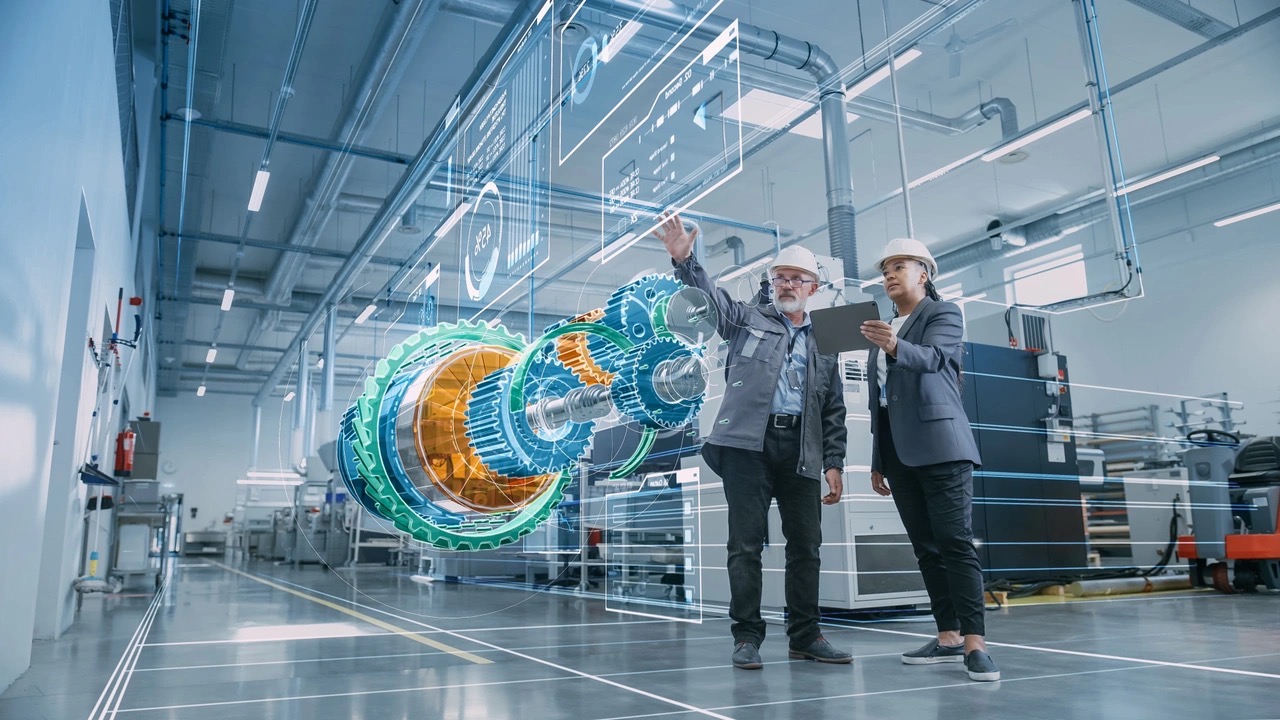
Industrial Mixed Reality (IMR) is revolutionizing the manufacturing sector, bridging the gap between the physical and digital worlds. By integrating Augmented Reality (AR) and Virtual Reality (VR), industries are enhancing productivity, training, and efficiency like never before. In 2025, IMR is not just an innovation—it’s an essential tool for industries aiming to stay competitive.
From real-time remote collaboration to error-free assembly lines, industrial mixed reality is paving the way for a smarter and more connected future. In this blog, we explore seven essential ways IMR is transforming industrial manufacturing and why companies need to adopt this technology now.
1. Enhanced Training and Workforce Development
Training industrial workers has always been expensive, time-consuming, and potentially hazardous. IMR is solving this problem by enabling realistic, immersive training environments where employees can practice skills without risks.
- Hands-on learning: Virtual simulations allow workers to interact with machinery without real-world consequences.
- Remote training: New hires can train from anywhere using industrial AR headsets and mixed reality glasses.
- Faster onboarding: Employees become proficient quicker, reducing downtime in production.
2. Real-Time Remote Assistance and Collaboration
Industrial operations often require expert intervention, but flying specialists to factories can be costly and time-consuming. Mixed Reality enables remote collaboration where experts can guide workers in real time.
- AR overlays: Experts can annotate and highlight machinery parts in real time.
- Faster troubleshooting: Engineers can diagnose and fix issues remotely.
- Reduced downtime: Equipment can be repaired without waiting for an in-person technician.
3. Precision in Manufacturing and Assembly
Manufacturing demands extreme accuracy, and Industrial Mixed Reality minimizes errors in assembly lines. IMR provides real-time 3D overlays and digital twins, ensuring precision in complex manufacturing tasks.
- Step-by-step assembly guides projected onto workstations.
- Quality control checks through real-time AR analysis.
- Reduction in errors, leading to improved product consistency.
4. Improved Maintenance and Repairs
IMR simplifies industrial maintenance by giving workers real-time diagnostics and repair guidance through smart glasses and AR headsets.
- Predictive maintenance: Machines alert workers before failures occur.
- AR-guided repairs: Workers receive visual step-by-step instructions.
- Reduced machine downtime, improving overall efficiency.
5. Digital Twins for Smart Manufacturing
A digital twin is a virtual representation of a physical system, allowing companies to simulate and optimize industrial processes.
- Enhanced workflow planning: Engineers can test modifications digitally before applying them.
- Predictive analytics: AI-powered digital twins detect potential issues before they happen.
- Optimized production: Reducing waste and improving efficiency.
6. Software Development and IT in Industrial Mixed Reality
Industrial Mixed Reality wouldn’t be possible without cutting-edge software development and IT support. Custom IMR applications, cloud computing, and AI integration are driving the next generation of industrial solutions.
- Custom software solutions: Industries need specialized applications tailored to their needs.
- Cloud-based collaboration: IMR applications require seamless cloud computing solutions.
- AI-driven automation: AI enhances IMR’s ability to analyze data and improve workflows.
7. Future of Industrial Mixed Reality with AI and IT Services
The future of Industrial Mixed Reality lies in AI-driven automation, advanced cloud IT solutions, and next-gen software development. Industries will rely on IT and tech services to scale their operations and maintain robust IMR ecosystems.
- Automated manufacturing: AI and IMR work together for precision tasks.
- Cybersecurity in IMR: IT solutions ensure data security in connected systems.
- Scalability: IT services allow businesses to expand IMR applications efficiently.
Conclusion
Industrial Mixed Reality is revolutionizing manufacturing, from training and maintenance to AI-powered automation. However, implementing IMR requires expert IT and software development services to ensure seamless integration and efficiency.
At aibuzz, we specialize in software development, IT solutions, and cutting-edge mixed reality applicationsfor industrial transformation. Contact us today to explore how our advanced tech solutions can enhance your business!
Leave a Reply