Tag: immersive technology

  • Artificial Intelligence (AI): A Super Human, No-Pressure Guide (Like a Friend Explaining It)

    Artificial Intelligence (AI): A Super Human, No-Pressure Guide (Like a Friend Explaining It)

    Let’s be honest.

    Artificial Intelligence is one of those topics that sounds way more complicated than it actually needs to be.

    When people hear “AI,” they usually imagine one of these things:

    • A robot taking over the world
    • A machine stealing everyone’s jobs
    • A supercomputer that knows everything
    • Or… something so technical that they immediately stop listening

    But the real AI you see today is not like that.

    Most AI is actually pretty simple in purpose:

    It’s a tool that helps computers notice patterns and make smart guesses.

    And yes—AI is already around you.
    Not in a scary way. More like a quiet assistant that’s been living in your phone and apps for years.


    What Is Artificial Intelligence (AI), Really?:

    Artificial Intelligence (AI) is a technology that helps computers do tasks that usually need human intelligence.

    But instead of explaining it like a textbook, here’s a real-life version:

    AI is like a super-fast learner

    If you show AI enough examples, it starts learning patterns.

    Just like humans do.

    For example:

    • If you show a child 100 pictures of cats, they start recognizing cats
    • If you show AI 100,000 pictures of cats, it becomes very good at spotting cats

    That’s AI.

    Not emotions.
    Not human thinking.
    Not “consciousness.”

    Just learning patterns from data.


    How AI Works (In the Most Human Way Possible):

    Imagine you run a small business.

    And you’re trying to answer questions like:

    • Which customers are likely to buy again?
    • Which products will sell best next month?
    • Which ads are wasting money?
    • Which leads are serious and which are just browsing?

    Now imagine doing that manually.

    You’d need hours… maybe days.

    This is where AI comes in.

    AI doesn’t replace your brain — it supports it

    AI looks at your past data and says:

    “Based on what happened before, this is most likely to happen next.”

    That’s it.

    AI is basically a prediction machine.

    And in the business world, prediction is power.


    Types of Artificial Intelligence (Without the Confusing Stuff):

    AI is not one single thing. It has levels.

    Narrow AI (The Only AI That Actually Exists Right Now)

    This is the AI we use today.

    Narrow AI is designed to do one job well.

    Examples:

    • Google Search
    • YouTube recommendations
    • Face unlock on your phone
    • Chatbots on websites
    • ChatGPT-style tools

    Narrow AI is smart, but only inside its specific task.

    General AI (The “Human-Like AI” People Talk About)

    General AI would be able to:

    • Learn anything
    • Understand the world like humans
    • Solve problems across all topics

    But here’s the truth:

    General AI is not real yet.

    It’s still research and theory.

    Super AI (The Sci-Fi Version)

    Super AI is the idea of AI becoming smarter than humans in every way.

    This is still a future concept.

    So no—AI is not secretly building an army.
    Not today.


    The Main Technologies Behind AI (Explained Like a Normal Person):

    AI has big terms, but the ideas are simple.

    Machine Learning (ML)

    Machine learning means:

    The system learns from data instead of being programmed for every situation.

    So instead of writing 10,000 rules, you train it using examples.

    Deep Learning

    Deep learning is like machine learning on steroids.

    It’s what powers:

    • Face recognition
    • Voice assistants
    • Image detection
    • AI that can generate text, images, and video

    Natural Language Processing (NLP)

    NLP is what helps AI understand human language.

    It powers:

    • Chatbots
    • Translation apps
    • Voice assistants
    • AI writing tools

    Where AI Is Used in Real Life (And You Probably Don’t Notice):

    AI isn’t a “future thing.”
    It’s already working quietly in the background.

    AI in Your Smartphone

    Your phone uses AI for:

    • Face unlock
    • Camera improvements
    • Auto photo editing
    • Voice commands
    • Predictive typing

    Every time your phone suggests the next word while you type…

    That’s AI.

    AI in Social Media

    Instagram, Facebook, YouTube, TikTok—all use AI.

    AI decides:

    • What content to show you
    • What to recommend next
    • Which posts might keep you scrolling

    That’s why sometimes you open Instagram for 5 minutes…

    And suddenly it’s been 45 minutes. 😭

    AI in Online Shopping

    Amazon and other platforms use AI to:

    • Recommend products
    • Predict what you might buy
    • Show personalized offers

    AI in Banking

    Banks use AI for:

    • Fraud detection
    • Suspicious transaction alerts
    • Credit risk analysis

    When your bank sends you a message like:

    “Did you make this transaction?”

    That’s AI doing its job.

    AI in Healthcare

    AI helps doctors by:

    • Analyzing scans faster
    • Detecting diseases earlier
    • Predicting health risks

    But no, AI is not replacing doctors.

    Doctors still make the final decisions.

    AI is just the helper that reduces human mistakes.


    Why AI Is Such a Big Deal (In a Practical Way):

    People don’t love AI because it’s trendy.

    They love it because it saves time.

    And time is money.

    Benefits of Artificial Intelligence

    AI helps with:

    • Automating boring work
    • Reducing human error
    • Improving productivity
    • Making smarter business decisions
    • Working 24/7 without breaks

    In simple words:

    AI is like having a smart employee who never sleeps.


    The Dark Side of AI (Because Yes, There Is One):

    AI is powerful, but it’s not perfect.

    And it can cause problems if used carelessly.

    1. Privacy Concerns

    AI needs data.

    And sometimes companies collect too much data.

    So privacy is a real concern—especially in apps and social platforms.

    2. Bias in AI

    AI learns from data.

    So if the data is biased, AI becomes biased too.

    That’s why AI can sometimes make unfair decisions in areas like:

    • Hiring
    • Loans
    • Facial recognition
    • Legal systems

    3. Job Fear

    Let’s not lie.

    AI can automate certain jobs.

    Especially repetitive jobs.

    But here’s the balanced truth:

    AI is not removing all jobs.
    It is changing jobs.

    New roles are already growing fast, like:

    • AI content strategist
    • Prompt engineer
    • Automation expert
    • Data analyst
    • AI product manager

    4. People Trusting AI Too Much

    AI can sound confident even when it’s wrong.

    So the biggest danger is:

    People treating AI like it’s always correct.

    AI is a tool.
    Not a god.


    The Future of Artificial Intelligence (What’s Actually Coming):

    The future of AI is not robots walking on streets.

    The real future is:

    • AI inside business software
    • AI inside customer support
    • AI inside HR and hiring tools
    • AI inside education apps
    • AI inside healthcare systems

    Basically:

    AI will become as normal as email.

    You won’t even call it “AI” anymore.

    It’ll just be… part of how things work.


    How Businesses Can Start Using AI (Without Getting Overwhelmed):

    Many businesses avoid AI because they think:

    • It’s expensive
    • It’s complicated
    • It’s only for big companies

    But today, AI is more accessible than ever.

    Step 1: Start With One Small Use Case

    Pick one area like:

    • Customer support
    • Marketing reports
    • Sales follow-ups
    • Lead generation
    • Content planning

    Step 2: Use Ready Tools First

    You don’t need to build AI from scratch.

    You can start with tools like:

    • Chatbots
    • AI writing assistants
    • AI analytics
    • Automation tools

    Step 3: Grow Slowly

    AI works best when you:

    Start small → measure results → improve over time.


    Link (Suggested):

    Want to understand AI even deeper? Read:
    Types of Artificial Intelligence: (Alternative short version)
    /narrow-ai-vs-general-ai-vs-super-ai/

    (External link ):-Wikipedia – Artificial Intelligence (Strong AI / Weak AI concepts)
    https://en.wikipedia.org/wiki/Artificial_intelligence


    Rich Media Link (Recommended):

    If you want a simple, visual way to learn AI, explore:
    Google AI – Machine Learning Crash Course (Rich Media Link)


    Conclusion: AI Is Not Here to Replace Humans. It’s Here to Help Humans.:

    Artificial Intelligence is not a monster.

    It’s not your enemy.

    It’s not going to “take over the world” tomorrow.

    It’s simply a tool.

    A powerful one.

    And like every powerful tool, it depends on how humans use it.

    If used wisely, AI can:

    • Save time
    • Improve business growth
    • Reduce repetitive workload
    • Help people make better decisions

    But if used carelessly, AI can create:

    • Privacy issues
    • Bias
    • Confusion
    • Bad decisions

    So the smartest thing you can do isn’t fear AI.

    It’s learn it.

    Because once you understand AI, you control it—not the other way around.


    FAQs About Artificial Intelligence (AI):

    1. What is AI in simple words?

    AI is a technology that helps computers learn from data and perform tasks like recognizing images, understanding language, and predicting results.

    2. Is AI a robot?

    No. AI is software. Robots are machines. Some robots use AI, but most AI is not robotic.

    3. Can AI replace jobs?

    AI can replace repetitive tasks, but it also creates new jobs. Most jobs will change, not disappear completely.

    4. Is AI safe?

    AI can be safe if used responsibly. The biggest risks are privacy issues, biased training data, and over-trusting AI outputs.

    5. How can a beginner learn AI?

    Start with basic concepts like machine learning, and explore beginner-friendly resources like Google’s Machine Learning Crash Course.

    ☎️: 919967940928

    🌐: https://aibuzz.net/

  • Artificial intelligence:9 Powerful Cases That Will Transform the World in 2025

    Artificial intelligence:9 Powerful Cases That Will Transform the World in 2025

    Introduction: 2025 — The Year AI Becomes Mainstream

    By the time we hit 2025, Artificial Intelligence is no longer an add-on or a luxury—it’s the engine running global innovation. Across industries, AI is shifting from “experimental tech” to “daily necessity,” powering decisions, operations, creativity, and problem-solving at a scale we’ve never seen before.

    The biggest leap?
    Artificial Intelligence is finally becoming intuitive, accessible, and predictive—meaning you don’t need a PhD or a data lab to use it. Businesses, governments, schools, hospitals, creators, and even small teams are unlocking smarter, faster, more effective workflows with AI at the core.

    Here are 9 powerful AI use cases that will reshape industries and daily life in 2025.


    1. Predictive Analytics for Smarter, Faster Decision-Making

    In 2025, predictive analytics evolves from “nice to have” to “critical for survival.”
    AI analyzes massive data streams in real time and predicts:

    • Market demand
    • Customer behavior
    • Machine failure
    • Supply chain disruptions
    • Risk patterns

    Businesses no longer react—they anticipate.
    This gives companies an unfair advantage in competitive industries, and it’s becoming the new baseline for success.


    2. Healthcare Diagnostics That Beat Human Speed

    Artificial Intelligence in healthcare is hitting a new milestone in 2025:
    accurate diagnostic insights in seconds, thanks to deep learning models trained on millions of medical images and patient records.

    Artificial Intelligence supports doctors with:

    • Early disease detection
    • Personalized treatment plans
    • Real-time patient monitoring
    • Risk prediction

    It doesn’t replace medical professionals — it amplifies them, reducing errors and improving outcomes.


    3. AI-Powered Automation Across Every Industry

    From factories to finance departments, AI automation is delivering peak efficiency in 2025.
    Repetitive tasks like:

    • Data entry
    • Inventory updates
    • Email classification
    • Reporting
    • Scheduling

    …all happen automatically, freeing human teams for creative and strategic work.

    The biggest win?
    Automation scales effortlessly, making small teams feel like large ones.


    4. Hyper-Personalized Customer Experiences

    Artificial Intelligence is the new customer experience engine.
    Brands now offer:

    • Personalized product recommendations
    • Tailored marketing messages
    • Smart chatbots with human-like responses
    • Real-time behavior tracking
    • Dynamic website experiences

    By 2025, customers expect personalization.
    AI makes it possible—instantly.


    5. AI Cybersecurity for Real-Time Threat Defense

    The digital world is growing, and so are cyber threats.
    Thankfully, Artificial Intelligence in cybersecurity is becoming more intelligent and proactive.

    AI monitors:

    • Suspicious user behavior
    • Abnormal network patterns
    • Fraud attempts
    • Malware signatures
    • Intrusion risks

    It can detect, block, and report threats faster than any human team.
    And in 2025, that’s exactly what businesses need.


    6. AI in Education for Adaptive, Personalized Learning

    Education in 2025 is no longer one-size-fits-all.
    Artificial Intelligence transforms classrooms—with or without walls—by offering:

    • Personalized learning paths
    • Intelligent tutoring systems
    • Automated grading
    • Student progress predictions
    • Immersive learning content

    Students learn at their own pace.
    Teachers get better insights.
    Education becomes smarter and more inclusive.


    7. AI for Creative Work: Content, Design, and Media

    Artificial Intelligence isn’t replacing creators—it’s empowering them with speed and flexibility.

    In 2025, AI tools can:

    • Generate visual concepts
    • Write content drafts
    • Create short films
    • Produce 3D models
    • Mix music
    • Brainstorm ideas

    Creativity is exploding because AI removes the technical barriers and allows creators to focus on imagination.


    8. Smart Cities Powered by AI

    Cities are becoming more intelligent, sustainable, and safe thanks to AI-driven systems like:

    • Traffic flow optimization
    • Smart public transport
    • Predictive maintenance for roads and utilities
    • Real-time pollution tracking
    • Emergency response systems

    Smart cities improve quality of life with seamless services—everything runs smoother because Artificial Intelligence holds the controls.


    9. AI in Finance for Accuracy, Speed, and Stability

    Artificial Intelligence is becoming the heartbeat of modern financial systems.

    Use cases in 2025 include:

    • Fraud detection
    • Credit scoring
    • Portfolio management
    • Automated trading
    • Expense forecasting
    • Customer risk profiling

    Finance becomes more transparent, more secure, and more efficient.

    About AiBuzz Technoventures Pvt. Ltd.

    AiBuzz Technoventures Pvt. Ltd. is a leading digital innovation company helping businesses embrace the future with powerful technology solutions. Their expertise includes:

    AiBuzz is committed to helping organizations scale with innovation and digital excellence.
    Visit: www.aibuzz.net


    Conclusion: The AI Revolution of 2025 Is Here

    As we step deeper into 2025, Artificial Intelligence is no longer a future technology—it’s the most powerful tool shaping our present. These use cases prove that AI is transforming every industry with unmatched speed, innovation, and intelligence.

    And the best part?
    We’re still at the beginning of what’s possible.

    📞 Contact: 919967940928
    🌐 Visit:www.aibuzz.net
    📩 Mail:info@aibuzz.net

  • IT and Tech Services 2025: 10 Essential Innovations Driving Digital Transformation

    IT and Tech Services 2025: 10 Essential Innovations Driving Digital Transformation

    Introduction

    The digital world is transforming faster than ever, and software development lies at the heart of that evolution. In 2025, organizations are focusing on smarter, faster, and more adaptable development practices to stay competitive. From low-code automation and artificial intelligence to cloud-native infrastructure, innovation is redefining how businesses operate and scale.

    At AIBuzz Technoventures Pvt Ltd, we combine deep technical expertise with creative problem-solving to craft intelligent, scalable, and secure software solutions. Our mission is simple — empower businesses through technology that’s built to last.


    1. Low-Code and No-Code Development: Accelerating Innovation

    Software creation has become more inclusive than ever. Low-code and no-code platforms empower users — even those with minimal programming knowledge — to build applications quickly using drag-and-drop interfaces. This approach saves time, reduces costs, and enhances business agility.

    In 2025, these platforms are essential for rapid prototyping, process automation, and internal tools. They enable faster innovation cycles while freeing up developers to focus on complex challenges.
    At AIBuzz, we implement low-code frameworks that merge speed with flexibility — delivering powerful apps without sacrificing performance or scalability.


    2. Artificial Intelligence Integration

    Artificial Intelligence (AI) is transforming the software landscape by enabling automation, predictive decision-making, and real-time analytics. Modern applications are built to learn, adapt, and optimize based on user behavior and data insights.

    From AI-driven chatbots and CRMs to intelligent ERP systems, this integration enhances personalization, speeds up processes, and increases efficiency.
    AIBuzz incorporates AI into every stage of software development — from backend automation to intuitive user experiences — ensuring intelligent, efficient, and future-ready solutions.


    3. Cloud-Native Development: Building for the Future

    As businesses embrace digital-first strategies, cloud-native development has become the foundation of scalable and resilient systems. This model uses microservices, containers, and Kubernetes to create flexible architectures that adapt seamlessly to changing demands.

    Cloud-native applications offer unmatched agility, reliability, and cost efficiency. At AIBuzz, our developers engineer cloud-native software that enhances performance, supports global scalability, and minimizes operational complexity — ensuring continuous delivery and business continuity.


    4. Cybersecurity-Driven Software Engineering

    With increasing cyber threats and data breaches, security by design has become a non-negotiable principle in 2025. Developers are embedding advanced encryption, real-time monitoring, and zero-trust models into applications from the ground up.

    AIBuzz takes a proactive approach to software security, implementing DevSecOps practices that integrate vulnerability scanning and compliance checks within every development phase. The result is robust, resilient software that protects business integrity and user trust.


    5. Cross-Platform Development: Unifying the User Experience

    In a multi-device world, users expect seamless interactions across mobile, web, and desktop. Cross-platform development frameworks like Flutter, React Native, and Xamarin make it possible to build apps that deliver native performance while sharing a unified codebase.

    This approach reduces costs, shortens development time, and ensures consistent experiences.
    AIBuzz’s cross-platform solutions help brands connect with users everywhere — offering speed, efficiency, and flawless performance across all touchpoints.


    6. DevOps and Continuous Integration/Continuous Deployment (CI/CD)

    Efficiency, collaboration, and automation define the modern development lifecycle. DevOps bridges the gap between developers and IT operations, ensuring faster delivery, fewer errors, and continuous improvement.

    Through CI/CD pipelines, updates and new features can be deployed in real-time without downtime.
    At AIBuzz, we use DevOps principles to streamline workflows, enhance productivity, and maintain software quality — enabling our clients to deliver innovations faster and more reliably.


    7. Edge Computing and IoT-Driven Software

    With billions of connected devices worldwide, edge computing is revolutionizing how software processes data. Instead of relying solely on cloud servers, data is processed closer to its source — reducing latency and improving response time.

    Industries like healthcare, manufacturing, and logistics are using edge-enabled software for real-time analytics and automation.
    AIBuzz designs IoT and edge-based software solutions that enhance operational efficiency and empower smart decision-making across industries.


    8. Predictive Analytics and Data Intelligence

    Businesses are moving beyond descriptive data analysis to predictive intelligence. Using AI and big data, modern software can forecast trends, detect risks, and automate business decisions.

    Predictive analytics tools are now integrated into ERP systems, marketing platforms, and customer support software — helping businesses anticipate user behavior and optimize performance.
    At AIBuzz, we embed advanced analytics modules into our software, transforming raw data into actionable insights that drive growth.


    9. Sustainable Software Engineering

    As climate awareness grows, green software development is emerging as a key trend. Developers are now optimizing algorithms, minimizing resource consumption, and designing systems with lower carbon footprints.

    AIBuzz adopts sustainable engineering practices that promote efficient computing and responsible innovation.
    From cloud optimization to lightweight coding, we believe in building software that’s good for both business and the planet.


    10. The Future of Software Development: Intelligent, Connected, and Adaptive

    The next phase of software evolution lies in automation, AI-driven coding assistants, and autonomous systems. Quantum computing, blockchain integration, and hyperautomation will soon redefine what’s possible in software architecture.

    AIBuzz continues to invest in these futuristic technologies — ensuring our clients are always at the forefront of digital transformation.


    About AIBuzz Technoventures Pvt Ltd

    AIBuzz Technoventures Pvt Ltd is a leading technology solutions provider dedicated to delivering high-impact digital transformation services.
    Their diverse portfolio spans:

    Through their expertise, AIBuzz helps organizations innovate, integrate, and accelerate digital growth in a connected world.


    Conclusion

    Software development in 2025 is about more than coding — it’s about creating intelligent ecosystems that evolve with your business. From AI integration and DevOps automation to sustainable design, innovation defines the future of technology.

    At AIBuzz Technoventures Pvt Ltd, we specialize in delivering customized, secure, and scalable software solutionsbuilt for the digital era. Whether you’re a startup or an enterprise, we turn your vision into powerful, data-driven applications that deliver real results.

    Contact: +91 99679 40928
    Visit: www.aibuzz.net
    Mail: info@aibuzz.net

  • Metaverse Virtual Reality 2025: 7 Powerful Ways It’s Transforming Our Digital World

    Metaverse Virtual Reality 2025: 7 Powerful Ways It’s Transforming Our Digital World

    Introduction

    The digital universe is expanding faster than ever, and at the heart of this evolution lies the fusion of Metaverse and Virtual Reality (VR). What was once science fiction is now a living, breathing ecosystem — where users can socialize, learn, work, shop, and play in fully immersive environments.

    In 2025, metaverse virtual reality is redefining how we experience the digital world. From futuristic workplaces and interactive classrooms to virtual concerts and real estate tours, VR-powered metaverses are unlocking limitless opportunities for businesses and individuals alike.

    In this blog, we’ll explore 7 powerful ways metaverse virtual reality is reshaping industries, driving innovation, and setting the stage for a new era of digital transformation.


    1. Revolutionizing Digital Interaction

    Gone are the days when digital connections were limited to screens and text. Metaverse virtual reality brings people together in fully immersive 3D environments, allowing users to interact as lifelike avatars.

    Imagine attending a business meeting in a virtual office, walking around, sharing presentations, or networking at a digital conference—all from the comfort of your home. These experiences break geographical barriers and create deeper, more meaningful engagement.

    Tech giants like Meta, Microsoft, and NVIDIA are investing billions into metaverse ecosystems, signaling that this revolution is here to stay.


    2. Transforming the Future of Gaming

    The gaming industry has always been at the forefront of innovation—and metaverse virtual reality is its most exciting frontier yet. Players are no longer just observers; they become active participants in expansive worlds where their actions, decisions, and creations shape the environment.

    Games like RobloxFortnite, and Decentraland already integrate VR and blockchain technology, enabling players to own digital assets, earn through play-to-earn models, and collaborate globally.

    In 2025, VR gaming is more immersive, social, and rewarding than ever—blurring the lines between entertainment and reality.


    3. Redefining Business and Workspaces

    Remote work has evolved from a temporary trend to a permanent model—and metaverse virtual reality is enhancing it like never before. Virtual offices allow employees to collaborate, brainstorm, and interact naturally in 3D spaces.

    Companies are using VR-powered metaverse platforms to host meetings, design products, and even onboard new employees. This not only increases engagement but also boosts creativity and efficiency.

    Brands can also showcase products in virtual showrooms, giving customers the freedom to explore items in realistic detail before purchasing.


    4. Empowering Education and Training

    Learning in 2025 is no longer confined to textbooks. Metaverse virtual reality enables immersive education, where students explore ancient civilizations, conduct virtual experiments, or attend lectures from global experts in real-time.

    Corporate training has also transformed. Employees can practice complex tasks—such as operating machinery, medical simulations, or emergency drills—inside virtual environments that mimic real-world conditions without any risk.

    This hands-on learning approach improves retention, engagement, and skill mastery across industries.


    5. Driving Virtual Commerce and Real Estate

    The rise of virtual commerce is revolutionizing how people shop. In VR-enabled metaverses, customers can browse digital stores, try products virtually, and even make purchases using cryptocurrencies.

    Similarly, virtual real estate is booming. Investors buy, sell, and lease plots of land within metaverse worlds like The Sandbox and Decentraland. Businesses use these spaces to build virtual storefronts or host interactive brand experiences.

    By 2025, metaverse virtual reality has become a multi-billion-dollar marketplace for digital assets, NFTs, and experiences.


    6. Enhancing Entertainment and Social Experiences

    Concerts, movie premieres, and global events are no longer limited by geography. Metaverse virtual reality allows users to attend immersive events from anywhere in the world.

    Artists like Travis Scott and Ariana Grande have already performed in metaverse concerts, attracting millions of virtual attendees. VR film experiences and interactive theaters give audiences the power to explore stories from within, making entertainment deeply personal and participatory.


    7. Unlocking Innovation for Businesses

    For brands, metaverse virtual reality is more than just a trend—it’s a gateway to new customer experiences. Businesses can host virtual product launches, run branded games, and create personalized marketing campaigns inside the metaverse.

    The integration of VR with AIblockchain, and big data enables companies to track engagement, personalize offerings, and deliver next-level brand experiences. Those investing early in this ecosystem are building communities, not just customer bases.


    The Technology Powering the Metaverse VR Revolution

    The success of metaverse virtual reality relies on cutting-edge technologies, including:

    • VR Headsets (like Oculus Quest, HTC Vive) for immersive visuals.
    • Blockchain for ownership and security of digital assets.
    • Artificial Intelligence for realistic avatars and adaptive environments.
    • 5G Connectivity for seamless, lag-free experiences.

    Together, these technologies create an interconnected, immersive digital universe where imagination meets reality.


    Future Trends in Metaverse Virtual Reality (2025 and Beyond)

    • AI-Driven Avatars: Intelligent characters capable of learning and adapting.
    • Cross-Platform Integration: Seamless movement across metaverses.
    • Mixed Reality Experiences: Blending physical and virtual worlds for hybrid interactions.
    • Decentralized Economies: Powered by cryptocurrencies and NFTs.
    • Virtual Governance: Digital nations with rules and communities.

    By 2030, experts predict that metaverse VR ecosystems will be as vital as websites are today—shaping commerce, culture, and communication.


    About AIBuzz Technoventures Pvt Ltd

    AIBuzz Technoventures Pvt Ltd is a leading technology solutions provider dedicated to delivering high-impact digital transformation services. Their diverse portfolio spans:

    Through their VR and Metaverse expertise, AIBuzz helps businesses harness immersive technologies to transform engagement, innovation, and growth.


    Conclusion

    The fusion of metaverse virtual reality is unlocking infinite possibilities—reshaping industries, redefining user experiences, and revolutionizing how we connect with the digital world. From gaming and education to business and entertainment, this technology is the cornerstone of tomorrow’s digital universe.

    Partnering with experts like AIBuzz Technoventures Pvt Ltd ensures your brand stays ahead of the curve—leveraging innovation, scalability, and creativity to thrive in the metaverse era.

    Contact: +91 9967940928
    Visit: www.aibuzz.net
    Mail: info@aibuzz.net

  • 9D Virtual Reality: 7 Powerful Ways It’s Transforming Experiences in 2025

    9D Virtual Reality: 7 Powerful Ways It’s Transforming Experiences in 2025

    Technology has evolved at a breathtaking pace, and with it, the world of immersive experiences has entered a whole new dimension—literally. While Virtual Reality (VR) and Augmented Reality (AR) have already made their mark, a new frontier called 9D Virtual Reality is redefining how we interact, learn, and entertain ourselves in 2025.

    But what exactly is 9D Virtual Reality, and why is it being hailed as the future of immersive experiences? Let’s dive into the technology, explore its benefits, and see how businesses can harness it to stay ahead.


    What is 9D Virtual Reality?

    9D Virtual Reality is the next evolution of VR, designed to provide users with a multi-sensory immersive experiencethat goes far beyond sight and sound. Unlike traditional VR, which primarily engages the eyes and ears, 9D VR stimulates all senses—including touch, motion, smell, and even environmental effects like wind, vibration, and temperature.

    This is achieved through advanced VR pods, simulators, motion chairs, and haptic devices that respond in real-time to the virtual environment. Imagine flying through space and actually feeling the motion, or diving underwater and experiencing vibrations, sprays of mist, and sound all around you. That’s the power of 9D Virtual Reality.


    7 Powerful Benefits of 9D Virtual Reality

    1. Unmatched Immersion

    9D VR offers a fully immersive experience by engaging multiple senses. This creates the illusion of being physically present in a digital world—an experience far superior to conventional VR.

    2. Interactive Storytelling

    Users are no longer just viewers—they become participants. With 9D Virtual Reality, stories come alive, and the audience can interact with characters, environments, and outcomes in ways that traditional media cannot match.

    3. Realistic Training Environments

    Industries like healthcare, aviation, and defense are adopting 9D VR for training simulations. Trainees can practice in safe, controlled environments that replicate real-life conditions with astonishing realism.

    4. Enhanced Entertainment Experiences

    From theme parks to gaming arcades, 9D VR pods and simulators deliver thrilling experiences that attract crowds. Roller coasters, space rides, and horror simulations feel lifelike, making them unforgettable.

    5. Personalized Learning

    Education powered by 9D Virtual Reality is revolutionizing classrooms. Students can experience historical events, explore the human body, or visit distant planets—all with interactive engagement.

    6. Global Business Opportunities

    The rise of VR arcades, 9D cinemas, and entertainment centers has opened new revenue streams worldwide. Entrepreneurs and investors are capitalizing on the demand for these next-generation experiences.

    7. Future-Proof Technology

    As consumers demand more immersive experiences, 9D Virtual Reality is set to dominate industries from gaming to healthcare. Investing in this technology now ensures businesses remain ahead of the curve.


    Industry Applications of 9D Virtual Reality

    Gaming & Entertainment

    9D VR is redefining gaming arcades and theme parks by offering ultra-immersive simulations that thrill players and boost engagement.

    Healthcare

    Doctors and medical students can use 9D VR to simulate surgeries, understand anatomy, and practice complex procedures in risk-free environments.

    Education

    Virtual field trips, 3D experiments, and immersive storytelling allow students to grasp difficult concepts faster and more effectively.

    Corporate Training

    Enterprises are adopting 9D VR to train employees in areas like safety, customer interaction, and technical workflows without real-world risks.

    Tourism & Real Estate

    9D VR allows customers to explore destinations or properties virtually—making decisions easier and experiences more interactive.


    How Do We Deliver Effective and Scalable VR Solutions?

    Performance-Driven Strategy

    At AIBuzz, we specialize in building high-impact VR solutions designed to maximize engagement, immersion, and ROI. Whether it’s VR simulations, 9D pods, educational applications, or enterprise solutions, we ensure your virtual experiences reach the right audience at the right time.

    Our approach combines data-driven insights with creative excellence, ensuring every VR project is optimized for both performance and reach. From concept design and content creation to hardware integration and analytics, AIBuzz handles the entire 9D VR journey with precision—helping your business thrive in today’s experience-driven digital landscape.


    The AIBuzz Advantage in Digital Transformation

    AIBuzz Technoventures Pvt Ltd is a leading technology solutions provider dedicated to delivering high-impact digital transformation services. Their portfolio spans:

    With such diverse expertise, AIBuzz doesn’t just create VR content—it builds future-ready immersive ecosystems for businesses worldwide.


    Conclusion: Step Into the Future with 9D Virtual Reality

    In 2025, 9D Virtual Reality is no longer science fiction—it’s a powerful tool transforming industries, creating new business models, and delivering unforgettable user experiences. From entertainment and education to healthcare and corporate training, its potential is limitless.

    At AIBuzz Technoventures Pvt Ltd, we deliver cutting-edge 9D Virtual Reality solutions tailored to your business needs, ensuring scalability, performance, and innovation. With our end-to-end expertise, we can help you harness VR technology to stay ahead of the competition.

    📞 Contact AIBuzz: +91 9967940928
    🌐 Visitwww.aibuzz.net
    📧 Mailinfo@aibuzz.net

  • 7 Essential Benefits of Cryptocurrency Development for Future-Ready Businesses in 2025

    7 Essential Benefits of Cryptocurrency Development for Future-Ready Businesses in 2025

    Cryptocurrency has moved beyond being just a buzzword—it has become one of the most powerful forces driving innovation, finance, and digital transformation across the globe. As businesses explore new ways to enhance transparency, security, and scalability, cryptocurrency development has emerged as a cornerstone of the digital economy. In 2025, the adoption of blockchain-based currencies is accelerating at an unprecedented rate, opening up opportunities for enterprises, startups, and even governments to leverage its vast potential.

    But what exactly makes cryptocurrency development so vital today? Let’s explore how it works, its key advantages, and why it’s a must for businesses that want to stay ahead.


    What is Cryptocurrency Development?

    Cryptocurrency development is the process of creating, designing, and deploying digital currencies that operate on blockchain networks. Unlike traditional fiat currencies controlled by central banks, cryptocurrencies function on decentralized systems where transactions are secure, transparent, and immutable.

    This includes:

    • Building tokens and coins for business ecosystems
    • Developing secure wallets for storage and transactions
    • Creating decentralized applications (dApps) for finance, gaming, or supply chain
    • Deploying smart contracts that automate agreements without intermediaries

    In short, cryptocurrency development empowers businesses to innovate with borderless, fast, and transparent financial solutions that redefine how transactions and trust are managed.


    7 Essential Benefits of Cryptocurrency Development in 2025

    1. Enhanced Security and Trust

    Blockchain technology, the backbone of cryptocurrencies, ensures data is encrypted and immutable. This makes transactions tamper-proof and resistant to fraud. For businesses, this means building trust with stakeholders by ensuring every transaction is transparent and verifiable.

    2. Faster and Cost-Efficient Transactions

    Traditional banking systems often involve delays and high fees for cross-border payments. With cryptocurrency, businesses can process transactions in minutes at a fraction of the cost. This efficiency is especially beneficial for global e-commerce and supply chain operations.

    3. Global Reach Without Borders

    Cryptocurrency eliminates the barriers of international currency exchange and middlemen. Businesses can operate globally, accepting payments in digital currencies seamlessly—opening doors to international markets and diverse customer bases.

    4. Improved Transparency

    Every transaction recorded on the blockchain can be traced, audited, and verified in real-time. This level of transparency helps companies enhance compliance, reduce corruption risks, and build stronger customer relationships.

    5. New Business Models and Innovation

    From tokenized assets to decentralized finance (DeFi) and NFTs, cryptocurrency development fuels innovative business models. Startups and enterprises can build entire ecosystems around their tokens, creating new revenue streams and customer engagement opportunities.

    6. Future-Proofing Against Market Disruption

    As central banks around the world explore digital currencies (CBDCs), businesses that adopt cryptocurrency early are positioning themselves to stay relevant and competitive in a rapidly evolving digital economy.

    7. Scalability and Automation with Smart Contracts

    Smart contracts allow businesses to automate workflows such as supply chain payments, royalties, or service-level agreements. This reduces operational costs while ensuring accuracy and efficiency at scale.


    How Cryptocurrency Development is Shaping Industries

    Cryptocurrency isn’t limited to the finance sector. It is reshaping industries across the spectrum:

    • Retail & E-commerce – Accepting cryptocurrency payments with zero middlemen.
    • Healthcare – Securing medical records and patient transactions.
    • Real Estate – Tokenizing property assets for transparent ownership.
    • Gaming & Entertainment – Powering play-to-earn models and in-game economies.
    • Supply Chain – Tracking goods with immutable blockchain records.

    Each of these applications demonstrates how cryptocurrency development is becoming an indispensable tool for digital transformation.


    The AIBuzz Advantage in Cryptocurrency Development

    AIBuzz Technoventures Pvt Ltd is a leading technology solutions provider dedicated to delivering high-impact digital transformation services. With expertise across multiple domains, AIBuzz ensures that your cryptocurrency project is built with cutting-edge innovation, scalability, and security.

    Our services span:

    With this holistic portfolio, AIBuzz doesn’t just build cryptocurrencies—we create entire ecosystems that help your business grow and scale.


    How Do We Deliver Scalable Cryptocurrency Solutions?

    At AIBuzz, we follow a performance-driven strategy:

    1. Requirement Analysis – Understanding your business goals and blockchain needs.
    2. Customized Development – Creating coins, wallets, or dApps designed for your audience.
    3. Security First – Building tamper-proof systems with encryption and compliance.
    4. Creative Integration – Aligning cryptocurrency with marketing, user adoption, and branding.
    5. Analytics & Optimization – Measuring impact and scaling efficiently.

    This ensures that your cryptocurrency project is not just functional, but also a revenue-driving asset.


    Conclusion: Embrace the Future with Cryptocurrency Development

    Cryptocurrency development is no longer optional—it’s a necessity for future-ready businesses that want to stay ahead in 2025 and beyond. From secure transactions to innovative ecosystems, cryptocurrency offers unparalleled opportunities for growth and global expansion.

    At AIBuzz Technoventures Pvt Ltd, we specialize in empowering businesses through cutting-edge cryptocurrency development and a complete suite of digital transformation services. Whether you are a startup, enterprise, or government institution, we have the expertise to make your vision a reality.

    👉 Connect with us today to explore how cryptocurrency can unlock your next growth opportunity.

    Contact AIBuzz:
    🌐 www.aibuzz.net
    📧 info@aibuzz.net

  • Mixed Reality: 7 Essential Insights to Unlock Future Experiences

    Mixed Reality: 7 Essential Insights to Unlock Future Experiences

    Introduction

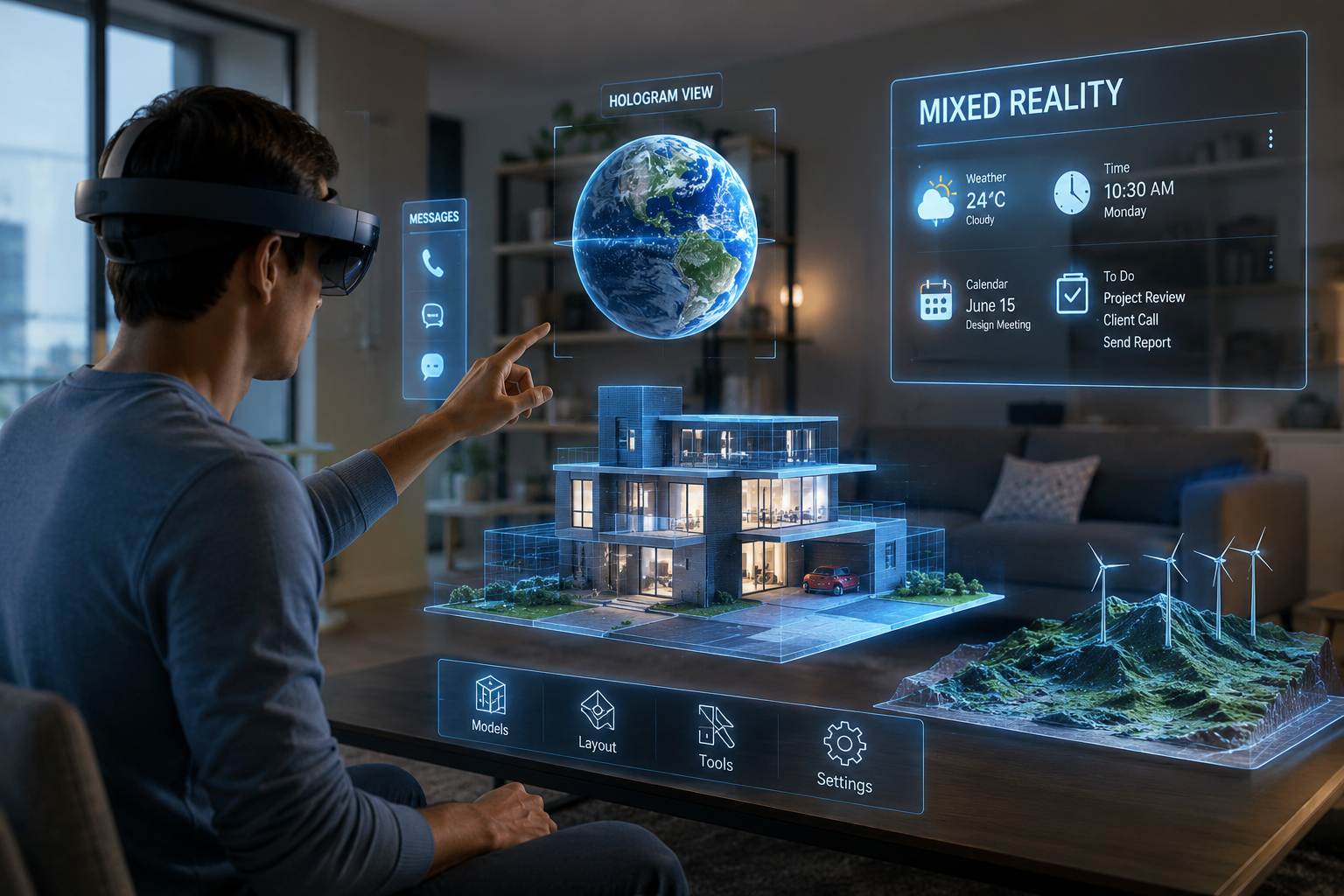
    Technology has reached a fascinating era where the digital and physical worlds coexist seamlessly. Among the most exciting innovations leading this shift is Mixed Reality (MR). Unlike Virtual Reality, which fully immerses you in a digital world, or Augmented Reality, which overlays visuals onto real life, Mixed Reality merges both worlds into one fluid environment. Businesses, educators, healthcare providers, and developers are all finding groundbreaking opportunities in MR.

    In this blog, we’ll explore 7 essential insights that explain why mixed reality is a future-defining technology and how it is reshaping industries worldwide.


    1. What is Mixed Reality?

    Mixed Reality combines the strengths of AR and VR to create immersive experiences where digital and physical objects coexist and interact in real time. Imagine wearing a headset and designing a car dashboard directly on a prototype, while simultaneously testing its functions in a simulated environment. This is the power of MR—practical, immersive, and interactive.


    2. How Mixed Reality Transforms Business

    For companies, Mixed Reality opens new ways to innovate, market, and collaborate. Imagine product demos where customers can “try” before they buy, or architecture firms showing lifelike 3D models in client meetings. MR doesn’t just impress—it saves time, reduces costs, and accelerates decision-making.

    Businesses leveraging MR report stronger customer engagement, increased productivity, and more creative solutions compared to traditional tools.


    3. Mixed Reality in Education & Training

    One of the most impactful uses of MR lies in education and corporate training. Instead of relying on books or videos, learners can interact with holographic models, medical procedures, or engineering blueprints.

    For example, medical students can practice surgeries in realistic simulations, reducing risks in real-life scenarios. Manufacturing workers can receive hands-on training in safe virtual environments. MR creates learning by doing, which boosts retention and confidence.


    4. Revolutionizing Healthcare with Mixed Reality

    Healthcare is witnessing a digital revolution powered by MR. From remote consultations to surgical planning, MR enables doctors to view patient anatomy in 3D before entering the operating room. This technology not only improves outcomes but also speeds up recovery by minimizing errors.

    Telemedicine also benefits, as MR allows doctors to virtually “step into” a patient’s environment for accurate diagnosis. This is transforming patient care worldwide.


    5. Enhancing Entertainment & Gaming

    Entertainment is one of the most recognized sectors for MR. Game developers are building hybrid experiences where digital characters appear in your living room, or sports fans watch holographic replays in real time.

    Movies, concerts, and art exhibitions are also adopting MR to provide immersive, unforgettable experiences that blur the line between reality and imagination.


    6. The Role of Mixed Reality in Engineering & Design

    Design and prototyping are being reshaped by MR. Engineers can collaborate virtually from anywhere in the world, examining 3D models of machines, buildings, or vehicles in real time.

    This collaborative design approach reduces development costs, shortens product cycles, and fosters innovation. It also eliminates many challenges caused by geographical boundaries.


    7. Future of Mixed Reality

    The future of MR lies in seamless integration with AI, big data, and cloud solutions. As devices become lighter and more affordable, adoption across industries will accelerate. By 2030, MR is expected to be as commonplace as smartphones today.

    We can anticipate MR becoming central in smart cities, workplace collaboration, and even daily consumer interactions. Businesses adopting MR early will hold a competitive edge in the global market.


    About AIBuzz Technoventures Pvt Ltd

    AIBuzz Technoventures Pvt Ltd is a leading technology solutions provider dedicated to delivering high-impact digital transformation services. Their diverse portfolio spans:

    Their mission is to enable businesses to embrace innovation while achieving measurable growth.


    Conclusion

    Mixed Reality is more than a trend—it’s a transformative technology shaping industries and enriching lives. From healthcare and education to business and entertainment, MR is revolutionizing how we interact with the digital world.

    At AIBuzz Technoventures Pvt Ltd, we specialize in building cutting-edge Mixed Reality solutions that help businesses lead with innovation. If you’re ready to explore the endless possibilities of MR, connect with us today.

    📞 Contact: +91 99679 40928
    🌐 Visit: www.aibuzz.net
    📧 Mail: info@aibuzz.net

  • Virtual Reality: 7 Powerful Ways It’s Transforming Business and Everyday Life

    Virtual Reality: 7 Powerful Ways It’s Transforming Business and Everyday Life


    Introduction

    Virtual Reality (VR) has quickly shifted from being a futuristic concept to a practical tool revolutionizing industries. Once confined to gaming and entertainment, VR is now enhancing training, healthcare, architecture, education, and even social interaction. Businesses are using it for immersive marketing campaigns, while consumers are enjoying unparalleled experiences that were previously unimaginable.

    In this blog, we’ll explore 7 powerful ways Virtual Reality is transforming business and everyday life, why it’s more relevant than ever, and how leading innovators like AIBuzz Technoventures Pvt Ltd are helping companies leverage this breakthrough technology.


    1. Virtual Reality in Gaming: A New Dimension of Fun

    The gaming industry was the birthplace of VR adoption—and it continues to push boundaries. VR headsets now deliver 360-degree immersive experiences, letting players step directly into their favorite game worlds. Titles like Beat Saber and Half-Life: Alyx have redefined interactivity.

    For businesses in gaming, VR isn’t just entertainment—it’s engagement. By offering realistic simulations and multi-player interactions, gaming companies have unlocked a multi-billion-dollar market that’s only growing.


    2. VR in Healthcare: Saving Lives Through Simulation

    Healthcare has embraced VR in ways that directly impact lives. Surgeons now practice complex operations using VR simulations, medical students learn anatomy in 3D environments, and therapists treat phobias or PTSD using controlled virtual settings.

    For example, VR pain management has shown success in reducing reliance on medication by transporting patients into calming, distraction-filled worlds during treatment. This proves how Virtual Reality is not only improving care but also innovating treatment methods.


    3. Transforming Education with Immersive Learning

    Imagine sitting in a history class and walking through the streets of ancient Rome—or studying biology by stepping inside a human cell. Virtual Reality makes these once impossible scenarios real.

    Educational institutions worldwide are adopting VR to create more interactive classrooms. Students learn faster, retain more, and remain highly engaged when immersed in 3D simulations. With VR, learning becomes an adventure, not a chore.


    4. Virtual Reality in Real Estate & Architecture

    In real estate and architecture, VR has become a game-changer. Potential buyers no longer need to physically visit properties—they can explore homes, offices, or buildings from anywhere in the world using VR tours.

    Architects also use VR to present 3D models of buildings before construction, enabling clients to visualize layouts, designs, and finishes. This reduces miscommunication, saves costs, and ensures client satisfaction.


    5. Immersive Marketing and Customer Engagement

    Brands are increasingly adopting VR for marketing campaigns that go beyond traditional ads. For example, automobile companies allow customers to “test drive” vehicles in VR, while travel agencies offer virtual tours of destinations before booking.

    These immersive campaigns enhance customer engagement and create unforgettable experiences. With Virtual Reality, advertising is no longer about telling—it’s about showing and immersing customers in the brand story.


    6. VR for Workplace Training and Collaboration

    Virtual Reality is transforming professional training across industries. Aviation, oil and gas, manufacturing, and military organizations use VR to train employees in high-risk scenarios—without real-world danger.

    Similarly, companies are using VR meeting rooms and collaborative environments where global teams can work together as if they were in the same space. This reduces travel costs, increases productivity, and fosters teamwork.


    7. Social VR and the Metaverse Experience

    Virtual Reality is paving the way for the metaverse, where people can meet, work, and socialize in 3D virtual spaces. Platforms like Horizon Worlds or VRChat show how VR is creating entirely new communities and economies.

    From hosting events to building businesses inside virtual worlds, the possibilities are endless. Social VR is no longer science fiction—it’s a growing digital society.


    Real-World Benefits of Virtual Reality

    The adoption of VR offers multiple advantages across industries:

    • Enhanced Engagement: Immersive experiences create stronger connections with audiences.
    • Cost Savings: Reduced need for physical travel, prototypes, or training facilities.
    • Improved Learning: Hands-on practice through VR simulations improves knowledge retention.
    • Global Accessibility: VR connects people across geographies seamlessly.
    • Innovation Edge: Businesses using VR stand out from competitors with cutting-edge solutions.

    A Spotlight on AIBuzz Technoventures Pvt Ltd: Leaders in Virtual Reality Solutions

    AIBuzz Technoventures Pvt Ltd is a leading technology solutions provider dedicated to delivering high-impact digital transformation services. Their diverse portfolio spans:

    Their expertise in Virtual Reality helps businesses design immersive experiences that drive customer engagement, improve training efficiency, and unlock new opportunities in education, real estate, and beyond.


    Conclusion

    Virtual Reality is no longer just entertainment—it’s a powerful technology transforming industries and daily life. From healthcare and education to marketing and workplace training, VR delivers innovation, engagement, and efficiency.

    For businesses ready to embrace immersive technology, AIBuzz Technoventures Pvt Ltd is the partner of choice. With their expertise in Virtual Reality and other cutting-edge services, they help organizations build experiences that truly stand out.

    Contact: 919967940928
    Visit: www.aibuzz.net
    Mail: info@aibuzz.net

  • Top 10 Power Moves in Software Development for 2025: Transform Your Tech Strategy Today!

    Top 10 Power Moves in Software Development for 2025: Transform Your Tech Strategy Today!

    In today’s hyper-connected digital world, software development is no longer just a back-end operation. It’s the enginebehind innovation, efficiency, and user experience across all industries. From healthcare and finance to education and entertainment, the demand for smarter, faster, and scalable solutions is fueling an exciting era in it software development.

    The year 2025 is proving to be a turning point. With AI, cloud computing, and agile methodologies converging, companies are reshaping how they develop, deploy, and scale software solutions. Whether you’re a business leader, startup founder, or tech enthusiast, mastering these evolving strategies can set you miles ahead.

    What is Software Development? 

    Software development is the process of designing, coding, testing, and maintaining applications, frameworks, or other software components. It involves methodologies like agile or waterfall and tools like programming languages, databases, and cloud platforms. The goal? To solve real-world problems through powerful, scalable digital solutions.

    Let’s explore the top 10 power moves that define successful software development today.


    1. Agile Development is No Longer Optional

    Agile isn’t a buzzword anymore — it’s the backbone of modern software development. In 2025, agile is evolving beyond scrum boards and sprints into continuous delivery systems and real-time feedback loops.

    • Why it matters: Agile shortens delivery time, reduces risk, and increases team collaboration.
    • Power Tip: Combine agile with DevOps for a streamlined CI/CD pipeline.

    Using agile principles helps ensure it software development stays customer-focused and adaptable, especially in rapidly changing markets.


    2. AI-Enhanced Coding and Automation

    Artificial Intelligence is transforming the software development process from line-by-line coding to smart suggestions, bug detection, and automated testing.

    • Why it matters: AI speeds up development and improves code quality.
    • Power Tip: Use tools like GitHub Copilot or Tabnine for AI-assisted coding.

    In it software development, AI is not replacing developers — it’s empowering them to work smarter and more creatively.


    3. Cloud-Native Software is the New Standard

    Gone are the days when applications lived in local servers. In 2025, cloud-native development is the industry standard.

    • Why it matters: Scalability, cost-efficiency, and remote accessibility.
    • Power Tip: Leverage platforms like AWS, Azure, or Google Cloud to build scalable microservices.

    For businesses relying on custom software development, cloud platforms reduce deployment times and improve user experience.


    4. Low-Code & No-Code Platforms Empower Everyone

    Low-code and no-code tools are enabling entrepreneurs, marketers, and non-tech professionals to build applications without writing complex code.

    • Why it matters: Democratizes software development and speeds up prototyping.
    • Power Tip: Tools like Bubble, OutSystems, and Webflow are leading this revolution.

    In it software development, these platforms are not replacing developers but complementing their efforts by offloading repetitive tasks.


    5. Cybersecurity-First Approach is Critical

    With cyber threats growing more sophisticated, security must be embedded throughout the development lifecycle.

    • Why it matters: Prevents data breaches, builds customer trust.
    • Power Tip: Adopt DevSecOps to integrate security checks into each phase of development.

    A secure software development process protects not only data but also the integrity of your brand.


    6. Progressive Web Apps (PWAs) Lead the Mobile Frontier

    PWAs combine the best of web and mobile apps, offering faster loading times, offline functionality, and a native-like experience.

    • Why it matters: Reduced development cost, faster launch, and improved performance.
    • Power Tip: Use service workers and responsive design to enhance your PWA.

    For companies focused on user experience, PWAs are the future of it software development on mobile.


    7. Cross-Platform Development for Wider Reach

    Why build two apps when you can build one? Tools like Flutter and React Native are enabling developers to create applications that work across iOS and Android platforms.

    • Why it matters: Saves time, reduces cost, and simplifies maintenance.
    • Power Tip: Choose the right framework based on your app’s complexity and performance needs.

    This power move makes enterprise software solutions more accessible and manageable.


    8. DevOps is Driving Collaboration

    Development and operations teams are no longer siloed. DevOps practices have become essential to deploy applications faster and more reliably.

    • Why it matters: Faster time-to-market and improved collaboration.
    • Power Tip: Use Jenkins, Docker, and Kubernetes for automation and containerization.

    DevOps transforms it software development into a seamless, end-to-end lifecycle that’s always delivery-ready.


    9. User-Centric Design Wins Every Time

    Your software can be technically perfect, but if users don’t love it — it fails. UI/UX is now at the core of every successful software product.

    • Why it matters: Boosts user engagement, retention, and satisfaction.
    • Power Tip: Use A/B testing and heatmaps to refine design decisions based on real user behavior.

    Today’s custom software development demands a balance between performance and experience.


    10. Ethical and Sustainable Coding Practices

    2025 has ushered in a renewed focus on ethical software development. This includes inclusivity in design, energy-efficient code, and fair AI practices.

    • Why it matters: Consumers and businesses alike value ethical innovation.
    • Power Tip: Regularly audit your algorithms for bias and optimize your codebase for lower energy consumption.

    Sustainability in it software development is more than a trend — it’s a responsibility.

    The Future of IT Software Development: A Positive Outlook

    The Future of IT Software Development: A Positive Outlook

    As we look ahead, the synergy between human creativity and machine efficiency is setting a new gold standard in it software development. Organizations that embrace agile processes, leverage cloud-native tools, and adopt ethical practices will dominate their sectors. Whether building enterprise-grade platforms or MVPs for startups, the power lies in staying updated, staying agile, and always coding forward.


    Conclusion: Partner with AIBuzz for Cutting-Edge Software Development

    At AIBuzz, we specialize in delivering custom software development solutions that are agile, secure, scalable, and future-proof. From cloud transformation to AI integration, our expert team ensures that your vision becomes a powerful reality. Whether you’re upgrading legacy systems or launching a new digital product, we’re your go-to partner for all things it software development. Let’s build the future — together.

  • 10 Powerful Ways Virtual Reality is Transforming 2025: A Positive Outlook for the Future

    10 Powerful Ways Virtual Reality is Transforming 2025: A Positive Outlook for the Future

    The year 2025 is shaping up to be a milestone in the world of technology, and at the center of this revolution is virtual reality . What was once seen as a science-fiction concept has become a practical tool reshaping industries, entertainment, education, and even healthcare. The growth of VR has opened new opportunities for businesses, professionals, and everyday users who want to experience the digital world in ways never imagined before.

    In this blog, we’ll explore ten powerful ways virtual reality is influencing our lives in 2025, its benefits, and why it holds so much promise for the future.


    What is Virtual Reality?

    At its core, virtual reality is a computer-generated simulation that immerses users into a digital environment. Through specialized VR headsets, motion tracking, and sometimes haptic feedback, people can experience environments that feel real—even though they exist entirely in the digital world.

    Unlike traditional screen-based experiences, VR engages sight, sound, and movement, creating an interactive world that users can explore and manipulate. From games and training modules to medical simulations, VR offers endless possibilities.


    1. Revolutionizing the Gaming Industry

    The gaming industry is one of the earliest adopters of virtual reality, and it continues to thrive in 2025. VR headsets now provide ultra-high-resolution graphics, realistic movement tracking, and multiplayer experiences that allow gamers to connect across the globe.

    Games are no longer about pressing buttons—they’re about entering new worlds. With VR, players can physically walk, gesture, and interact with digital objects, blurring the line between reality and fantasy.


    2. Virtual Reality in Education and Training

    One of the most impactful uses of virtual reality is in education and skill training. Schools and universities are increasingly integrating VR into classrooms. For example, history students can take a virtual tour of ancient Rome, while biology students can explore the human body in 3D.

    Corporate training has also embraced VR. From pilots practicing in flight simulations to surgeons rehearsing complex procedures, VR offers risk-free environments where mistakes become learning opportunities.


    3. Healthcare Breakthroughs with VR

    The healthcare sector has embraced virtual reality for both patients and doctors. VR therapy helps patients manage pain, reduce anxiety, and recover from trauma. Mental health professionals use VR to treat phobias and post-traumatic stress disorder through controlled exposure therapy.

    Surgeons use VR to practice complex operations before performing them on real patients, increasing accuracy and safety. These innovations make healthcare more efficient, patient-friendly, and effective.


    4. Enhancing Workplaces with Virtual Collaboration

    Remote work has become a global norm, and virtual reality is pushing collaboration to the next level. Instead of flat video calls, professionals can now meet in immersive digital offices, where avatars represent each team member.

    Companies use VR for team-building, project presentations, and brainstorming sessions. This not only makes meetings engaging but also builds stronger connections among remote workers who feel like they’re truly in the same room.


    5. Tourism and Travel Experiences

    Imagine standing on the Great Wall of China or walking through the Louvre Museum without leaving your home. Thanks to virtual reality, this is possible. Travel companies now offer virtual tours that give customers a taste of destinations before booking real trips.

    For those unable to travel due to cost or health reasons, VR creates opportunities to explore the world from the comfort of their living rooms. This blend of convenience and immersion has made VR tourism a growing trend.


    6. Retail and E-Commerce Innovation

    Shopping has been transformed by virtual reality in 2025. Customers can now walk through digital showrooms, try on clothes virtually, or preview how furniture looks in their homes.

    Retailers use VR to build interactive brand experiences that engage customers far beyond traditional websites. This not only drives sales but also enhances customer satisfaction by allowing people to “try before they buy” in a digital environment.


    7. Real Estate and Architecture

    Buying a home or designing a building no longer requires physical visits. With virtual reality, real estate agents offer potential buyers immersive property tours, helping them experience the layout and design before stepping inside.

    Architects and engineers also use VR to create accurate 3D models of projects, allowing clients to visualize the end result. This makes planning more efficient and reduces costly design changes later in construction.


    8. Entertainment Beyond Gaming

    While gaming is huge, virtual reality entertainment extends much further. Concerts, movies, and live events are now being experienced in immersive VR settings. Imagine attending a live concert where you feel like you’re standing in the front row—or watching a film where you are inside the story instead of just observing it.

    VR also enables interactive storytelling where the audience’s choices affect the outcome, creating deeply personalized entertainment experiences.


    9. Military and Defense Training

    Governments and defense organizations use virtual reality to train soldiers in safe, controlled environments. Military simulations include battlefield strategies, equipment handling, and even psychological preparation for high-stress situations.

    VR reduces the risks and costs of training while ensuring soldiers are better prepared for real-life operations.


    10. Empowering Creativity and Innovation

    Artists, designers, and creators are using virtual reality as a canvas for innovation. 3D modeling tools in VR allow creators to design, sculpt, and experiment in ways that traditional tools could never match.

    From virtual museums to immersive art galleries, VR is becoming a hub for creative expression that bridges technology and imagination.


    Positive Impact of Virtual Reality in 2025

    The impact of virtual reality goes beyond convenience—it changes how we connect, learn, heal, and explore. In 2025, VR is no longer just a technology trend; it is a lifestyle enhancement tool. Businesses are thriving with immersive experiences, education is becoming more engaging, and healthcare is reaching new heights of innovation.

    As technology advances further, VR will continue to evolve into a tool that empowers humanity with opportunities that were once unimaginable.


    Conclusion

    It is clear that virtual reality is one of the most transformative forces shaping our world in 2025. From gaming and healthcare to education and business, its applications are endless and full of promise. At AIBuzz, we are dedicated to helping businesses and individuals embrace this exciting technology. Our expertise in VR and digital innovation allows us to deliver cutting-edge solutions that enhance experiences, improve efficiency, and create new opportunities for growth. If you are looking to explore the limitless potential of VR, AIBuzz is here to guide you every step of the way.