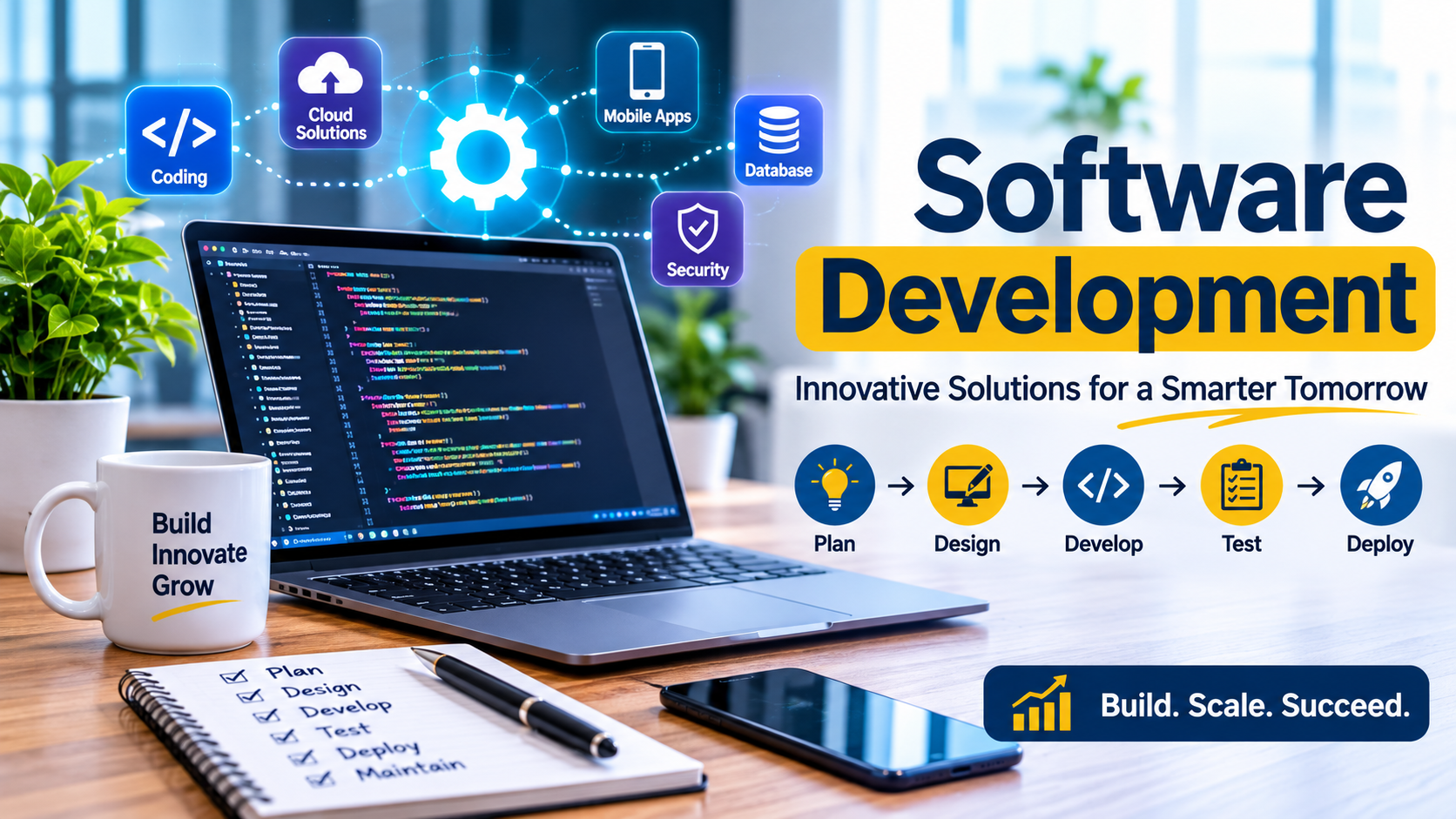
Technology has become an important part of almost every business. From managing daily operations to connecting with customers, companies increasingly depend on digital tools to work efficiently and stay competitive. Behind many of these tools is software development, the process of creating applications and systems that solve real-world problems.
Think about the applications you use every day. Online shopping platforms, banking applications, business management systems, educational platforms, and communication tools all depend on software development. These solutions are designed to make everyday activities easier, faster, and more convenient.
However, software development is not simply about writing code. It involves understanding business requirements, planning solutions, designing user-friendly interfaces, testing functionality, and continuously improving performance.
In this guide, we will explore what software development means, how the development process works, its major types, benefits, and how modern technologies are changing the future of software.
What Is Software Development? :
Software development is the process of designing, creating, testing, deploying, and maintaining computer programs and applications. It involves using programming languages, development frameworks, databases, and other technologies to build solutions for specific requirements.
The main purpose of software development is to solve problems through technology. For example, a business might need software to manage customer information, automate billing, track inventory, or communicate with employees.
Instead of depending entirely on manual processes, companies can use customized software to simplify these activities and improve productivity.
Software development can be used to create:
- Websites and web applications.
- Mobile applications for Android and iOS.
- Business management software.
- E-commerce platforms.
- Customer relationship management (CRM) systems.
- Enterprise resource planning (ERP) solutions.
- Artificial intelligence-powered applications.
- Cloud-based software platforms.
Every software solution starts with an idea or requirement and develops into a functional digital product through a structured process.
Why Is Software Development Important for Modern Businesses? :
Businesses operate in a competitive environment where customer expectations and market requirements continue to change. Traditional working methods may not always provide the speed, flexibility, or accuracy required to manage modern operations.
This is where software development becomes valuable.
1. Improves Business Efficiency
Software helps businesses automate repetitive activities such as data entry, report generation, billing, and record management. Employees can spend less time handling manual tasks and more time focusing on important responsibilities.
2. Supports Business Growth
As a business expands, its operational requirements also increase. Scalable software can support additional users, larger amounts of data, and new features without requiring a completely new system.
3. Enhances Customer Experience
Customers expect smooth digital experiences. User-friendly websites, mobile applications, and online platforms make it easier for customers to access services, find information, and complete transactions.
4. Improves Data Management
Businesses generate information through sales, customers, operations, and marketing activities. Software solutions help organize this information, making it easier to access, manage, and analyze.
5. Strengthens Security
Well-designed software can include authentication, access controls, encryption, backups, and security monitoring. These features help protect business information and reduce potential security risks.
What Are the Different Types of Software Development? :
Software development covers several areas, and each serves a different purpose. Businesses can choose the right development approach depending on their goals and technical requirements.
1. Custom Software Development
Custom software development involves creating applications specifically for a business or organization. Unlike ready-made products, customized solutions are designed around particular workflows, challenges, and requirements.
For example, a manufacturing company might need a system to monitor production, manage inventory, and generate operational reports.
Custom software offers greater flexibility because its features can be developed according to business needs.
2. Web Development
Web development focuses on creating websites and web-based applications that users can access through internet browsers.
Examples include:
- Business websites.
- Online shopping platforms.
- Booking systems.
- Educational portals.
- Customer dashboards.
Modern web development combines responsive design, programming, databases, and security to create reliable digital experiences across different devices.
3. Mobile App Development
Mobile app development involves building applications for smartphones and tablets. These applications can be developed for Android, iOS, or both platforms.
Businesses use mobile applications to connect with customers, provide services, manage bookings, process payments, and deliver personalized experiences.
A well-developed mobile application should be easy to navigate, responsive, secure, and compatible with the devices it supports.
4. Enterprise Software Development
Enterprise software is designed to support the operations of medium-sized and large organizations.
Examples include enterprise resource planning systems, human resource management platforms, supply chain management software, and customer relationship management tools.
These solutions help different departments work with organized information and coordinated processes.
5. Cloud-Based Software Development
Cloud-based software runs on cloud infrastructure instead of depending entirely on local computers or servers.
Users can access these applications through the internet, depending on the platform’s configuration and permissions.
Cloud-based solutions can support remote collaboration, flexible infrastructure, centralized data management, and easier scaling.
Understanding the Software Development Life Cycle (SDLC) :
The Software Development Life Cycle (SDLC) is a structured approach used to plan, create, test, deploy, and maintain software applications.
Following a development lifecycle helps teams manage project requirements, identify risks, and maintain software quality.
1. Planning and Requirement Analysis
The first step is understanding what the software needs to achieve.
Developers and stakeholders discuss business objectives, target users, required features, budget, and project timelines.
Clear requirements help prevent misunderstandings during development.
2. Software Design
Once the requirements are defined, the development team prepares the software architecture and user interface design.
This stage determines how the system will function, how information will be stored, and how different components will communicate.
Wireframes and prototypes can also be created to demonstrate the application’s appearance before development begins.
3. Development and Coding
During this stage, developers write the code that brings the planned solution to life.
Depending on the project, they may use programming languages such as Python, Java, JavaScript, C#, or PHP.
Developers also work with databases, APIs, frameworks, and development tools to build the required functionality.
4. Testing and Quality Assurance
Testing ensures that the software works according to its requirements.
The quality assurance team checks functionality, usability, performance, compatibility, and security. Bugs and errors are identified and corrected before the software is released.
Testing is not just a final activity. It should take place throughout the development process.
5. Deployment and Launch
After successful testing and approval, the software is deployed to its intended environment.
This may involve publishing a website, launching a mobile application, or installing a business management system.
The deployment process should be planned carefully to reduce interruptions and ensure a smooth launch.
6. Maintenance and Updates
Software development does not end when an application goes live.
Regular maintenance helps resolve technical issues, improve performance, update security features, and introduce new functionality.
User feedback and changing business requirements also help guide future improvements.
Popular Technologies Used in Software Development :
The technologies selected for a software project depend on its purpose, complexity, performance requirements, and budget.
Some commonly used technologies include:
- Python: Used for web applications, automation, data analysis, and artificial intelligence.
- Java: Commonly used for enterprise applications and backend systems.
- JavaScript: Used to create interactive websites and web applications.
- PHP: Often used for server-side web development.
- React: A popular JavaScript library for building user interfaces.
- Node.js: Used to build server-side applications and APIs.
- MySQL: A relational database management system.
- MongoDB: A database designed to work with flexible document-based data.
Choosing the right technology is important because it affects software performance, scalability, security, and long-term maintenance.
How Artificial Intelligence Is Transforming Software Development :
Artificial intelligence is changing how developers plan, build, and maintain software.
AI-powered development tools can assist with code suggestions, debugging, documentation, test generation, and repetitive programming tasks.
For example, developers can use AI tools to identify potential coding errors, generate basic code structures, and explore possible solutions to technical challenges.
However, AI does not replace the need for skilled developers. Human expertise remains important for understanding business requirements, designing system architecture, reviewing generated code, protecting sensitive information, and making technical decisions.
When used responsibly, AI can support development teams and help them work more efficiently.
How to Choose the Right Software Development Company :
Selecting a software development partner is an important decision because the quality of the solution can directly affect business operations.
Before choosing a development company, consider the following factors:
Understand Its Experience
Review the company’s technical expertise, previous projects, and experience with similar business requirements.
Check Its Development Process
A reliable development team should follow a clear process covering planning, design, coding, testing, deployment, and maintenance.
Evaluate Communication
Regular updates, transparent discussions, and clear project documentation help keep development work aligned with business expectations.
Prioritize Security and Quality
Ask about testing procedures, data protection, security practices, and ongoing technical support.
Consider Future Scalability
Choose a solution that can adapt as your business grows. Software should be designed with future improvements and changing requirements in mind.
The Future of Software Development :
The future of software development will be influenced by automation, artificial intelligence, cloud computing, cybersecurity, and connected technologies.
AI-assisted coding is making certain development tasks faster, while cloud platforms are providing flexible infrastructure for applications of different sizes.
Low-code and no-code platforms are also making it easier to create certain digital solutions with less manual programming.
At the same time, businesses are placing greater importance on data privacy, application security, accessibility, and reliable digital experiences.
One thing is clear: successful software will not simply be about using the newest technology. It will be about creating practical, secure, and user-friendly solutions that address real problems.
How Aibuzz Helps Businesses with Software Development :
At Aibuzz, we believe technology should make business operations smarter, simpler, and more efficient.
Our software development approach focuses on understanding business requirements and creating solutions that support specific organizational goals.
From custom software and web development to mobile applications, software testing, and API integration, the right development strategy can help businesses improve their digital capabilities.
Our focus is on building solutions that combine functionality, usability, performance, and scalability.
Whether you are planning a new application, improving an existing system, or exploring a customized digital solution, having the right technology partner can make the development journey more effective.
Explore our Software Development Services to learn more about how Aibuzz can support your business technology requirements.
Internal links :
External links :
Rich media link :
Frequently Asked Questions (FAQs) :
1. What is software development in simple terms?
Software development is the process of creating computer programs, websites, and applications that help people and businesses perform specific tasks or solve problems.
2. What are the main types of software development?
The main types include custom software development, web development, mobile app development, enterprise software development, and cloud-based software development.
3. Which programming languages are commonly used?
Popular programming languages include Python, Java, JavaScript, PHP, and C#. The choice depends on the project’s requirements and intended platform.
4. How long does software development take?
The timeline depends on the project’s complexity, features, technology, and development team. A simple application may take a few weeks, while a complex enterprise solution can require several months or longer.
5. Why is custom software development important?
Custom software is designed around specific business requirements. It can improve workflows, support unique operations, integrate with existing systems, and provide flexibility as the business grows.
Conclusion :
Software development has become an essential part of digital transformation. It helps businesses automate operations, improve customer experiences, manage information, and develop new ways to deliver products and services.
However, successful software requires more than good coding. It needs proper planning, thoughtful design, continuous testing, reliable security, and regular maintenance.
The right software does more than solve today’s problems. It creates opportunities for tomorrow’s growth.
📞 Contact: 919967940928
🌐 Visit: http://aibuzz.net
Leave a Reply