
Introduction: A Bold New Digital Frontier
In 2025, the digital landscape is buzzing with innovation—and at the center of this buzz are virtual reality systems. Once considered science fiction, VR has rapidly evolved into a practical, immersive tool across industries. These systems offer a new way to perceive, interact, and even feel digital content. Whether it’s learning in a virtual classroom, diagnosing patients in a simulated hospital, or touring a property without leaving your couch, virtual reality systems are reshaping our everyday experiences.
So why is the world betting big on VR in 2025? Let’s dive into the 7 game-changing benefits of virtual reality systemsthat are powering this positive tech revolution.
What Are Virtual Reality Systems?
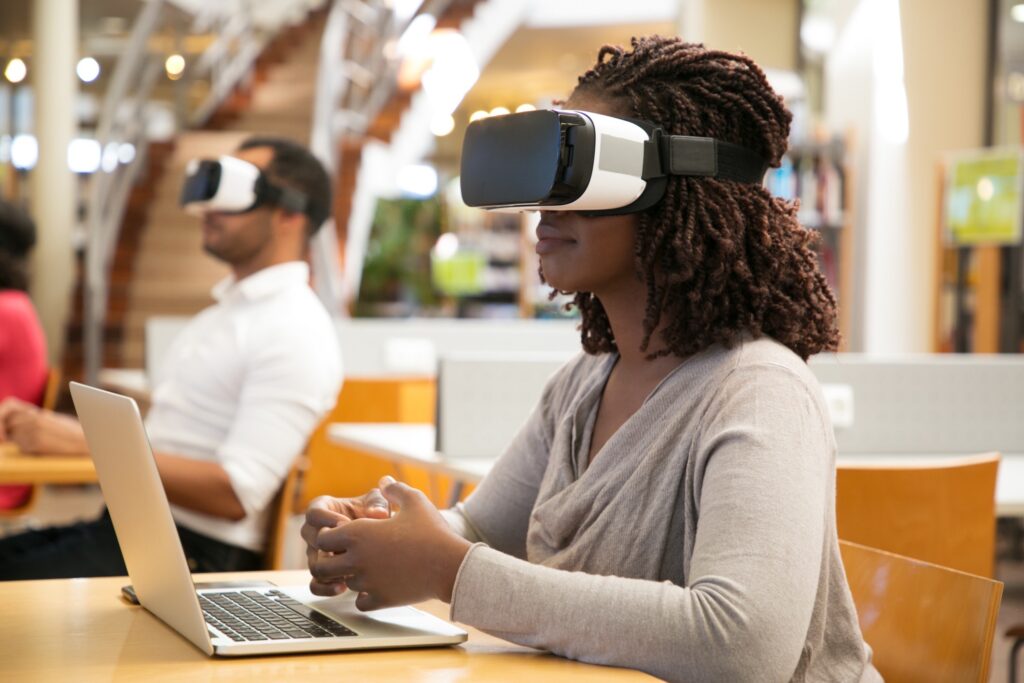
Virtual reality systems refer to technologies that simulate real or imaginary environments, allowing users to interact in a fully immersive 3D space. Using headsets, motion controllers, and sensory feedback devices, VR systems can transport users to different realities—from deep sea exploration to Martian landscapes.
These systems typically include:
- A VR headset or head-mounted display (HMD)
- Audio and motion tracking systems
- Software and hardware integration for interactive content
VR is not just entertainment anymore; it’s a powerful tool that combines software, hardware, and real-time analytics to create transformative digital experiences.
1. Immersive Education: Learning Without Borders
In 2025, virtual reality systems have completely transformed the education sector. Forget blackboards and whiteboards—students now explore the Great Wall of China in history class or dissect a virtual frog in biology without touching a scalpel.
Key educational benefits include:
- Real-time collaboration in shared virtual classrooms
- Higher engagement and knowledge retention
- Accessibility for remote and underprivileged learners
Virtual reality systems make learning fun, safe, and interactive. It’s no wonder they’re being called the future of global education.
2. Advanced Healthcare Training and Patient Care
Doctors and nurses no longer need to rely solely on cadavers or mannequins for practice. Virtual reality systems allow for hyper-realistic simulations that mimic surgeries, emergencies, and rare conditions.
In hospitals, VR helps with:
- Training surgical teams in high-risk scenarios
- Phobia treatment using exposure therapy
- Pain distraction therapy for burn victims and children
Even patients with PTSD and anxiety are finding relief through tailored VR experiences. The ability to control environments and stress factors makes VR a vital companion in modern medicine.
3. Revolutionizing Business Collaboration and Remote Work
The rise of hybrid work has triggered a demand for better remote collaboration tools. Virtual reality systems deliver just that—letting remote teams brainstorm in 3D whiteboard rooms or conduct product demos as if they were in the same space.
Business applications of VR include:
- Virtual boardrooms and conferences
- Interactive product design
- Virtual sales meetings and trade shows
In 2025, companies are ditching video calls for fully immersive VR meetings—boosting productivity and reducing the “Zoom fatigue” many professionals dread.
4. Retail and Real Estate Go Virtual
Why browse a static catalog or walk through a house via photos when you can experience it virtually? With virtual reality systems, customers can walk through showrooms, explore dream homes, or even try on clothes with realistic avatars.
Notable transformations in these sectors:
- Virtual home tours with spatial audio and lighting control
- VR fitting rooms and digital wardrobe previews
- Interactive retail experiences for better buying decisions
Brands are leveraging VR to personalize shopping like never before—boosting conversions and customer satisfaction.
5. Game Development and Entertainment Evolution
Of course, we can’t talk about virtual reality systems without mentioning gaming and entertainment. 2025 has taken immersive gaming to new heights. Titles now include haptic suits, full-body motion tracking, and open-world experiences that redefine engagement.
How VR enhances entertainment:
- Multiplayer co-op in immersive virtual worlds
- VR concerts and live sports from the best seat in the house
- Cinematic experiences with interactive storytelling
Gaming is no longer just a hobby—it’s an adventure you live through, thanks to advanced VR tech.
6. Smart Cities and Virtual Planning
Urban planning in smart cities now relies heavily on virtual reality systems. Governments, architects, and developers use VR to simulate city layouts, traffic flow, and even climate impact before breaking ground.
Innovations in this space:
- 3D modeling of city infrastructure
- Simulation of emergency scenarios
- Public involvement via virtual consultations
Virtual reality systems offer data-driven urban planning that reduces costs, errors, and inefficiencies—ushering in a more connected, intelligent future.
7. Empowering Mental Wellness and Therapy
One of the most heartening uses of virtual reality systems is in mental wellness. Whether it’s treating depression, social anxiety, or cognitive disorders, VR offers therapeutic pathways that traditional methods can’t.
Benefits include:
- Immersive mindfulness and meditation experiences
- Guided cognitive-behavioral therapy (CBT)
- VR journaling and stress management
This emotionally intelligent technology is helping people reconnect with themselves in powerful new ways.
The Tech Behind the Magic
In 2025, virtual reality systems are powered by a fusion of cutting-edge technologies:
- AI-driven personalization: Tailors experiences to user preferences
- 5G connectivity: Enables low-latency, high-resolution streaming
- Cloud computing: Makes VR scalable and storage-efficient
- Motion tracking and haptics: Enhance realism and feedback
These integrations have made VR more accessible, efficient, and scalable for industries of all sizes.
A Short Note on Mixed Reality
While virtual reality systems fully immerse users in digital worlds, mixed reality blends the physical and digital seamlessly. Think holograms you can interact with in real-time—perfect for engineering, training, and creative design. Together, these technologies are complementing each other to redefine human-computer interaction.
Conclusion: A Future Fueled by Data and Immersion

The rise of virtual reality systems in 2025 is not just a technological shift—it’s a human-centric evolution. From learning and healing to shopping and working, VR is offering smarter, safer, and more meaningful digital experiences. It’s about building a world where imagination meets innovation.
At AIBuzz, we’re proud to be at the forefront of this revolution. Our expert teams are building VR-enabled ecosystems integrated with intelligent data management solutions that turn immersive content into real business value. With AIBuzz, your data doesn’t just sit—it works for you.
Leave a Reply