Blog

  • 7 Essential Insights into Mobile Mixed Reality: Transforming the Future of Digital Interaction

    7 Essential Insights into Mobile Mixed Reality: Transforming the Future of Digital Interaction

    Mobile Mixed Reality (MR) is rapidly emerging as one of the most innovative and exciting technologies in the digital world. By blending the physical world with digital elements through mobile devices, MR is changing how we interact with content, entertainment, education, and business. Whether you’re a tech enthusiast or a business looking to integrate cutting-edge technology into your services, understanding the essentials of Mobile Mixed Reality is crucial. In this guide, we will explore what Mobile MR is, its key applications, and how it’s shaping the future of digital interaction.

    What is Mobile Mixed Reality?

    7 Essential Insights into Mobile Mixed Reality

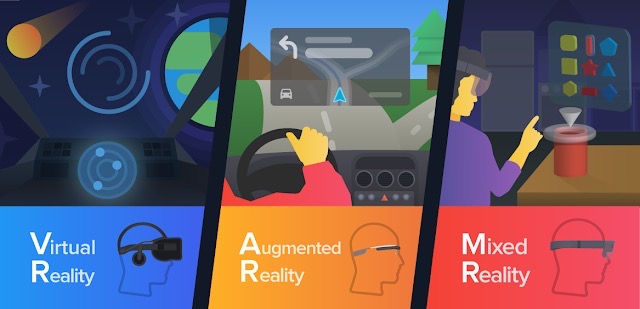
    Mobile Mixed Reality (MR) refers to the integration of virtual objects into the real world using mobile devices like smartphones and tablets. Unlike Virtual Reality (VR), which isolates the user from the physical environment, and Augmented Reality (AR), which overlays digital information on the physical world, MR combines both by allowing virtual objects to interact with real-world surroundings in real-time.

    For instance, MR enables you to use your phone or tablet to view a piece of furniture placed virtually in your living room, interact with it, and see it adjust in real-time based on your physical space. This immersive experience is made possible through sophisticated sensors, cameras, and advanced software.

    The Key Technologies Behind Mobile MR

    Several technologies work in tandem to bring Mobile Mixed Reality to life. Understanding these components is essential for appreciating the scope and potential of MR.

    1. Sensors and Cameras

    Mobile devices are equipped with a variety of sensors such as accelerometers, gyroscopes, and magnetometers, as well as cameras to track the physical environment. These sensors allow the device to map the real world and place virtual objects within it. Advanced cameras also enable high-definition visuals that make interactions more realistic.

    2. Processing Power

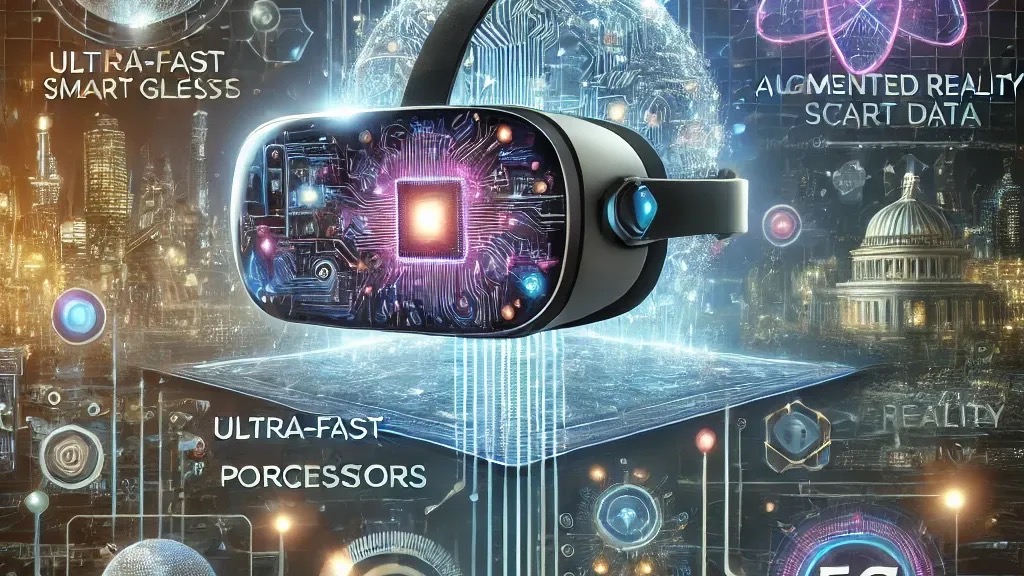
    Mobile MR requires significant computational power to render virtual elements and process the interaction between the digital and physical world in real-time. Modern smartphones come equipped with powerful processors and GPUs that can handle the complex calculations necessary for smooth MR experiences.

    3. Software and Applications

    Apps designed for MR are critical for its functionality. They use algorithms to track the user’s environment, detect surfaces, and correctly align virtual objects. Popular MR platforms, such as Apple’s ARKit and Google’s ARCore, provide developers with the tools to create these engaging experiences.

    4. C

    Cloud-based computing plays a key role in MR by enabling large-scale data processing and real-time updates. Many MR applications offload some of the heavy processing to the cloud, ensuring that the device doesn’t become overwhelmed by the demands of MR experiences.

    Mobile Mixed Reality Applications

    Mobile MR is not just a trend but a transformative force across various industries. Here are some key sectors where MR is making an impact.

    1. Gaming and Entertainment

    The gaming industry has already begun to embrace MR, offering more immersive experiences than ever before. Players can interact with game elements as though they exist in the real world. For example, games like Pokémon GO and Harry Potter: Wizards Unite use augmented reality elements to bring the digital world into players’ surroundings.

    The future holds potential for mobile MR to create highly interactive and personalized experiences, where users can engage in dynamic, real-time storytelling or multiplayer games with the physical environment integrated seamlessly.

    2. Retail and E-Commerce

    Mobile MR has revolutionized the retail industry by offering virtual try-ons and product visualization. For example, platforms like IKEA have MR features that let customers visualize how furniture will look in their homes before making a purchase. This provides customers with a more informed decision-making process, driving both satisfaction and sales.

    Additionally, brands use MR to create engaging and interactive marketing campaigns, blending the physical and digital worlds in creative ways.

    3. Education and Training

    Mixed Reality offers significant potential in the education sector. Through MR, students can immerse themselves in educational environments where they can interact with 3D models, conduct virtual experiments, or explore historical events firsthand. This form of experiential learning can be more effective than traditional methods, helping to engage students on a deeper level.

    In professional training, MR is used to simulate real-life scenarios, such as surgeries for medical students or flight simulations for pilots, providing a safe and cost-effective way to gain practical experience.

    4. Healthcare

    Mobile MR has various applications in healthcare, especially in diagnostics, surgery, and patient care. Doctors can use MR apps to overlay diagnostic data over patient scans, improving the precision of medical procedures. Furthermore, mobile MR enables medical professionals to conduct remote consultations or provide virtual rehabilitation services.

    5. Real Estate

    The real estate industry has also started adopting MR technology to help prospective buyers visualize properties in 3D. Through mobile MR, users can take virtual tours of homes and apartments, providing an immersive experience that would otherwise require a physical visit.

    How Mobile MR is Enhancing User Interaction

    The power of Mobile Mixed Reality lies in its ability to enhance the user experience by blending real-world interactions with digital elements. Here’s how it’s transforming the way we interact with technology:

    1. Enhanced Engagement

    MR keeps users engaged by offering dynamic and interactive content. Whether you’re gaming, shopping, or learning, the interactivity created by MR enhances the experience, making it more enjoyable and memorable.

    2. Personalization

    Mobile MR allows for personalized experiences based on real-time feedback and interactions with the user’s environment. For example, a mobile app could tailor content to specific locations, objects, or even the individual user’s preferences, creating a unique, one-on-one experience.

    3. Natural Interaction

    The integration of digital and physical spaces in MR allows for more natural, intuitive interactions. Whether through gestures, voice commands, or simply pointing your phone at objects, Mobile MR enables seamless and user-friendly interaction with digital content.

    4. Accessibility

    Mobile MR has the potential to make technology more accessible to a wider audience. Its compatibility with smartphones means that users don’t need specialized equipment, such as headsets or computers, to enjoy mixed reality experiences. This lowers the barrier to entry and broadens the reach of MR.

    The Future of Mobile Mixed Reality

    The future of Mobile Mixed Reality is incredibly promising. As mobile technology continues to evolve, MR will become even more integrated into our daily lives. We can expect:

    1. Improved Hardware

    Mobile devices will continue to get faster, with improved cameras and sensors that allow for even more seamless MR experiences. We may also see the development of lightweight wearables that further enhance MR experiences without the need for bulky devices.

    2. AI Integration

    Artificial Intelligence (AI) will play a key role in Mobile MR by enabling smarter interactions, better environmental mapping, and more personalized experiences. AI algorithms will help predict user behavior and preferences, creating an even more intuitive and responsive user experience.

    3. Wider Adoption

    As MR becomes more mainstream, it will penetrate a broader range of industries, from entertainment and education to healthcare and beyond. New applications and use cases will continue to emerge, expanding the possibilities of what MR can achieve.

    4. 5G Networks

    With the rollout of 5G technology, MR will benefit from faster speeds and lower latency, enabling more fluid and responsive experiences. This will be especially important for real-time interactive applications like gaming, remote collaboration, and virtual tourism.

    Conclusion

    In conclusion, aibuzz is at the forefront of transforming the mobile mixed reality landscape, providing innovative solutions that blend the virtual and real worlds seamlessly. By leveraging cutting-edge AI technology and immersive mobile experiences, we empower users to engage with content in ways that were once unimaginable. As the mobile mixed reality market continues to evolve, aibuzz remains committed to pushing the boundaries of creativity and functionality, ensuring that both businesses and consumers enjoy the full potential of this groundbreaking technology. Whether it’s for gaming, education, or real-world applications, aibuzz is dedicated to delivering immersive experiences that redefine the way we interact with our environment.

  • 7 Essential Amazon Big Data Solutions for Modern Businesses

    7 Essential Amazon Big Data Solutions for Modern Businesses

    Big data has revolutionized how businesses operate, offering deep insights and predictive analytics that drive smarter decision-making. Amazon Web Services (AWS) provides a robust suite of big data solutions designed to help companies collect, store, analyze, and visualize massive amounts of data efficiently.

    In this blog, we’ll explore seven essential Amazon big data solutions that can supercharge your business operations.

    7 Essential Amazon Big Data Solutions for Modern Businesses

    1. Amazon S3: Scalable Data Storage

    Amazon Simple Storage Service (S3) is one of the most widely used cloud storage solutions for big data. It offers scalable, durable, and cost-effective storage for structured and unstructured data.

    Key Benefits:

    • Scalability – Store unlimited amounts of data.
    • Security – Advanced encryption and access control.
    • Integration – Works seamlessly with other AWS services like AWS Lambda and Amazon Redshift.

    Businesses can use Amazon S3 for data lakes, ensuring easy retrieval and analysis for machine learning and real-time analytics.

    2. Amazon Redshift: Fast Data Warehousing

    Amazon Redshift is a powerful cloud data warehouse designed for big data analytics. It processes petabyte-scale data with high performance and cost efficiency.

    Why Choose Amazon Redshift?

    • Columnar storage improves query speed.
    • Machine learning-based performance optimization.
    • Integration with BI tools like Power BI and Tableau.

    This service is perfect for companies looking to extract insights from massive datasets with high-speed query execution.

    3. AWS Glue: Serverless Data Integration

    Handling large datasets often requires data preparation and transformation before analysis. AWS Glue is a fully managed ETL (Extract, Transform, Load) service that automates this process.

    Features of AWS Glue:

    • Serverless execution reduces management overhead.
    • Schema discovery automates metadata cataloging.
    • Supports multiple data sources, including Amazon S3, Amazon RDS, and Redshift.

    This solution enables businesses to clean and structure data for use in data analytics and AI applications.

    4. Amazon Kinesis: Real-Time Data Streaming

    If your business relies on real-time data from sources like IoT devices, application logs, or social media, Amazon Kinesis is an essential tool. It provides real-time analytics and processing capabilities.

    Key Features:

    • Processes millions of records per second.
    • Low-latency insights for immediate decision-making.
    • Integration with AWS Lambda, S3, and Redshift.

    Amazon Kinesis is widely used in fraud detection, security monitoring, and customer behavior tracking.

    5. Amazon EMR: Big Data Processing with Apache Spark

    Amazon Elastic MapReduce (EMR) is a managed service for big data processing, leveraging Apache Spark, Hadoop, and Presto.

    Why Use Amazon EMR?

    • Handles large-scale data workloads.
    • Optimized for cost and speed.
    • Supports advanced machine learning applications.

    Companies in financial services, healthcare, and e-commerce use EMR for deep data analysis and predictive modeling.

    6. Amazon QuickSight: AI-Powered Data Visualization

    Data is only as valuable as the insights it provides. Amazon QuickSight is an AI-powered business intelligence (BI) tool that allows businesses to create interactive dashboards and reports.

    Key Benefits:

    • Machine learning insights for anomaly detection.
    • Scalable to thousands of users without additional infrastructure.
    • Integration with various data sources, including S3, Redshift, and RDS.

    QuickSight is perfect for businesses that need actionable insights without complex analytics tools.

    7. AWS Lake Formation: Secure Data Lakes

    data lake enables businesses to store raw data from multiple sources in a centralized repositoryAWS Lake Formation helps companies build and manage secure data lakes efficiently.

    Features of AWS Lake Formation:

    • Automates data ingestion and organization.
    • Applies security policies across datasets.
    • Supports multi-user access control.

    With AWS Lake Formation, businesses can ensure compliance with data security regulations while optimizing big data workflows.

    Why Choose Amazon for Big Data Solutions?

    Amazon’s big data ecosystem is scalable, secure, and cost-effective, making it ideal for businesses of all sizes. AWS services integrate seamlessly, allowing companies to build end-to-end data pipelines that support AI, machine learning, and business intelligence.

    Key Takeaways:

    ✅ Amazon S3 – Best for scalable cloud storage.
    ✅ Amazon Redshift – Ideal for high-performance data warehousing.
    ✅ AWS Glue – Essential for serverless data integration.
    ✅ Amazon Kinesis – Enables real-time data streaming.
    ✅ Amazon EMR – Optimized for big data processing.
    ✅ Amazon QuickSight – Transforms data into actionable insights.
    ✅ AWS Lake Formation – Builds secure and managed data lakes.

    Conclusion

    Amazon’s big data solutions provide the tools necessary for businesses to harness the power of data. Whether you need real-time processing, secure storage, or AI-powered analytics, AWS has a service tailored to your needs.

    For businesses looking to optimize their big data strategy, these seven essential AWS services offer the foundation for success.

    Looking to implement Amazon Big Data Solutions? Visit aibuzz.net to learn how we can help your business thrive in the data-driven era!

  • 10 Essential Applications of Computer Vision in Artificial Intelligence

    10 Essential Applications of Computer Vision in Artificial Intelligence

    Introduction

    Artificial Intelligence (AI) is fundamentally transforming how machines interact with the world, and at the heart of this revolution lies computer vision. This remarkable technology enables machines to interpret, analyze, and make decisions based on visual data, much like humans do—but with even greater precision and scalability.

    From facial recognition and self-driving cars to medical imaging and industrial automation, computer vision is a key enabler of AI’s most groundbreaking advancements. But how does this technology work? What makes it an essential component of AI, and where is it headed in the future?

    In this comprehensive guide, we explore 10 essential applications of computer vision in artificial intelligence, detailing how it’s shaping industries and revolutionizing the way we interact with technology.

    10 Essential Applications of Computer Vision in Artificial Intelligence

    1. What is Computer Vision?

    At its core, computer vision is a subfield of AI that enables machines to extract, analyze, and understand visual information from images and videos. It aims to mimic human vision but in a way that surpasses human capabilities in speed, accuracy, and objectivity.

    Unlike traditional image processing, which focuses on enhancing images, computer vision goes beyond by applying AI techniques like machine learning, deep learning, and neural networks to extract meaningful insights from visual data.

    With the growing availability of high-resolution cameras, powerful GPUs, and vast datasets, computer vision has evolved into a sophisticated technology capable of real-time analysis in healthcare, security, transportation, retail, and beyond.


    2. How Does Computer Vision Work?

    Computer vision works by processing images and videos through several complex steps, enabling AI systems to make decisions based on visual data. These steps include:

     How Does Computer Vision Work?

    a. Image Processing and Feature Extraction

    • AI systems analyze images by breaking them down into pixels, edges, textures, and colors.
    • Features like shapes, patterns, and object outlines are extracted to identify key elements.

    b. Object Detection and Recognition

    • AI models classify and recognize objects, faces, or even emotions in images.
    • Deep learning algorithms like Convolutional Neural Networks (CNNs) help in accurate identification.

    c. Semantic Segmentation

    • The system categorizes each pixel of an image into different classes.
    • This technique is widely used in medical imaging and self-driving cars.

    d. Real-Time Decision Making

    • AI interprets the processed image data and makes real-time decisions.
    • Used in applications like automated surveillance, fraud detection, and industrial quality control.

    3. 10 Essential Applications of Computer Vision in AI

    1. Facial Recognition – Transforming Security & Authentication

    One of the most well-known applications of computer vision is facial recognition, which identifies individuals based on their unique facial features.

    • Used in smartphones (Face ID), border security, banking, and surveillance.
    • Enhances cybersecurity by replacing traditional password authentication.
    • AI-driven facial recognition is now being used for personalized customer experiences in retail and hospitality.

    However, privacy concerns remain a challenge, with many pushing for ethical AI regulations in facial recognition technology.


    2. Autonomous Vehicles – The Eyes of Self-Driving Cars

    Self-driving cars rely heavily on computer vision to navigate, detect objects, and make real-time driving decisions.

    • AI processes camera feeds to identify pedestrians, road signs, and other vehicles.
    • Technologies like LiDAR, sensor fusion, and deep learning enable collision avoidance and lane detection.
    • Companies like Tesla, Waymo, and Uber are leading the race in AI-powered autonomous mobility.

    The future of self-driving technology depends on improving real-time vision accuracy, reducing computational costs, and ensuring public safety.


    3. Healthcare Imaging – Revolutionizing Disease Diagnosis

    Medical professionals are leveraging AI-powered computer vision for faster and more accurate diagnostics.

    • AI can analyze MRI scans, X-rays, and CT scans to detect diseases like cancer, pneumonia, and brain tumors.
    • Deep learning models identify anomalies in medical images faster than human radiologists.
    • Robotic surgery also uses computer vision for precision and minimally invasive procedures.

    This technology is revolutionizing early disease detection and personalized treatment plans, ultimately improving patient outcomes.


    4. Retail and E-commerce – AI-Powered Shopping Experiences

    Retailers are integrating computer vision to enhance customer experiences and optimize operations.

    • AI-powered visual search allows users to search for products using images instead of text.
    • Automated checkout systems (like Amazon Go) eliminate the need for traditional cash registers.
    • AI-driven inventory management helps in tracking stock levels and preventing losses.

    These innovations are making shopping faster, smarter, and more personalized for consumers worldwide.


    5. Smart Surveillance – AI for Safer Cities

    Computer vision has transformed traditional surveillance into intelligent security systems capable of detecting suspicious behavior in real-time.

    • AI-powered CCTV cameras can identify unusual activity and alert authorities instantly.
    • Smart surveillance helps in traffic monitoring, crowd analysis, and public safety management.
    • Facial recognition aids in law enforcement to identify criminals more efficiently.

    Despite these advancements, ethical concerns regarding privacy invasion and data security must be addressed.


    6. Augmented Reality & Virtual Reality – Enhancing Digital Experiences

    Computer vision is a crucial component of Augmented Reality (AR) and Virtual Reality (VR).

    • AR applications use AI vision to overlay digital objects onto real-world environments.
    • VR games use AI-powered object tracking to create immersive experiences.
    • Industries like education, healthcare, and real estate are adopting AR/VR for training simulations.

    With the rise of AI-powered AR glasses and smart wearables, the future of human-computer interaction is becoming more seamless than ever.


    7. Robotics and Manufacturing – AI-Driven Automation

    Robotics and Manufacturing – AI-Driven Automation

    Industrial robots rely on computer vision for precision-based manufacturing and quality control.

    • AI-driven robotic arms detect defects in products with near-zero errors.
    • Automated assembly lines use vision-based AI to improve efficiency.
    • AI-powered predictive maintenance reduces machine downtime and operational costs.

    Companies like Tesla, Siemens, and Amazon are using AI-driven robots to optimize manufacturing processes.


    8. Smart Farming – AI for Agriculture Optimization

    Smart Farming – AI for Agriculture Optimization computer vision

    AI-powered computer vision is helping farmers increase crop yield and detect plant diseases early.

    • Drones and sensors analyze soil conditions and monitor crop health.
    • AI models can predict weather patterns and optimize irrigation.
    • Automated harvesting robots use computer vision to pick ripe crops without human intervention.

    By integrating AI, IoT, and cloud computing, smart farming is making agriculture more efficient and sustainable.


    9. AI in Medical Surgery – Precision and Accuracy

    AI-driven surgical robots utilize computer vision for minimally invasive procedures.

    • AI enhances real-time tissue recognition and surgical planning.
    • Robotic-assisted surgery reduces human error and improves patient safety.
    • Hospitals are implementing AI for remote surgery and real-time diagnostics.

    As AI continues to evolve, it will redefine the future of healthcare and medical procedures.


    10. Traffic and Crowd Analysis – AI for Smart Cities

    Governments and city planners use AI-powered computer vision to optimize urban mobility.

    • AI-based traffic monitoring systems reduce congestion and improve road safety.
    • Crowd analysis helps in emergency response planning and public event security.
    • Smart city projects are integrating AI for automated parking and pedestrian tracking.

    These innovations contribute to building safer, smarter, and more sustainable cities.


    Challenges in Computer Vision

    Despite its rapid progress, computer vision faces several challenges:

    • Data Privacy Concerns – Ensuring responsible AI use while respecting privacy.
    • High Computational Costs – AI models require significant processing power.
    • Bias in AI Algorithms – Ensuring fairness and eliminating biases in AI models.

    Conclusion

    Computer vision is an essential pillar of artificial intelligence, powering some of the most advanced innovationsacross industries. As technology evolves, businesses must adapt and leverage AI-powered solutions for greater efficiency and automation.

    At aibuzz.net , we specialize in cutting-edge AI solutions, helping businesses harness the power of computer vision. Whether it’s AI-driven automation, image processing, or smart surveillance, we help enterprises unlock the full potential of AI.

    Transform your business with AI today! Contact aibuzz.net for next-gen AI solutions.


  • 10 Reasons Onsite Tech Support is Essential for Your Business

    10 Reasons Onsite Tech Support is Essential for Your Business

    In today’s digital-driven world, businesses rely heavily on technology to operate efficiently. However, with increased dependence on IT infrastructure comes the inevitable need for professional support. While remote IT support has its advantages, onsite tech support remains indispensable for many businesses. In this article, we explore ten compelling reasons why onsite tech support is essential, along with how services like IT consulting services, managed IT services, and IT technician services can optimize your business operations.

    Onsite Tech Support

    1. Immediate Hands-On Assistance

    When a technical issue arises, an onsite IT support technician can diagnose and resolve it quickly. Unlike remote IT support, where troubleshooting may be limited by access restrictions, an onsite technician can physically inspect and repair hardware or network problems, ensuring minimal downtime.

    2. Personalized IT Solutions

    Onsite tech support provides tailored IT solutions that align with your specific business needs. IT consulting services help analyze your company’s infrastructure and recommend improvements, ensuring that your IT setup supports growth and efficiency.

    3. Preventive Maintenance

    With onsite tech support, businesses can proactively address potential IT failures before they become critical. Managed IT services include routine maintenance and system monitoring to keep everything running smoothly, reducing the risk of unexpected failures.

    4. Enhanced Cybersecurity

    Cyber threats are a major concern for businesses today. IT solutions providers offering onsite support can implement and maintain security protocols such as firewalls, antivirus programs, and encryption, providing robust protection against cyber threats.

    5. Better Hardware Management

    Many IT issues stem from hardware malfunctions. Onsite IT technician services ensure that hardware components, such as servers, workstations, and networking equipment, are properly maintained and repaired when necessary, increasing their lifespan and reliability.

    6. Faster Troubleshooting for Complex Issues

    Some technical problems are too complex to be resolved remotely. An onsite IT support technician can investigate intricate issues in real time, perform tests, and resolve them efficiently, preventing prolonged business interruptions.

    7. Compliance and Regulation Support

    Businesses operating in regulated industries must comply with various IT security and data protection laws. IT consulting services ensure that companies meet compliance requirements by implementing necessary security measures and maintaining proper documentation.

    8. Employee Training and IT Support

    Employees often require IT training to use new software or systems effectively. Onsite tech support can provide hands-on training, helping employees maximize their productivity while reducing the risk of IT-related errors.

    9. Seamless IT Infrastructure Upgrades

    Upgrading IT systems can be a challenging process. With onsite IT solutions provider services, businesses can execute smooth transitions to new hardware or software, minimizing disruptions and ensuring compatibility with existing infrastructure.

    10. Greater Reliability and Accountability

    Having an onsite IT support technician means businesses have a dedicated professional who understands their unique IT environment. This fosters accountability and a deeper level of commitment to resolving issues and optimizing IT performance.

    Software Development: A Key Aspect of IT Solutions

    In addition to onsite tech support, businesses also require reliable software solutions tailored to their operations. Software development plays a crucial role in automating processes, improving efficiency, and enhancing customer experiences. Whether it’s developing custom applications, integrating third-party tools, or maintaining software systems, professional software development services ensure that businesses stay ahead in the digital era.

    Conclusion

    Onsite tech support is an essential service that ensures businesses operate smoothly without IT disruptions. From immediate hands-on assistance to cybersecurity and compliance support, onsite IT services provide businesses with the expertise needed to maintain optimal IT performance. At aibuzz.net, we offer comprehensive IT consulting services, remote IT support, managed IT services, and IT technician services to help businesses thrive in today’s technology-driven world. Contact us today to learn how we can support your IT needs!

  • 7 Ways Quantum Computing is Transforming Artificial Intelligence in 2025

    7 Ways Quantum Computing is Transforming Artificial Intelligence in 2025

    Artificial Intelligence (AI) has already transformed industries, but with the advent of quantum computing, we are on the brink of an unprecedented revolution. Quantum computing’s ability to process information at an exponentially faster rate than classical computers is set to supercharge AI capabilities. In this blog, we explore seven ways quantum computing is transforming AI and what this means for the future.

    7 Ways Quantum Computing is Transforming AI in 2025

    1. Accelerating Machine Learning

    quantum computing Accelerating Machine Learning

    Machine learning models require massive amounts of data processing. Traditional computing struggles with complex calculations, but quantum computers leverage quantum superposition and entanglement to perform parallel computations at extraordinary speeds. This dramatically reduces the time needed for AI model training and optimization.

    One of the primary challenges in machine learning is handling large datasets. Classical computers process data sequentially, limiting speed and efficiency. However, quantum computing allows simultaneous processing of vast datasets, improving model accuracy and reducing computational bottlenecks.

    A practical example of quantum-enhanced machine learning is fraud detection in banking. Traditional AI models require vast computing resources to analyze patterns in financial transactions. Quantum AI can sift through massive datasets in real time, detecting fraud with greater accuracy and speed.

    2. Solving Optimization Problems Faster

    Optimization problems are at the core of AI applications, from supply chain logistics to financial modeling. Classical algorithms often take hours or even days to find optimal solutions. Quantum computing, through algorithms like the Quantum Approximate Optimization Algorithm (QAOA), can solve these problems in minutes, improving efficiency across industries.

    For instance, AI-powered recommendation systems in e-commerce platforms rely on optimization algorithms to suggest products based on user preferences. Traditional AI models process millions of data points, but quantum computing can analyze these datasets faster, delivering more precise recommendations.

    Another application is traffic management. AI-driven traffic prediction models struggle with the complexity of real-time traffic flow optimization. Quantum computing can assess multiple variables simultaneously, reducing congestion and improving urban mobility.

    3. Enhancing Neural Networks

    quantum computing Enhancing Neural Networks

    Deep learning relies on neural networks, which require complex computations. Quantum computing introduces quantum neural networks (QNNs), which enhance pattern recognition, data classification, and predictive modeling. These advancements enable more powerful AI applications in areas like healthcare, robotics, and finance.

    QNNs outperform classical neural networks by reducing training times and improving model accuracy. For example, in medical diagnostics, AI models analyze medical imaging data to detect diseases like cancer. Quantum AI can process high-dimensional data more efficiently, leading to earlier and more accurate diagnoses.

    Similarly, in robotics, quantum-enhanced AI improves autonomous navigation. Self-driving cars rely on AI to interpret sensor data and make real-time driving decisions. Quantum computing speeds up this process, enabling safer and more efficient autonomous vehicles.

    4. Boosting Natural Language Processing (NLP)

    quantum computing  Boosting Natural Language Processing

    Natural language processing (NLP) is crucial for AI-powered chatbots, translation services, and voice assistants. Quantum computing’s ability to analyze vast amounts of linguistic data simultaneously enhances NLP models, making them more accurate, faster, and context-aware.

    One challenge in NLP is understanding context and ambiguity in human language. Classical AI struggles with polysemy (words with multiple meanings) and complex sentence structures. Quantum NLP models, leveraging quantum superposition, can process multiple interpretations simultaneously, leading to more natural and accurate language comprehension.

    A key application is in customer service. AI chatbots, powered by quantum-enhanced NLP, can handle complex customer queries more efficiently, reducing response times and improving user experience.

    5. Revolutionizing Drug Discovery

    AI is already helping researchers identify new drugs and understand complex biological processes. However, quantum computing enables AI to simulate molecular interactions with unprecedented precision. This advancement accelerates drug discovery and personalized medicine, leading to faster breakthroughs in healthcare.

    Classical AI models predict molecular structures using approximate methods, often requiring extensive computational resources. Quantum AI, on the other hand, can analyze quantum interactions within molecules directly, leading to more accurate predictions of drug efficacy and side effects.

    For example, pharmaceutical companies are using quantum AI to design new antibiotics to combat drug-resistant bacteria. By simulating molecular behaviors at a quantum level, researchers can identify promising drug candidates faster and more efficiently.

    6. Strengthening Cybersecurity with AI and Quantum Encryption

    Cyber threats are becoming increasingly sophisticated, requiring advanced AI-driven security solutions. Quantum computing introduces quantum cryptography, which, when combined with AI, creates near-unbreakable encryption protocols. This enhances data security in banking, healthcare, and government sectors.

    One of the biggest cybersecurity challenges is protecting sensitive data from quantum attacks. Traditional encryption methods rely on mathematical complexity, which quantum computers can break in seconds. Quantum AI-driven security systems use quantum key distribution (QKD) to create encryption keys that are theoretically unbreakable.

    AI-powered threat detection systems also benefit from quantum computing. Traditional cybersecurity models analyze past attack patterns to predict future threats. Quantum-enhanced AI can evaluate multiple threat scenarios simultaneously, improving predictive accuracy and response times.

    7. Transforming Financial Modeling and Risk Analysis

    Financial institutions rely on AI for risk assessment, fraud detection, and market predictions. Quantum computing enables AI to analyze vast amounts of financial data instantly, improving decision-making, fraud prevention, and investment strategies with higher accuracy and speed.

    Market predictions require analyzing multiple variables, including economic indicators, stock trends, and geopolitical factors. Classical AI models struggle with the complexity of financial systems. Quantum computing allows AI to process vast amounts of market data in parallel, providing more accurate financial forecasts.

    For example, hedge funds are leveraging quantum AI to optimize portfolio management. By simultaneously evaluating multiple investment strategies, quantum computing enables fund managers to make better-informed investment decisions, minimizing risks and maximizing returns.

    Challenges and the Road Ahead

    Despite its potential, quantum computing is still in its early stages. The technology requires stable quantum bits (qubits) and advanced error correction to be commercially viable. Researchers are making progress, but widespread adoption may take a few more years. However, companies like Google, IBM, and Microsoft are heavily investing in quantum AI, indicating a promising future.

    Another challenge is integration. Quantum AI requires new programming paradigms, as traditional AI models must be restructured to work with quantum algorithms. Organizations must invest in quantum-ready infrastructure and talent to fully leverage the technology.

    Conclusion

    Quantum computing and AI together are set to redefine the technological landscape. From solving complex optimization problems to revolutionizing industries like healthcare and finance, the possibilities are limitless. As quantum hardware advances, we can expect AI-driven applications to become smarter, faster, and more efficient than ever before.

    The race to quantum supremacy is well underway, and AI will be one of its biggest beneficiaries. Businesses that embrace quantum AI early will gain a competitive edge, unlocking new levels of innovation and efficiency.

    For more insights on cutting-edge technologies and AI advancements, visit aibuzz.net.

  • 7 Powerful Big Data Services Revolutionizing the Digital World

    7 Powerful Big Data Services Revolutionizing the Digital World

    In today’s data-driven era, businesses are generating and handling vast amounts of information daily. But raw data alone isn’t useful—it needs to be processed, analyzed, and transformed into actionable insights. That’s where big data services step in, providing cutting-edge solutions to store, manage, and analyze massive datasets efficiently.

    From big data testing to big data cloud computing, companies now have access to powerful tools that enhance decision-making, optimize operations, and drive innovation. Let’s dive into seven key big data services that are reshaping industries worldwide.

    7 Powerful Big Data Services Revolutionizing the Digital World

    1. Big Data Testing: Ensuring Accuracy and Performance

    Bad data can lead to disastrous decisions. Big data testing ensures the accuracy, reliability, and performance of data-driven systems. It involves verifying data integrity, testing ETL (Extract, Transform, Load) processes, and assessing system scalability under high loads. With businesses relying on real-time analytics, robust testing is crucial to prevent costly errors and inefficiencies.

    Why Is Big Data Testing Important?

    
Big Data Testing: Ensuring Accuracy and Performance
    • Data Quality Assurance: Ensures data consistency and correctness before analysis.
    • Performance Benchmarking: Evaluates system response times under different workloads.
    • Security & Compliance: Ensures that data handling meets regulatory requirements like GDPR and HIPAA.

    Modern businesses cannot afford unreliable data, making testing an essential part of big data service implementation.

    2. Big Data Platform: The Backbone of Data Management

    big data platform is an integrated suite of tools and technologies designed to handle large-scale data operations. It includes data storage, processing, analytics, and visualization features. Popular platforms like Hadoop, Apache Spark, and Google BigQuery enable organizations to extract meaningful insights from massive datasets while ensuring scalability and security.

    Key Features of a Big Data Platform

    • Scalability: Handles vast amounts of structured and unstructured data.
    • Real-time Processing: Enables instant insights for faster decision-making.
    • Integration Capabilities: Supports various data sources, including IoT devices and social media feeds.

    Enterprises need a well-structured platform to ensure seamless data processing and analytics.

    3. Big Data Cloud Computing: Scalability Meets Efficiency

     Big Data Cloud Computing: Scalability Meets Efficiency

    Big data cloud computing allows businesses to process and store enormous data volumes in the cloud rather than relying on on-premise infrastructure. Cloud providers like AWS, Microsoft Azure, and Google Cloud offer scalable big data solutions, ensuring flexibility, cost savings, and seamless integration with AI-powered analytics. The cloud’s ability to handle real-time data streams makes it indispensable for modern enterprises.

    Benefits of Big Data Cloud Computing

    • Cost Efficiency: Reduces the need for expensive hardware investments.
    • Accessibility: Enables remote access to data from anywhere in the world.
    • Disaster Recovery: Ensures data backups and recovery options for business continuity.

    Cloud computing empowers businesses to scale their data infrastructure based on demand, making it one of the most sought-after big data services today.

    4. Big Data and Data Analytics: Turning Information into Insights

    Without analytics, data is just numbers. Big data and data analytics empower companies to uncover patterns, predict trends, and make informed decisions. Advanced techniques like machine learning, artificial intelligence, and predictive analytics allow businesses to gain a competitive edge. Industries like healthcare, finance, and retail are leveraging analytics to improve customer experiences, detect fraud, and optimize supply chains.

    Use Cases of Big Data Analytics

    • Healthcare: AI-driven diagnostics and personalized treatment plans.
    • Retail: Customer behavior prediction for better marketing strategies.
    • Banking: Fraud detection and risk assessment for financial transactions.

    Big data analytics is transforming industries by providing deeper insights that drive better business strategies.

    5. Big Data Pipeline: Streamlining Data Processing

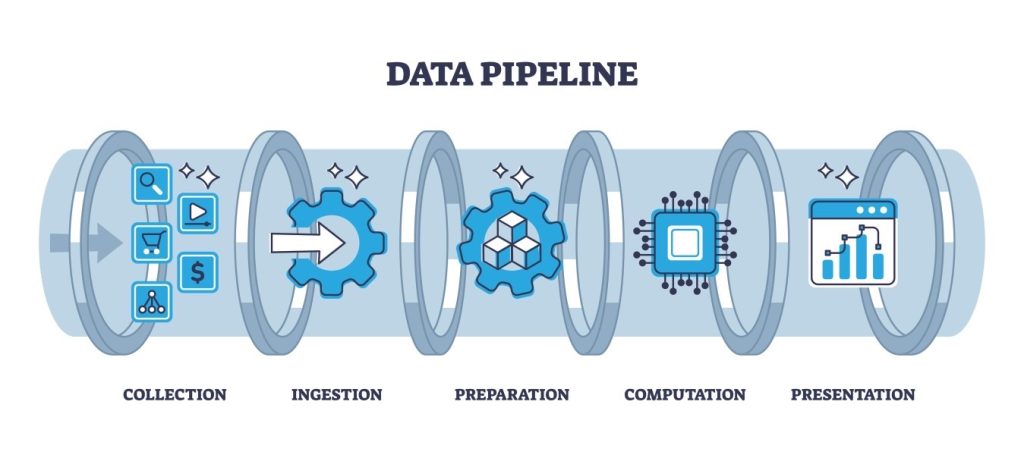
    big data pipeline automates the flow of data from various sources to analytical systems. It involves data ingestion, transformation, and storage, ensuring real-time processing and insights. Companies like Netflix and Uber use sophisticated pipelines to personalize user experiences and optimize operations, demonstrating the power of efficient data management.

    Components of a Big Data Pipeline

    • Data Ingestion: Collects data from multiple sources (APIs, databases, IoT devices).
    • Data Transformation: Cleans and formats raw data for analysis.
    • Data Storage & Retrieval: Stores processed data in data lakes or warehouses for further analysis.

    Big data pipelines help businesses automate data workflows and streamline real-time decision-making.

    6. Big Data Cloud Solutions: Secure and Scalable Storage

    Big data cloud solutions provide businesses with the ability to store, manage, and analyze large datasets securely. These solutions offer features like distributed storage, data encryption, and real-time processing. With cloud-based architectures, companies can scale their data operations without heavy upfront infrastructure investments, making it an ideal choice for businesses of all sizes.

    Advantages of Cloud-Based Big Data Solutions

    • High Availability: Ensures data accessibility even in case of server failures.
    • Advanced Security Measures: Protects sensitive business information with encryption and access controls.
    • Automatic Scaling: Adjusts resources dynamically based on data load and processing needs.

    The rise of cloud computing has made big data services more accessible, allowing businesses to leverage powerful analytics without investing in costly physical infrastructure.

    7. The Future of Big Data Services: AI and Beyond

    As technology advances, big data services are evolving with AI-driven automation, blockchain security, and edge computing. Businesses that harness these innovations will gain a strategic advantage in the ever-competitive digital landscape.

    Emerging Trends in Big Data

    • AI-Powered Data Analytics: Machine learning is making data analysis more predictive and efficient.
    • Edge Computing: Data processing at the source reduces latency and improves performance.
    • Blockchain for Data Security: Enhances data integrity and prevents tampering in sensitive industries like finance and healthcare.

    The future of big data services lies in intelligent automation and enhanced security measures, ensuring businesses stay ahead in an increasingly data-driven world.

    Final Thoughts

    Big data is no longer just a trend—it’s a necessity for businesses looking to stay ahead. From big data cloud computing to big data analytics, these services provide the foundation for smarter decision-making and optimized operations. Companies that invest in big data solutions can expect improved efficiency, better customer insights, and a significant competitive advantage.

    If your business is looking to leverage the power of big data, investing in the right technologies and platforms is key to success. Ready to explore the best big data cloud solutions for your organization? Stay ahead of the curve by embracing the power of big data today with aibuzz!

  • 7 Essential IT and Tech Services Every Business Needs in 2025

    7 Essential IT and Tech Services Every Business Needs in 2025

    Introduction

    Technology is at the core of modern businesses, driving efficiency, security, and growth. From IT service desk support to advanced AI-driven automation, companies need a comprehensive IT strategy to stay ahead of the competition. In 2025, IT and tech services are more critical than ever, ensuring seamless operations, enhanced security, and future-ready infrastructure.

    In this blog, we’ll explore the seven essential IT and tech services that every business should invest in, including how AI is revolutionizing IT management and automation.

    7 Essential IT and Tech Services Every Business Needs in 2025

    1. IT Service Desk Support: The First Line of Defense

    IT Service Desk Support

    IT service desk support is essential for businesses to maintain smooth daily operations. It serves as the first point of contact for employees and customers facing technical difficulties, ensuring that IT issues are resolved efficiently.

    How AI is Transforming IT Service Desk Support

    • AI Chatbots for Instant Support – AI-powered chatbots can handle routine IT queries, freeing up human agents for complex issues.
    • Predictive Issue Resolution – AI can analyze past service requests to anticipate and prevent common IT problems.
    • Automated Ticketing Systems – AI streamlines ticket management by prioritizing urgent issues and routing them to the right department.

    Key Benefits:
    ✅ Faster resolution times
    ✅ 24/7 assistance with AI-driven chatbots
    ✅ Reduced workload for IT staff


    2. IT Hardware Support: Ensuring Longevity and Performance

    IT and Tech Services

    Hardware remains a crucial part of IT infrastructure, from laptops and desktops to networking devices and servers. IT hardware support services include maintenance, upgrades, and troubleshooting to prevent failures and maximize performance.

    AI in Hardware Monitoring and Predictive Maintenance

    • Smart Diagnostics – AI-driven tools continuously monitor hardware performance and detect early signs of failure.
    • Automated Firmware Updates – AI can schedule and execute firmware and driver updates without disrupting business operations.
    • Asset Management – AI tracks IT assets and predicts when replacements or upgrades are needed.

    Why Businesses Need IT Hardware Support:
    ✅ Prevents unexpected downtime
    ✅ Extends hardware lifespan
    ✅ Enhances overall IT infrastructure stability


    3. IT Server Management: The Backbone of Digital Operations

    IT Server Management

    Servers are the powerhouse of IT operations, managing databases, applications, and company data. IT server management ensures high availability, security, and performance optimization.

    AI-Powered Server Management

    • Self-Healing Servers – AI can detect server issues and automatically execute repairs.
    • Performance Optimization – AI analyzes server loads and optimizes resource allocation in real-time.
    • Cybersecurity Threat Detection – AI detects anomalies and potential breaches before they cause damage.

    Advantages of IT Server Management:
    ✅ Improves server uptime and performance
    ✅ Strengthens cybersecurity defenses
    ✅ Reduces manual workload for IT teams


    4. Cloud IT Support: Driving Digital Transformation

    Cloud computing is now the foundation of modern IT infrastructure, offering flexibility, scalability, and cost savings. Cloud IT support ensures that businesses can efficiently manage cloud storage, software applications, and remote collaboration tools.

    How AI Enhances Cloud IT Support

    • AI-Based Cloud Security – AI-driven threat detection secures cloud environments against cyber threats.
    • Automated Data Backup & Recovery – AI predicts data loss risks and ensures secure backups.
    • Cost Optimization – AI analyzes cloud usage patterns to suggest cost-saving adjustments.

    Why Businesses Need Cloud IT Support:
    ✅ Secure data access from anywhere
    ✅ Scalable IT resources without heavy upfront costs
    ✅ Automated security updates and backup management


    5. IT Technology Services: Powering Innovation and Growth

    IT technology services cover a broad spectrum of solutions, including AI-driven automation, data analytics, and cybersecurity. Businesses leveraging emerging technologies gain a competitive edge and improve operational efficiency.

    AI’s Role in IT Technology Services

    • Intelligent Automation – AI automates repetitive tasks, from data entry to IT ticket management.
    • Predictive Analytics – AI helps businesses analyze vast amounts of data to forecast trends and optimize decision-making.
    • AI-Driven Cybersecurity – Machine learning algorithms detect and mitigate cyber threats in real-time.

    Emerging IT Technologies Include:
    ✅ Artificial Intelligence (AI) & Machine Learning
    ✅ Internet of Things (IoT) for smart connectivity
    ✅ Blockchain for secure data transactions


    6. IT Integration Services: Unifying Digital Infrastructure

    Businesses use multiple software and hardware systems that need to work seamlessly together. IT integration services help organizations connect various applications, databases, and networks for smooth operations.

    AI in IT Integration Services

    • Automated Workflow Orchestration – AI streamlines data flow between different platforms.
    • Real-Time Data Synchronization – AI ensures instant updates across all connected systems.
    • Seamless API Integration – AI optimizes API communication for smooth software interactions.

    Benefits of IT Integration Services:
    ✅ Eliminates data silos and improves collaboration
    ✅ Enhances process automation and efficiency
    ✅ Reduces system compatibility issues


    7. AI-Driven IT Solutions: The Future of Business Technology

    AI is revolutionizing IT and tech services by automating complex processes, improving security, and optimizing IT infrastructure. From AI-powered IT service desk support to smart cybersecurity solutions, businesses that embrace AI gain a significant advantage.

    How AI Transforms IT Services:

    • AI-Powered IT Support – Virtual assistants provide instant troubleshooting for employees.
    • Smart IT Asset Management – AI predicts hardware failures and schedules proactive maintenance.
    • AI-Enhanced Security – Machine learning identifies and blocks cyber threats before they escalate.

    Why AI is Essential for IT Services:
    ✅ Reduces operational costs
    ✅ Increases efficiency and productivity
    ✅ Provides proactive IT management


    Conclusion: Elevate Your Business with AI-Powered IT & Tech Services

    Investing in IT and tech services is no longer optional—it’s essential for staying competitive in today’s digital world. Whether it’s IT service desk support, IT hardware support, IT server management, cloud IT support, IT technology services, or IT integration services, businesses must adopt the latest innovations to optimize performance and security.

    Why Choose AIBUZZ.NET?

    At AIBuzz, we specialize in cutting-edge AI and IT & Tech solutions tailored to meet your business needs. Our services include:
    ✅ AI-powered IT service desk support for faster issue resolution
    ✅ Advanced IT server management with predictive maintenance
    ✅ Secure cloud IT support with AI-driven threat detection
    ✅ Smart IT integration services for seamless digital operations

    🔹 Future-proof your business with AI-driven IT solutions. Contact us today at aibuzz.net to discover how we can help you streamline operations, enhance security, and scale efficiently.

  • 7 Explosive Ways 3D Virtual Reality is Transforming the World

    7 Explosive Ways 3D Virtual Reality is Transforming the World

    Virtual reality (VR) has transformed from a futuristic concept into an everyday technology. From gaming to healthcare, 3D virtual reality is reshaping industries in ways we never imagined. Companies like Google Virtual Reality and Sony Virtual Reality are leading the charge, making immersive experiences more accessible.

    Virtual reality

    Whether you’re a gamer exploring PlayStation 4 Virtual Reality, a business professional utilizing VR for training, or just someone fascinated by tech, this guide will walk you through seven incredible ways VR is making an impact.

    1. Gaming Like Never Before

    Virtual reality Gaming

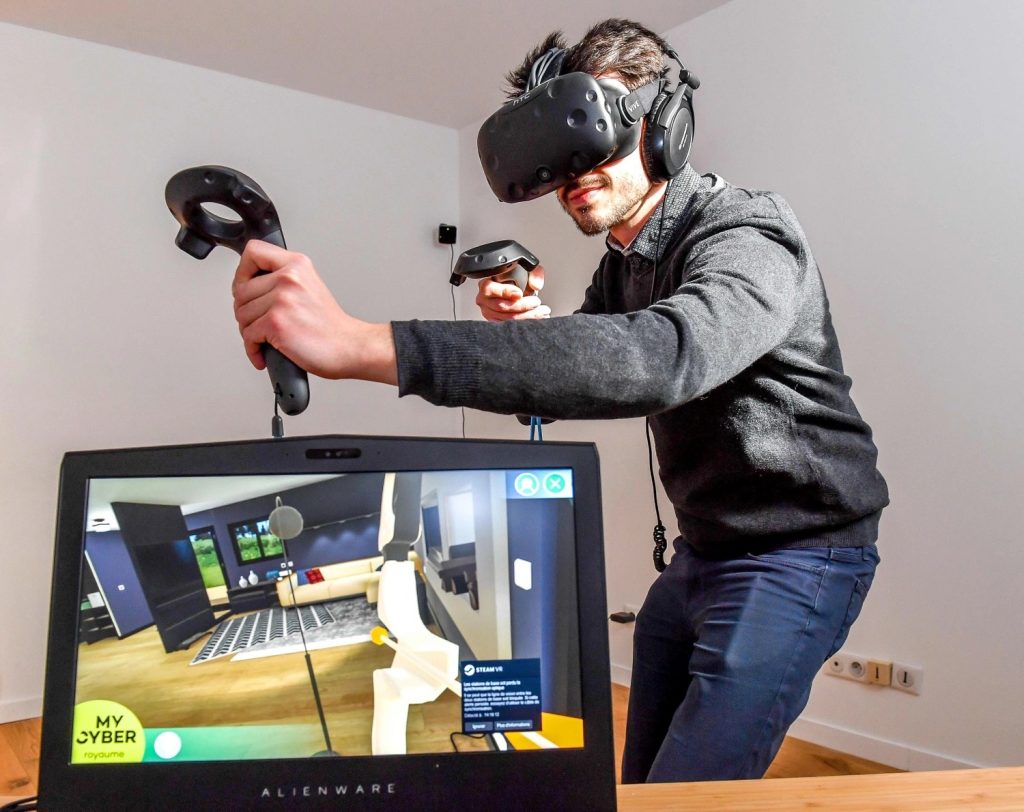
    Gaming was one of the first industries to embrace VR, and it’s still the most exciting space for innovation. PlayStation 4 Virtual Reality (PSVR) brought high-quality immersive gaming to the masses, allowing players to step inside their favorite games.

    Meanwhile, platforms like Omni Virtual Reality enhance the experience by letting users physically walk and run in their virtual worlds. With haptic feedback, 3D audio, and motion tracking, VR gaming isn’t just fun—it’s a workout too!

    2. Virtual Travel and Exploration

    Virtual Travel and Exploration

    Ever wanted to walk through the streets of Paris without leaving your home? VR makes it possible! Google Virtual Reality is pushing the boundaries of travel with tools like Google Earth VR, where users can explore the world from the comfort of their couch.

    Virtual tourism is also gaining traction, allowing people to visit famous landmarks, museums, and even historical events through VR simulations. It’s a game-changer for those unable to travel due to time, money, or physical limitations.

    3. Revolutionizing Education and Training

    Revolutionizing Education and Training

    Imagine learning about ancient civilizations by walking through a virtual reconstruction or practicing surgery without touching a real patient. That’s the power of VR in education.

    Medical students now use VR to simulate complex procedures, while military personnel train in realistic combat environments. Schools are also integrating VR into classrooms, helping students engage with subjects like never before.

    4. The Future of Social Interaction

    The Future of Social Interaction

    With the rise of Virtual Reality, social interactions are becoming more immersive. Instead of video calls, people can meet in virtual spaces, represented by avatars, and interact naturally.

    Platforms like VRChat and Meta’s Horizon Worlds are redefining digital communication. Whether it’s a business meeting, a virtual party, or just hanging out with friends across the globe, VR is bridging the gap between physical and digital worlds.

    5. Transforming the Workplace

    Companies are embracing VR for remote work, training, and collaboration. Instead of boring Zoom meetings, imagine sitting in a virtual boardroom, complete with whiteboards, presentations, and real-time interactions.

    Industries like architecture and design also benefit from VR. Professionals can create, test, and visualize projects in 3D before committing to real-world construction. This reduces costs, improves efficiency, and enhances creativity.

    6. Healthcare and Therapy

    VR isn’t just about fun—it’s also saving lives. Medical professionals use VR for pain management, mental health therapy, and physical rehabilitation.

    Patients suffering from PTSD, anxiety, and phobias are benefiting from VR exposure therapy, which gradually introduces them to their fears in a controlled environment. Meanwhile, stroke victims use VR to regain motor functions through engaging exercises.

    7. The Future of Entertainment

     The Future of Entertainment

    Beyond gaming, VR is reshaping the entertainment industry. Sony Virtual Reality and other companies are working on immersive movie experiences where viewers can step inside a film rather than just watching it.

    Concerts, theater performances, and even sporting events are also adopting VR, allowing fans to experience front-row seats without ever leaving home. With advances in VR technology, the way we consume entertainment is set to change forever.


    Final Thoughts

    3D Virtual Reality is no longer a niche technology—it’s a mainstream revolution. From PlayStation 4 Virtual Realitygaming to Google Virtual Reality experiences, the possibilities are endless. As VR continues to evolve, its impact will only grow, transforming how we work, play, and connect.

    At aibuzz, we specialize in cutting-edge virtual reality solutions, helping businesses and individuals harness the full potential of 3D VR. Whether you’re looking for immersive gaming, business applications, or training simulations, we’ve got you covered.

    Are you ready to step into the virtual world? Explore the latest in VR technology with aibuzz and see how it can change your life!


  • 10 Game-Changing Ways Mixed Reality is Transforming Technology in 2025

    10 Game-Changing Ways Mixed Reality is Transforming Technology in 2025

    Introduction

    Mixed Reality (MR) is revolutionizing the way we interact with digital content, seamlessly blending the physical and virtual worlds. With the rapid advancements in Windows 10 Mixed RealityMixed Reality Headsets, and artificial intelligence, industries like gaming, healthcare, education, and business are experiencing groundbreaking innovations. This blog explores how the best Windows Mixed Reality experiences are shaping the future and why MR is the next big thing in technology.

    mixed reality

    1. Enhanced Gaming and Entertainment

    One of the most significant impacts of mixed reality is in gaming. Unlike traditional Virtual Reality (VR), which immerses users in a completely digital space, MR overlays digital elements onto the real world. This hybrid experience makes gaming more interactive, offering players an engaging mix of real-world elements with virtual enhancements.

    With Windows 10 Mixed Reality, users can access high-quality MR experiences through compatible headsets, providing better tracking, real-time responsiveness, and ultra-immersive environments. Companies like Microsoft and HP are investing heavily in mixed reality headsets that push the boundaries of interactive entertainment.


    2. Revolutionizing Healthcare and Surgery

    Mixed reality is transforming the healthcare sector by providing doctors and surgeons with augmented visualization tools. MR-powered headsets enable professionals to analyze 3D anatomical models, perform precision surgeries, and train medical students in a more hands-on environment.

    For example, MR applications allow surgeons to visualize a patient’s anatomy in real-time during procedures, reducing risks and improving outcomes. Technologies like best Windows Mixed Reality headsets are also being used in mental health treatments, offering immersive therapy sessions for anxiety, PTSD, and phobias.


    3. AI-Powered Productivity and Collaboration

    Artificial intelligence (AI) and MR together are enhancing workplace productivity by enabling remote collaboration. AI-driven MR applications help businesses visualize data in interactive 3D environments, making meetings more engaging and insightful.

    For instance, AI-powered virtual assistants integrated with Windows 10 Mixed Reality headsets can guide professionals through complex tasks, from assembling machinery to software development. These AI-enhanced MR tools are making hybrid work environments more efficient, eliminating the need for physical presence in office spaces.


    4. Transforming Education and Training

    The education sector is leveraging mixed reality to create immersive learning environments. Traditional classrooms are evolving into interactive spaces where students can explore historical sites, conduct virtual science experiments, and engage with 3D models of complex concepts.

    Universities and corporate training programs are incorporating Windows 10 Mixed Reality headsets to offer realistic simulations, such as flight training for pilots or safety drills for emergency responders. MR-based learning improves knowledge retention by making lessons more engaging and experiential.


    5. Retail and E-Commerce Innovations

    Mixed reality is reshaping the retail industry by offering customers virtual try-on experiences and immersive product previews. Consumers can visualize how furniture will look in their homes, try on clothes without changing physically, or test electronic devices before purchasing.

    Brands like IKEA and Nike are adopting the best Windows Mixed Reality technologies to enhance their digital shopping experience, making online shopping more interactive and reducing return rates by giving buyers a better sense of their purchases beforehand.


    6. Advancements in Architecture and Real Estate

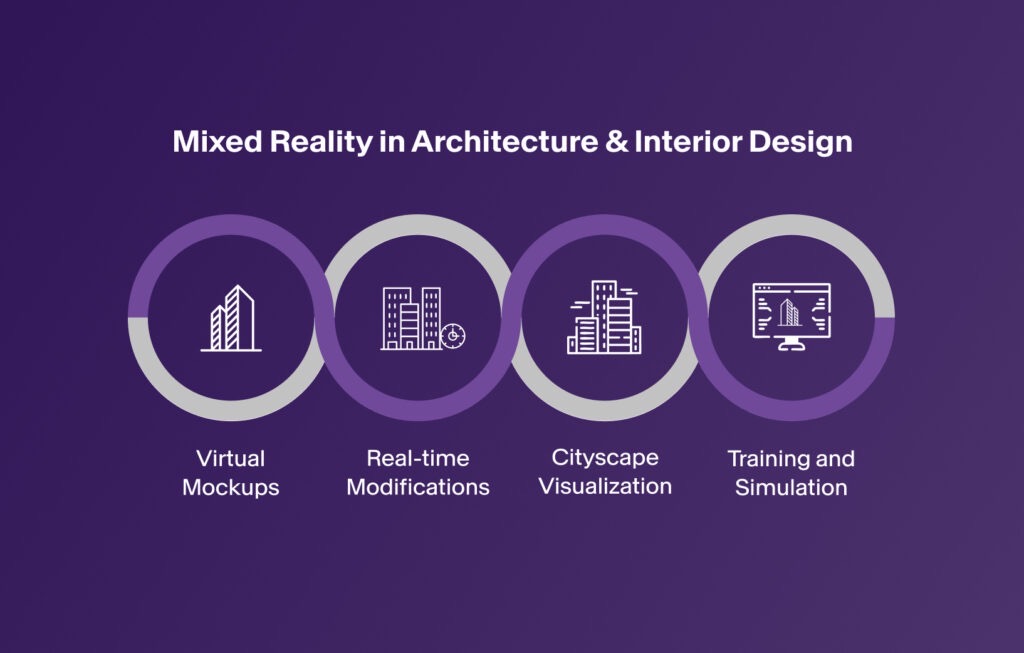
    The real estate and architecture industries are using mixed reality to visualize property designs and construction projects. Instead of looking at blueprints, clients and engineers can walk through virtual versions of properties before they’re built, making modifications in real time.

    With Windows 10 Mixed Reality headsets, real estate developers can showcase virtual property tours, allowing potential buyers to explore homes remotely. This technology is revolutionizing how properties are sold and designed, making architectural planning more precise and interactive.


    7. Military and Defense Applications

    The military is utilizing MR for training and strategic planning. Mixed reality simulations help soldiers train in high-risk environments without physical dangers. These simulations include combat training, aircraft maintenance, and mission planning using AI-powered MR tools.

    The U.S. Army and other defense organizations are integrating the best Windows Mixed Reality solutions to improve battlefield awareness and decision-making. Mixed reality helps create a more effective and informed military force.


    8. Revolutionizing Manufacturing and Engineering

    Manufacturing and engineering industries are embracing MR to optimize production lines, enhance worker safety, and streamline design processes. Engineers can interact with holographic blueprints, reducing prototyping costs and improving efficiency.

    With Windows 10 Mixed Reality, assembly line workers can receive real-time guidance, ensuring accuracy and reducing errors. MR is making industrial operations more precise, cost-effective, and innovative.


    9. Enhancing Tourism and Cultural Experiences

    Mixed reality is reshaping the travel and tourism industry by offering virtual tours of historic landmarks, museums, and cities. Tourists can experience ancient civilizations through MR reconstructions or explore destinations before booking trips.

    With best Windows Mixed Reality headsets, museums and cultural institutions are creating immersive exhibitions, allowing visitors to engage with artifacts and historical events in entirely new ways.


    10. Smart Home and IoT Integration

    The integration of MR with smart home technology is enhancing the way people interact with IoT devices. Users can control home appliances, security systems, and lighting using gesture-based or voice-activated MR interfaces.

    With Windows 10 Mixed Reality, smart home experiences are becoming more intuitive, allowing users to customize their environment in real-time, making homes more connected, interactive, and futuristic.


    Conclusion

    As mixed reality continues to evolve, its applications across various industries will only expand. From gaming and healthcare to retail and defense, MR is bridging the gap between digital and physical worlds, offering unprecedented levels of interactivity and efficiency.

    If you’re looking to explore the potential of mixed reality for your business or project, aibuzz.net offers cutting-edge MR solutions tailored to your needs. Stay ahead of the curve and embrace the future of mixed reality today!

  • 7 Key Steps to Cryptocurrency Development: A Complete Guide for 2025

    7 Key Steps to Cryptocurrency Development: A Complete Guide for 2025

    The rise of digital assets has revolutionized the global financial landscape, and cryptocurrency development continues to gain momentum. Whether you’re a startup, an enterprise, or a blockchain enthusiast, understanding the intricacies of cryptocurrency development is crucial. From blockchain architecture to security protocols, every step plays a vital role in building a successful cryptocurrency.

    In this guide, we’ll explore the seven key steps to cryptocurrency development, incorporating essential aspects such as blockchain application developmentblockchain consulting and development, and the use of advanced blockchain developer tools.

    7 Key Steps to Cryptocurrency Development: A Complete Guide for 2025

    1. Define the Purpose and Use Case

    Before diving into the technical aspects of cryptocurrency development, it’s essential to outline its purpose and utility. Will your cryptocurrency be used for payments, smart contracts, decentralized applications (dApps), or industry-specific solutions? Conducting thorough market research and leveraging blockchain consulting and development services can help shape the vision of your cryptocurrency project.

    2. Choose the Right Blockchain Platform

    The next crucial step is selecting the appropriate blockchain technology. You can either build a cryptocurrency on an existing blockchain like Ethereum, Binance Smart Chain, or Solana, or develop a custom blockchain from scratch. Engaging a blockchain development agency can provide expert insights into the best platform based on scalability, transaction speed, and security.

    3. Design the Consensus Mechanism

    The consensus mechanism determines how transactions are verified and added to the blockchain. Some common mechanisms include:

    • Proof of Work (PoW) – Used by Bitcoin, requires miners to solve complex cryptographic puzzles.
    • Proof of Stake (PoS) – Ethereum 2.0 and Cardano use this energy-efficient approach.
    • Delegated Proof of Stake (DPoS) – Increases scalability and transaction speed.

    Choosing the right consensus mechanism depends on your cryptocurrency’s security and efficiency goals. Blockchain application development services can help you determine the best approach for your project.

    4. Develop Smart Contracts and Core Features

    Smart contracts enable automated transactions without intermediaries. They define the rules and functionalities of your cryptocurrency. Blockchain developer tools like Solidity (Ethereum), Rust (Solana), and Go (Hyperledger Fabric) help developers build secure and efficient smart contracts. Partnering with blockchain development firms ensures the implementation of secure and scalable smart contracts.

    5. Ensure Security and Compliance

    Ensure Security and Compliance

    Security is paramount in cryptocurrency development. Implementing encryption protocols, multi-signature wallets, and rigorous testing can safeguard your blockchain network from vulnerabilities. Additionally, compliance with regulatory frameworks such as AML (Anti-Money Laundering) and KYC (Know Your Customer) is critical to ensuring legal operations. Consulting a blockchain development agency can assist in navigating these complexities.

    6. Create a User-Friendly Wallet and Interface

    A cryptocurrency wallet is essential for users to store, send, and receive digital assets. Wallets can be:

    hot wallet and cold wallet
    • Hot Wallets – Online wallets connected to the internet (e.g., MetaMask, Trust Wallet).
    • Cold Wallets – Offline wallets offering enhanced security (e.g., Ledger, Trezor).

    An intuitive user interface enhances the adoption of your cryptocurrency. Working with a blockchain application development team can help create seamless wallet integration.

    7. Launch and Continuous Improvement

    Once your cryptocurrency is developed, launch it on a testnet to identify potential issues before the mainnet release. Engage with a blockchain development agency to refine and optimize your network. Marketing, community engagement, and continuous development play crucial roles in ensuring long-term success.

    Conclusion

    Cryptocurrency development is a multi-faceted process that requires strategic planning, technical expertise, and security implementation. From defining a use case to ensuring compliance and security, each step contributes to the success of your project. Partnering with experienced blockchain consulting and development firms can simplify the process and provide valuable insights.

    Additionally, ongoing support, community engagement, and future upgrades are essential to maintaining the competitiveness and security of your cryptocurrency. As the blockchain landscape continues to evolve, staying informed about the latest trends and technological advancements will be critical to your project’s success.

    Whether you are an entrepreneur looking to launch a new digital asset or a company aiming to integrate blockchain solutions, the right expertise can make all the difference. Leveraging blockchain app development services, utilizing blockchain developer tools, and collaborating with blockchain development firms can streamline the development process and ensure a successful launch.

    If you’re ready to embark on your cryptocurrency journey, our team at aibuzz.net offers top-tier blockchain app development services to bring your vision to life. We provide expert solutions tailored to your needs, ensuring security, efficiency, and innovation. Contact us today to start building the future of digital finance!